June 8 – 11, 2026, at Thomas More University

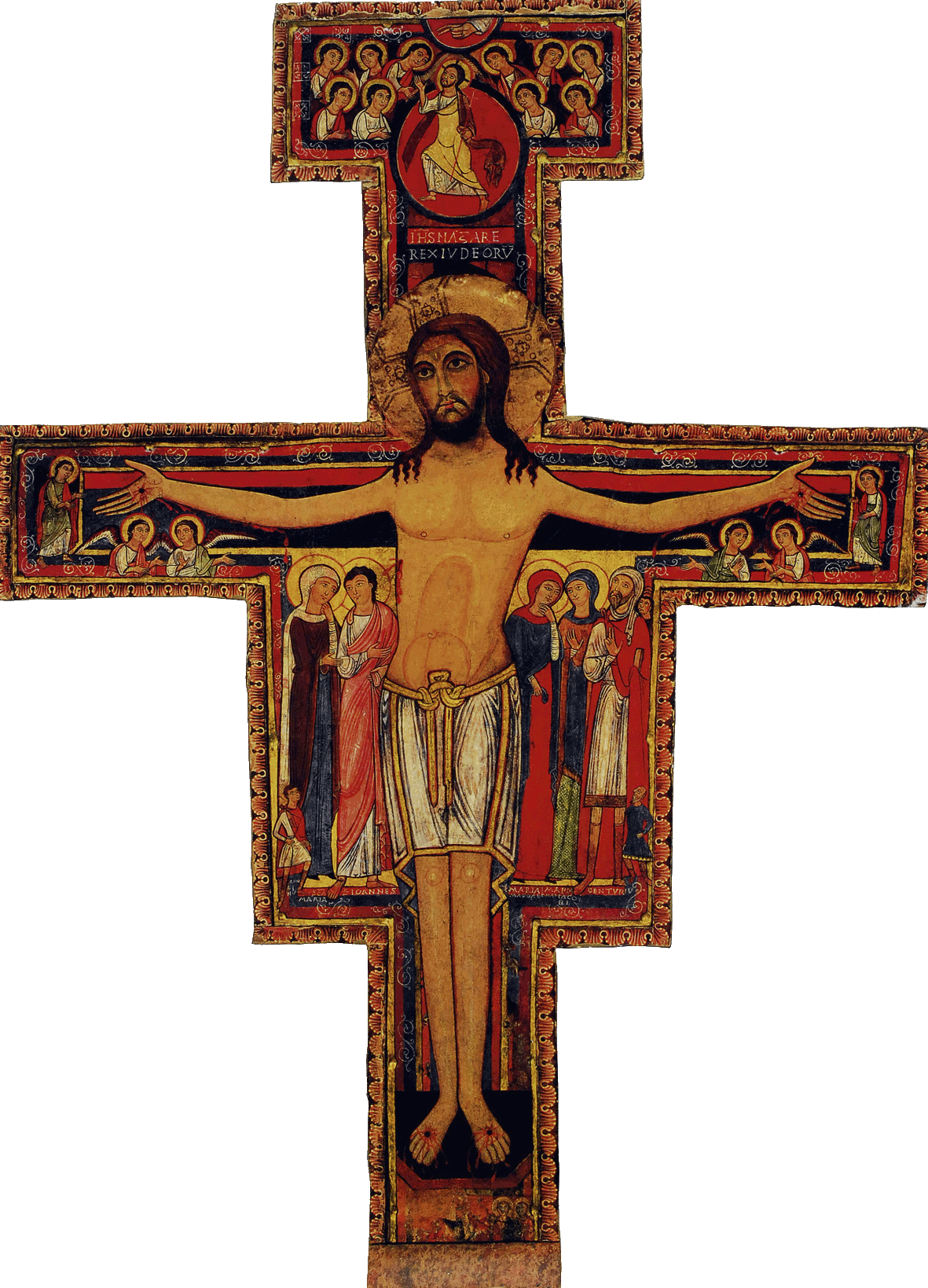
Franciscan_san_damiano CrossThe Diocese of Covington, in partnership with the Franciscan University’s Catechetical Institute, is offering FREE In-Person Adult Catholic Faith Formation Workshops in TMU’s Administration Building (Library Classrooms).

All workshops are broken into two parts and scheduled for two consecutive days, 1.5 hours per day. Instructors will provide topical information, video content, and open discussion time.

When you register, check the date and time to eliminate scheduling conflicts. Many workshops run at the same time.

2026 June Summer Courses

When you register, check the date and time to eliminate scheduling conflicts. Many workshops run at the same time.

This workshop explores the most critical element in the graced work of passing on the faith — you. Because the content of the faith is a Person — the Person of Christ — the person of the catechist is pivotal for success. The vocation of the catechist is to be a witness of Christ’s goodness, of His zeal, of His ways, of Him — to be like the Master. JUNE 8 & 9, 9:30 – 11:00 a.m.

Taught by: Jamie Schroeder

As teachers, administrators, or pastoral staff in a Catholic school, we are in a unique position to assist parents in building up the domestic church of their family, in strengthening their role as primary educators of their children, and in helping them learn ways of integrating the faith into the daily routines of their family life. This workshop explores how a Catholic school can intentionally and creatively foster this vision, so as to authentically support family life. JUNE 8 & 9, 9:30 – 11:00 a.m.

Taught by: Anita Dunn

Mother Church insists that catechesis that truly evangelizes hearts, and that meets souls in the place of greatest need, must be unshakably centered upon Him who is our beginning and our end —Jesus Christ. We teach Jesus, and everything we teach, we teach in reference to Him, thus teaching Christo-centrically. JUNE 8 & 9, 9:30 – 11:00 a.m.

Taught by: Rev. Michael Barth

Throughout the generations, the Word of God has been handed on as a precious jewel. The Church has guarded this Deposit of Faith so that the saving message of hope might shine out for all to see. Now it is up to us. It is our turn to hand on this jewel, unscathed. It is up to us to catechize, continuing the unbroken chain of passing on the faith throughout the ages. JUNE 8 & 9, 9:30 – 11:00 a.m.

Taught by: Very Rev. Ryan Maher

This workshop will explore the necessary connection of catechesis to the sacramental and liturgical life of the Church in our work as catechists.  The liturgy comes from the “living memory” of the Church, that is, the Holy Spirit (Catechism of the Catholic Church, CCC, 1099).  Through the Holy Spirit working in the liturgy, the truths of the faith are passed on like a special family memory, from generation to generation, down to the present day. JUNE 8 & 9, 9:30 – 11:00 a.m.

Taught by: Rev. Raymond Enzweiler

Knowing and understanding Scripture is essential in the life of a catechist. This workshop will explore how God’s Word, transmitted in Sacred Scripture, grounds and deepens our relationship with Jesus Christ and His Church. In Scripture, we see the sweeping Plan of God, the history of salvation unfolded. JUNE 8 & 9, 9:30 – 11:00 a.m.

Taught by: Claire Therese Heyne

This workshop will introduce participants to biblical catechesis through an ancient catechetical technique: the use of the Story of the Bible. The most important historical events of the Bible can be briefly described in one Story, connected by one common theme: union with God. Often in a catechetical setting we fall into the habit of teaching individual topics without reference to the greater context of salvation history. In order to draw others into the life of God and the Church, we must help them make this Story of the Bible their own. JUNE 8 & 9, 9:30 – 11:00 a.m.

Taught by: Rev. Conor Kunath

Scripture converts. It is an effective gift to God’s adoptive family, graced and imbued with His own life. The place of the sacred page in our catechetical work is matchless, irreplaceably vital. It is at the heart of all that the Church “believes, teaches, and proclaims to be revealed by God” (RCIA 491). This workshop will explore Sacred Scripture as a fundamental agent of conversion in the catechetical process, and will provide practical means to make Scripture much more than just “proof” texts for your teaching. Learn how to identify the Scriptures that drive the Church’s doctrines and how to incorporate them into your catechesis as the preeminent unfolding of the Father’s love for His children. JUNE 8 & 9, 9:30 – 11:00 a.m.

Taught by: Josh Ostertag

“The eternal Father, in accordance with the utterly gratuitous and mysterious design of his wisdom and goodness, created the whole universe and chose to raise up men to share in his own divine life” (CCC 759). A plan born in the Father’s heart: from the genesis of life itself, to the last prophet of the Jewish people, the grand sweep of salvation history is unfolded in the 46 books of the Old Testament. The Covenants, the Commandments, and the promise of a Chosen One form the subject of this workshop, to give catechists a sense of the provident hand of God over our past, and our present. JUNE 8 & 9, 9:30 – 11:00 a.m.

Taught by: Kathy Kramer

The Blessed Trinity is the greatest of all mysteries: the One and Only God is a unity of Three Persons. The Trinity is also our final home, the goal of our life. This mystery, revealed in Jesus, sheds light on all other Christian mysteries. And it is the revelation that sheds light on all other Christian mysteries. Knowing that God, the Creator of Heaven and Earth, is a unity of loving Persons, changes our understanding of everything. June 8 & 9, 12:30 – 2:00 p.m.

Taught by: Rev. Michael Barth

St. John Bosco once said, probably on one of his hard days while shepherding his sea of teenage boys, that, “sometimes children just need to be loud!” But how do you balance necessary discipline and the need for a loving Christian tone? Joy and just punishment. Gentleness and good focus? This workshop addresses the challenge experienced by the teacher of the faith: ensuring that a loving Christian environment exists as a good witness to younger disciples without compromising effective and efficient means of discipline, JUNE 8 & 9, 12:30 – 2:00 p.m.

Taught by: Very Rev. Ryan Maher

“That which was from the beginning…that which we have seen and heard we proclaim to you…” (1 John 1:1, 4). The New Testament is the completion of the story of how the Father prepared the world for His Son, and the beginning of the story of the Church, His Body, His Kingdom, His Bride, His Ark to save a People He calls His own. This sweeping drama of truth, centered upon He who is Truth, forms the message of the good news that catechists are privileged to offer to each generation of souls. JUNE 8 & 9, 12:30 – 2:00 p.m.

Taught by: Josh Ostertag

This workshop offers a summary outline of the basic principles of Catholic morality and how our moral life is rooted, not merely in a code of ethics or a set of rules, but profoundly in the person of Jesus. It discusses some of the major moral issues we face in our society today, and equips all who teach the faith — whether youth ministers, catechists, Catholic school teachers, and so on — with the tools to establish a sure foundation for right moral thinking, both in themselves and in those to whom they minister. JUNE 8 & 9, 12:30 – 2:00 p.m.

Rev. Conor Kunath

The Christian moral life finds its foundation in the Ten Commandments. Yet, they are often explained only as proscriptions or laws that must be kept. This workshop will present the Ten Commandments as prescriptions that profoundly inform and foster living life in its fullness. Building on the foundation of the Commandments, Jesus gave us the model of how to live the reality of Heaven here on Earth through the Beatitudes: a great challenge, but a reality each one of us is called to in God’s grace. This workshop will discuss the blessed radicality of a life lived under the Commandments and the Beatitudes. JUNE 8 & 9, 12:30 – 2:00 p.m.

Kathy Kramer

The gift of human sexuality and the virtue of chastity are meant to be taught in the context of love, because love empowers us to live chastely and recognize the gift of human sexuality. This workshop aids parents in their ability to detect signs that indicate when their children are ready to begin this formation, while offering strategies for approaching the topic clearly and delicately. It is especially meant for parents. However, this workshop is also beneficial for catechists, Catholic school teachers, parish catechetical leaders, youth ministers, and others who are in roles where they assist parents in how to teach their children about God’s plan for sexuality. JUNE 8 & 9, 12:30 – 2:00 p.m.

Thought by: Claire Therese Heyne

Jesus desires that the little children come to Him. As parents, priests, catechists, and teachers, we can bring the children entrusted to our care to the Lord, so that He may bless them and fill them with His love. It is critical that we learn how to effectively engage the young mind and heart of each child, encourage each child to respect and love the things of the faith, and help each child discover the wonderful love of a gentle Father. This workshop will reflect on key aspects of a child’s psyche from ages 3–6, and how we can build upon what is naturally occurring within children, in order to allow Jesus to draw them into the heart of the Father. JUNE 8 & 9, 12:30 – 2:00 p.m.

Taught by: Jamie Schroeder

The goal of catechesis is participation in God’s life. As parents, priests, catechists, and teachers, we can bring the children entrusted to our care to the Lord, so that He may bless them and fill them with His love. It is critical that we learn how to effectively engage the young mind and heart of each child, encourage each child to respect and love the things of the faith, and help each child discover the wonderful love of a gentle Father. This workshop will reflect on key aspects of a child’s psyche from ages 6–12, and how we can build upon what is naturally occurring within children, in order to allow Jesus to draw them into the heart of the Father. JUNE 8 & 9, 12:30 – 2:00 p.m.

Taught by: Judy Pieper

St. Paul, when instructing a young St. Timothy, wrote, “Let no one despise your youth, but set the believers an example in speech and conduct, in love, in faith, in purity” (1 Timothy 4:12). We can imitate St. Paul by encouraging the young people entrusted to us to discover who the Lord has called them to be, respond to His invitation to follow Him, and become young men and young women of virtue. It is critical for us to learn how to effectively engage the mind and heart of each young person, so that they may receive the full and abundant life that our loving Father offers them. This workshop will reflect on key aspects of an adolescent’s psyche from ages 12–18, and how we can build upon what is naturally occurring within adolescents, in order to allow Jesus to draw them into the heart of the Father. JUNE 8 & 9, 12:30 – 2:00 p.m.

Taught by: Rev. Raymond Enzweiler

He is the Alpha and the Omega.  He is in all, before all, through all.  The primary and essential object of catechesis is, to use an expression dear to St. Paul, “the mystery of Christ.” (CT 5)  Therefore everyone who teaches the Catholic faith must be immersed in this mystery. June 8 & 9, 3:30 – 5:00 p.m.

Taught by: Rev. Michael Barth

It is through the gift of Baptism that Christ’s work of salvation is applied personally to each one of us. Through Baptism, we are cleansed from our sins and share in God’s divine life. In this workshop, we will deepen our understanding of and appreciation for the Sacrament of Baptism. We will explore how Jesus instituted Baptism, reflect on the effects of the Sacrament, and the obligations it imparts to us. We will learn about the importance of the theological virtues in the Christian life, and ponder how we participate in Christ’s priestly, prophetic, and kingly ministry through Baptism. This workshop is applicable to everyone because we all have room to grow in our understanding of and appreciation for this ever-important Sacrament. JUNE 8 & 9, 3:30 – 5:00 p.m.

Taught by: Jamie Schroeder

This workshop is the first installment of a four-part series on reading the Catechism of the Catholic Church, an amazing gift that the Church has given us. Within the Catechism, we find the Church’s teachings clearly laid out and supported by Sacred Scripture and Tradition. This particular workshop walks through and highlights the key points within Part 1: The Profession of Faith, which includes an overview of the Trinity, the Creed, Salvation History, the Four Last Things, etc. June 8 & 9, 3:30 – 5:00 p.m.

Taught by: Rev. Martin Pitstick

The holy Eucharist is the greatest of all gifts, because here Jesus offers His Body, Blood, Soul, and Divinity to us. Through the Eucharist, we are able to receive the living God and be transformed by His divine life dwelling within us. Our lives flow from the Eucharist and lead back to the Eucharist, so that we may be filled with God’s life, sent into the world to proclaim the Good News, and be strengthened and refreshed. This workshop will help you, whether you are a priest, parent, parish catechetical leader, catechist, teacher, youth minister, and so on, to better understand the Eucharist and its unique importance in your life. JUNE 8 & 9, 3:30 – 5:00 p.m.

Taught by: Josh Ostertag

Called to Him. Kept in Him. Made new in Him. God’s generosity and His fatherly love for His young daughters and sons are strikingly evident in the gift of these two Sacraments to those newly arrived at the age of reason. This workshop unfolds the Church’s guidance for parents and parishes in preparing souls for Confession and Communion. By considering the role of both the home and the parochial settings, a balanced and effective formation can be achieved. This pragmatic workshop also addresses common struggles and cultural issues that Catholic communities face in developing responsible and robust approaches to helping young souls be open to grace. JUNE 8 & 9, 3:30 – 5:00 p.m.

Taught by:  Mary Anita Dunn

During the Last Supper, Jesus promised that He would send us the Holy Spirit. Jesus, in union with the Father, sent the Holy Spirit, and the power of the Holy Spirit fell upon the Church at Pentecost. Through the Sacrament of Confirmation, we are sealed with the Holy Spirit to be authentic and faithful disciples of Jesus Christ. We are empowered by the Holy Spirit to spread the faith by our words and deeds. In this workshop, we will learn more about the richness of the Sacrament of Confirmation through reflecting on the Scriptural roots, effects, and outward signs of it. This workshop can be beneficial for all — pastors, parents, parish catechetical leaders, catechists, youth ministers, teachers, and so on — who would like to learn more about the Sacrament of Confirmation. JUNE 8 & 9, 3:30 – 5:00 p.m.

Taught by:  Juy Pieper

What the bishop gives sacramentally is always efficacious. How do we support our confirmands and their families in this deeply challenging modern culture so that what we give in our parishes and schools catechetically is also reliably effective? How do we not only provide a program, but also a conversion process, so that participants do not experience the catechesis we give as a series of required hoops to jump through, but revelatory hope? This workshop aims to explore some practical strategies that apply to this and other parish ministries. It includes insights from Sacred Scripture, Sacred Tradition, and the Magisterium, as well as examines current trends relating to the age of Confirmation and the ordering of the Sacraments of Christian initiation. JUNE 8 & 9, 3:30 – 5:00 p.m.

Taught by:  Sarah Wells

Mother Church desires that all of us — children included — fully and actively participate in the Eucharistic liturgy, the Holy Mass, so that we may experience the beauty and profundity that is present in every moment of the Mass and the joy of allowing Jesus to help us become the persons He has created us to be through its celebration. Every gesture and word of the Mass has significance, and children — when taught the concrete meaning of each element — can joyfully and excitedly engage with the Mass and encounter the person of Jesus. This workshop offers a method to introduce the liturgy to children, in order for them to enter into the liturgical rites and to pray the Mass to the best of their abilities. JUNE 8 & 9, 3:30 – 5:00 p.m.

Taught by:  Claire Therese Heyne

Hidden within plain sight in every liturgy is the heart of catechesis – the mystery of Christ’s earthly vocation to return us to the Father’s loving embrace. A deeply Catholic catechesis seeks to uncover the profound meaning of the words, signs, and movements of worship to enlighten and enliven every truth we teach. Understanding the relationship between liturgy and catechesis is vital to forming souls – and to helping those we teach discover the peace and joy of their salvation. JUNE 8 & 9, 3:30 – 5:00 p.m.

Taught by:  Rev. Raymond Enzweiler

This workshop examines the place of the sacraments within God’s magnificent plan of love. More than simply Catholic rituals, the sacraments are God’s chosen channels of supernatural life, His plan for doing even more than saving us: “For this is why the Word became man, and the Son of God became the Son of man: so that man, by entering into communion with the Word and thus receiving divine sonship, might become a son of God.” JUNE 8 & 9, 5:30 – 7:00 p.m.

Taught by: Very Rev. Ryan Maher

Pope Benedict XVI stated that, “the ancient tradition of Lectio Divina… will bring to the Church a new spiritual springtime.”  Come and experience the prayerful pondering of sacred Scripture in the timeless Lectio Divina in which the Holy Spirit makes a connection between the passage and one’s own life. JUNE 8 & 9, 5:30 – 7:00 p.m.

Taught by: Deacon Brian Cox

Evangelizacion en la Parroquia – En este taller exploraremos los elementos esenciales sobre la misión más importante: la evangelización. La misión de evangelizar es la vocación propia de la Iglesia. Como miembros de la Iglesia cada uno de nosotros estamos llamados a participar en esa misión. “La Buena Nueva del Reino que llega y que ya ha comenzado, es para todos los hombres de todos los tiempos. JUNE 8 & 9, 5:30 – 7:00 p.m.

Taught by: Deacon Tony Lopez Escamilla

This workshop is part of a four-part series on reading the Catechism of the Catholic Church, an amazing gift that the Church has given us. Within the Catechism, we find the Church’s teachings clearly laid out and supported by Sacred Scripture and Tradition. This particular workshop walks through and highlights the key points within Part 2: The Celebration of the Christian Mystery, which includes an overview of Christ’s continuing work in the Sacraments, the seven Sacraments of the Church, and other liturgical celebrations. JUNE 8 & 9, 5:30 – 7:00 p.m.

Taught by: Rev. Martin Pitstick

This workshop is part of a two-part series on Church History. Part One: a) Examines the growth of the Church from a small Jewish community to a Greco-Roman state religion under Theodosius. b) Key people and events in the first 500 years of Christianity. c) Issues that led to the East-West Schism and its effect on the development of Christianity. d) The influence of the Roman Empire and feudalism on the Church from Charlemagne through the 1300s. e) The impact of monasticism on the reform of the clergy and the papacy. Part Two: a) Examines the Protestant Reformation and the Catholic Counter-Reformation. b) The Council of Trent and its impact on the life of the Church. c) How the Renaissance, the Age of Enlightenment, Industrial Revolution, French Revolution, and other cultures affected the growth of the Church from the 17th Century to the present. d) How the Catholic Church developed in the United States and what effects the U.S. Church has had and is having on the universal Church. e) The present state of the Catholic Church and some challenges Catholicism will face in the future. JUNE 10 & 11, 3:30 – 5:00 p.m.

Taught by: Rev. Joshua Lange

St. Francis de Sales once said, “Do not look forward to what may happen tomorrow; the same everlasting Father Who cares for you today will take care of you tomorrow and every day.” Who is God the Father? What does God the Father have to do with my life? How do I come to know the Father? God the Father is the First Person of the Trinity: the Alpha and the Omega. The Catechism of the Catholic Church begins and ends with the Father. The Son became Man in order to show us the Father and lead us into relationship with Him. This workshop teaches us about who the Father is, and how we relate to Him as His children. JUNE 8 & 9, 5:30 – 7:00 p.m.

Taught by: Jamie Schroeder

How do we keep our focus on serving the Holy Spirit’s plan and empowerment, and not our own ways and human strength? No one responds to the Gospel without first being drawn by the Holy Spirit, and no one can live the high calling of the Christian life without being empowered by the Holy Spirit. When we forget that outreach is a work of God, we burn out. This workshop explores who the Holy Spirit is, His work in personal conversion, and our accepting with joy the gift of the fullness of the Catholic Church. JUNE 8 & 9, 5:30 – 7:00 p.m.

Taught by: Rev. Jeffrey Von Lehmen

The Church is the Body of Christ on Earth. The Church Christ founded is His continued history on Earth. The graces entrusted to her make possible an explosion of sanctity in the human family. The revelation of truth entrusted to her makes possible our secure return to the Father’s arms. The mission entrusted to her engages all human endeavors, and transcends all human failings, so that God’s Spirit can go forth to fulfill Christ’s promise to “make all things new” (Revelation 21:5). This workshop will explore God’s magnificent convocation of souls that we call the one, holy, catholic, and apostolic Church. JUNE 8 & 9, 5:30 – 7:00 p.m.

Taught by: Deacon James Fortner

We are greatly blessed by the leadership God gives us through the teaching office of the Church, the Magisterium. Significant documents have been written, which provide much needed inspiration and guidance for catechists. In this workshop, we will consider the mind and heart of Mother Church through Her key documents that govern the catechetical endeavor. We will consider the underlying themes and their application in parish and school settings, as well as their meaning for the training, growth, and development of catechists. JUNE 8 & 9, 5:30 – 7:00 p.m.

Taught by: Rev. Raymond Enzweiler

We are greatly blessed by the leadership God gives us through the teaching office of the Church, the Magisterium. Significant documents have been written which provide much needed inspiration and guidance for catechists. In this second part of this topic area, we will continue to consider the mind and heart of Mother Church through Her key documents that govern the catechetical endeavor. We will consider the underlying themes and their application in various catechetical settings, as well as their meaning for the training, growth, and development of catechists. JUNE 8 & 9, 5:30 – 7:00 p.m.

Taught by: Rev. Michael Barth

This workshop is part of a four-part series on reading the Catechism of the Catholic Church, an amazing gift that the Church has given us. Within the Catechism, we find the Church’s teachings clearly laid out and supported by Sacred Scripture and Tradition. This particular workshop walks through and highlights the key points within Part 3: Life in Christ, which includes discussion of the dignity of the human person, human community, law and grace, and the Ten Commandments. June 10 & 11, 9:30 – 11:00 a.m.

Taught by: Rev. Martin Pitstick

What is our purpose and goal as ministers in the Church in an OCIA/OCIC process? To make new Catholics? To spread the Gospel? To run a good process? Our purpose and goal must transcend the “how” of OCIA/OCIC and begin with the “why.” The restoration of the catechumenal process is a reflection of the Church’s wisdom in going back to a tried and true practice in order to lovingly bring people into Her fold. June 10 & 11, 9:30 – 11:00 a.m.

Taught by: Sarah Wells

From the ancient Nicene Creed, we proclaim that “I believe in one Lord Jesus Christ, the Only Begotten Son of God, born of the Father before all ages.” The mystery of the Second Person of the Trinity is the God who comes to us to save, redeem, instruct, give us hope, and lead us to our promised glory. He is the Way, the Truth, and the Life. We do not have a God who is distant, but a God who comes to us in the most intimate way. We enter into the mystery of Christ through a living Word, transforming sacramental grace, evangelizing catechesis, and evangelical communities. This workshop will explore how a rich understanding of the means by which people enter into Christ’s life can be fostered in our approaches to ministry. This workshop describes the means to participate in that life. JUNE 10 &11, 9:30 – 11:00 a.m.

Taught by: Mary Anita Dunn

The role of an educational leader in a Catholic setting is to aid parents in the education of their children, so that their children grow in all aspects of life. The educational leader can do this by being a person of virtue. This workshop reflects upon how an educational leader is meant to foster the virtues of humility, magnanimity, and the cardinal virtues in their life, in order to better serve students, faculty, and staff entrusted to them. This workshop also examines what an educational leader is, considers how an educational leader hires a team, and how he or she evaluates the team and assesses how well it is entering into the mission of Catholic education. JUNE 10 &11, 9:30 – 11:00 a.m.

Taught by: Kendra McGuire

The work of evangelization, of sharing the Gospel message with others, is vitally important, because the love at the heart of the Gospel is intended for every one of us — educators and students alike. Creating an environment within the Catholic school or parish classroom in which students are evangelized, transformed by the love of the Gospel, and led into discipleship of Christ is made possible first and foremost by the faithful witness of the educator. June 10 &11, 9:30 – 11:00 a.m.

Taught by: Judy Pieper

Why do we often hear religion class is the hardest class to teach? Because the heart is the hardest to reach! Today in various fields of human formation, we find a great interest in the “heart” and its role. We relate out of the core of who we are and what we really desire. This place or space is called the “heart “in Catholic and Biblical anthropology. It is the deepest part of the mind and the hardest to reach. Sometimes we might not get through all the material A-Z, but if we can continue to discover how to awaken that core and its real desires, there will be fruit that grows like a mustard seed. The rabbis distinguish between the Word on the Heart and the Word in the heart. The Word remains on the heart until a person desires it. Then it becomes “in the heart”. Pope Francis has written an encyclical letter “Dilexit Nos”(He loved us). We will look at his writing to help us find a way to reawaken our own desires and those of our students so His Word will land in the heart. That’s the link between evangelization and catechesis. At the end of a long school year and as we begin summer, we might find “and he loved us” refreshing as well. “Hence if the heart is not alive, man remains a stranger to himself “(DN 12). June 10 &11, 9:30 – 11:00 a.m.

Taught by:  Rev. Jeffry Von Lehmen

The goal of catechesis is participation in God’s life. It is critical that catechists learn how to effectively engage the young mind and heart of each child, encourage each child to respect and love the things of the faith, and help each child discover the wonderful love of a gentle Father. JUNE 10 &11, 9:30 – 11:00 a.m.

Taught by: Claire Therese Heyne

The General Directory of Catechesis says that, “Catechesis for adults, since it deals with persons who are capable of an adherence that is fully responsible, must be considered the chief form of catechesis” (GDC 59). Do most parishes orient sufficient resources to this endeavor? This workshop will explore techniques to evangelize, catechize, and form faith in adults most effectively, given that the principle places of adult formation are in the family and in the parish. JUNE 10 &11, 9:30 – 11:00 a.m.

Taught by: Allison Miller

“Man cannot live without love. He remains a being that is incomprehensible for himself, his life is senseless, if love is not revealed to him, if he does not encounter love, if he does not experience it and make it his own, if he does not participate intimately in it,” (St. John Paul II, Encyclical Letter The Redeemer of Man, Redemptor hominis 10). The love that we are meant to “participate intimately in” is the love of God. God first loves us, and this love enables us to love God above all things and to love our neighbor as ourselves. St. John Paul II offers a reflection and teaching on human love in the Divine plan through his work called the Theology of the Body. This workshop explores that work, and offers insights on our vocation to perfect love and its relationship to the vocation of marriage and family life, June 10 &11, 9:30 – 11:00 a.m.

Taught by: Rev. Raymond Enzweiler

“In many and various ways God spoke of old to our fathers by the prophets, but in these last days he has spoken to us by a Son” (Hebrews 1:1–2). Revelation means to pull back the veil. It is God’s method of manifesting a bit of Himself, allowing us time to absorb it and respond, before He shows a bit more; and the process repeats. Because the work of catechesis is oriented towards conversion, the catechist needs to understand clearly how a person gets faith and grows in faith. This workshop delves in the sacred pattern of God’s methodology — how He reaches out to us, and how He calls us and enables us to freely respond. JUNE 10 &11, 12:30 – 2:00 p.m.

Taught by: Rev. Conor Kunath

In order to pass on the truths of Faith in season and out, the catechist must be securely grounded in Christ. This workshop will consider the richness of the Catholic spiritual life as it pertains specifically to the life of the catechist. Prayer is not the “last ditch effort” of defense for us as catechists, but our first line of defense – the wings on which every effort should soar. A review of the spiritual tools of the trade is thus appropriate to help us as catechists joyfully incorporate prayer as our first, middle, and last act of the day, and of the teaching session, creating an environment for catechesis that is permeated by prayer. JUNE 10 &11, 12:30 – 2:00 p.m.

Taught by: Claire Therese Heyne

Flowing from the workshop called, “The Human Person,” this workshop addresses three of the major components of the human person and their relevance to the unfolding of God’s plan of loving kindness: 1) our creation in the image of God and His call to transformation by grace into His likeness; 2) our creation as male and female; and 3) the unity of body and soul in the human person. As we learn from the Catechism of the Catholic Church, “Being in the image of God the human individual possesses the dignity of a person, who is not just something, but someone. He is capable of self-knowledge, of self-possession and of freely giving himself and entering into communion with other persons. And he is called by grace to a covenant with his Creator, to offer him a response of faith and love that no other creature can give in his stead.” (CCC 357). JUNE 10 &11, 12:30 – 2:00 p.m.

Taught by: Very Rev. Ryan Maher

St. John Paul II tells us that, “Family catechesis . . . precedes, accompanies and enriches all other forms of catechesis” (Apostolic Exhortation “On Catechesis in Our Time,” Catechesi tradendae, CT, 68). These words challenge us to examine our thinking about how to pass on the Catholic faith within the parish or school we serve, and specifically to look at how to encourage the formation of the entire family. This workshop examines the primacy of the family in religious education and the importance of assisting families in their formation, so that together the parish or school community and families can work to bring about the well-formed and beautiful soul of each member. JUNE 10 &11, 12:30 – 2:00 p.m.

Taught by: Rev. Michael Barth

The ministry of catechesis and the ministry of spiritual formation are ordinarily somewhat separate in people’s understanding. Yet in the Church’s mind, they relate naturally and necessarily. In the General Directory for Catechesis we read, “Truly, to help a person to encounter God, which is the task of the catechist, means to emphasize above all the relationship that the person has with God so that he can make it his own and allow himself to be guided by God. . . . The catechist is essentially a mediator. He facilitates communication between the people and the mystery of God, between subjects amongst themselves, as well as with the community” (139, 156). This workshop explores what it means to be guided — an intentional docility and trust in the Church’s ability to lead us to spiritual growth. Building upon this, we then examine the fundamentals of what it means for you to guide another soul in a catechetical context, so that you can more intentionally seek to be all that the catechetical vocation is graced to become. JUNE 10 &11, 12:30 – 2:00 p.m.

Taught by: Kathy Kramer

This workshop is part of a four-part series on reading the Catechism of the Catholic Church, an amazing gift that the Church has given us. Within the Catechism, we find the Church’s teachings clearly laid out and supported by Sacred Scripture and Tradition. This particular workshop walks through and highlights the key points within Part 4: Christian Prayer, which includes an overview of what prayer is, types of prayer, the life of prayer, and a detailed look at the Lord’s Prayer. JUNE 10 &11, 12:30 – 2:00 p.m.

Taught by: Rev. Martin Pitstick

This workshop is about the central importance of personal vocation. Each is called to a graced path: to eternal divine beatitude, and to live as a person devoted to the good of his or her neighbor. We will discuss the meaning of personal vocation as it emerged from the Second Vatican Council and was developed in the teaching of St. John Paul II. The unfortunate neglect of personal vocation will also be addressed. We will discuss the pressing need for integrating personal vocation into all Catholic formation. Mentors must situate their mentorship squarely within their own unique callings. In turn, they must help those in their care further clarify and deepen their own personal vocations. Personal vocation should not be a peripheral concept for the Catholic but a central and integrating principle of a life lived in and for Christ. JUNE 10 &11, 12:30 – 2:00 p.m.

Taught by: Judy Pieper

An important part of being a mentor is getting to really know the person under your care. In this workshop, we explore various kinds of questions related to this work of discovery, and demonstrate which ones best accomplish the objective of authentically revealing that person’s thoughts and needs to productively and wisely build the mentoring relationship. Poor questions result in missed opportunities or weak rapport. Great questions truly serve to open up a soul and build strong mentorship. We especially emphasize the value of open-ended questions oriented toward drawing out a person’s life story. JUNE 10 &11, 12:30 – 2:00 p.m.

Taught by: Mary Anita Dunn

Empathic listening makes a profound impact on mentoring relationships and in the mentor’s ability to influence effectively someone seeking guidance. When mentors ask good questions, they demonstrate a sincere interest in getting to know those in their care. Such questions orient the relationship towards more authentic sharing and thereby allows the Holy Spirit to foster spiritual progress and genuine openness to God’s will. This workshop is intended to complement the workshop on asking good questions. Empathic listening is the counterpart skill that enables mentors to truly understand another person intellectually as well as emotionally. As well as addressing the meaning of empathy, we discuss how Jesus provides the superlative pattern for this service to souls. JUNE 10 &11, 12:30 – 2:00 p.m.

Taught by: Deacon Adam Feinauer

Jesus had a special affection for children. He saw in them a unique capacity to receive the Kingdom of God. When this capacity is understood and fostered, the child’s relationship with God blossoms. In this workshop — the first in the Educating in Christ (EIC) Track — we will learn about the EIC approach to religious education. This approach honors the child’s particular way of receiving God. This workshop explores the history of the EIC approach, its key principles, and the basic structure of formation as an EIC educator. Most importantly, we will embark on a journey, with both God and children that promises to form our hearts to become ever more like the Heart of the One Who said, “‘Let the children come to me’ . . .”. JUNE 10 &11, 3:30 – 5:00 p.m.

Taught by: Deacon Adam Feinauer

The Directory for Catechesis tells us that “St. Augustine indicated early and middle childhood as times for learning the dialogue with the Teacher who speaks deep within. It is from the tenderest age that the child must be helped to perceive and to develop the sense of God and the natural intuition of his existence” (236). Our ability to catechize, to hand on to children a relationship with Jesus Christ — whether as catechists, parents, Catholic school teachers, and so on — is not simply a matter of our teaching abilities. Rather, the age and development of a child, as well as environmental factors, affect a child’s receptivity to the faith. In this workshop, we will explore ways to craft our catechesis in relation to a child’s developmental stage, so that we may better lead them into intimacy with Jesus Christ. JUNE 10 & 11, 3:30 – 5:00 p.m.

Taught by: Judy Pieper

Pope Francis taught us that, “Faith does not draw us away from the world or prove irrelevant to the concrete concerns of the men and women of our time. . . . Faith makes us appreciate the architecture of human relationships because it grasps their ultimate foundation and definitive destiny in God, in his love, and thus sheds light on the art of building; as such it becomes a service to the common good” (Encyclical Letter “On the Light of Faith,” Lumen fidei 51). In this workshop, we will be exploring how God wishes to form each and every one of us into the person He created us to be, through helping us love others and live for others, just as Christ Himself lived for us and loved us “to the end” (see John 13:1). Often misunderstood, the Church’s social teaching is not a partisan platform, an economic policy, or a political position, but rather is an integral part of proclaiming and living the Good News of Jesus Christ in community. We will present the social doctrines in this context and demonstrate how this aspect of Church teaching can help evangelize, console, and lovingly challenge us, as well as those we seek to teach. JUNE 10 &11, 3:30 – 5:00 p.m.

Taught by: Rev. Michael Barth
The heart of the Christian life is an attentive listening to the Father, the Son, and the Holy Spirit. From the beginning of the Church, this listening has been an active one of reading the Holy Scriptures. Mother Church turns to the Scriptures, knowing that the Word of life is contained in them, a Word “living and active” (Hebrews 4:12) that brings the assurance that the fulfilment of God’s promises awaits us, if we respond in trust. This workshop introduces a traditional practice of listening to the Lord through the reading of the Scriptures. It is a practice known as lectio divina, or sacred reading. In this workshop, you will have opportunities for practicing this reading, on your own or in a group setting. You will also be encouraged to integrate this form of reading into your handing on of the faith. In this way, your catechesis can become a true school of listening and of prayer. JUNE 10 &11, 3:30 – 5:00 p.m.

Taught by: Rev. Raymond Enzweiler

Children, even those as young as three years old, have a profound capacity for understanding Scripture and also for developing a deep love for it. Children encounter Jesus through hearing, reading, and praying with Scripture. Mother Church’s call for us to draw our catechesis from Sacred Scripture applies to all of us catechizing children, whether as parish catechists, Catholic school teachers, parents, and so on. The methods by which we introduce the Scriptures to children, and the particular passages we invite them to explore, depend largely on the developmental stage of the children. Thus, in this workshop we will explore when and how to introduce specific passages from the Scriptures to children, particularly children of ages 3–12, in such a way as to help them grow in their relationship with God and truly love encountering Him in His Word. JUNE 10 & 11, 3:30 – 5:00 p.m.

Taught by: Jamie Schroeder

Mentorship is integral to ministry in the Catholic Church, as well as to life in the home. In ministry, we are privileged to participate in the Blessed Trinity’s divine and loving mentorship of every soul. In His gracious plan of salvation, God, our heavenly Father, provides for us to receive all the guidance we need for our journey to Him. Through the sending of His own Son and Spirit, He not only teaches us the Way to Him but also gives Himself to us to be our companion on this royal highway. The Church, the Body of His Son, formed by the Spirit, mothers and mentors us on this journey, and it is within this Body that each of us who are also called into ministry — whether as ordained members, as parents, or as lay catechists and pastoral associates — exercise a mentorship for those whom we serve. Our ministry, then, is a participation in His mentorship. Our ministry is one of the ways in which God makes this generous provision of mentorship for others. JUNE 10 & 11, 3:30 – 5:00 p.m.

Taught by: Deacon Adam Feinauer

St. John Paul II stated that “. . . the Church has always looked on catechesis as a sacred duty and an inalienable right” that needs to be available to all people, and this includes persons with disabilities (Apostolic Exhortation “On Catechesis in Our Time,” Catechesi tradendae 14). This workshop will introduce the catechist to the Church’s teaching concerning catechesis for persons who have physical or developmental disabilities and include practical assistance for catechists working with various special needs situations. This workshop will also help raise awareness among those involved in parish work of the many resources and sources of aid that exist to serve children and adults with these conditions. JUNE 10 & 11, 3:30 – 5:00 p.m.

Taught by: Mary Anita Dunn

During His public ministry, Jesus invited men and women to follow Him and be His disciples. Through adult catechesis, we invite men and women to be Jesus’ disciples, and we accompany them on their journey of faith, so that they may come to believe more firmly, hope more ardently, and love more perfectly. This workshop offers practical insights on how to disciple adults, the need for pastoral accompaniment, and how to identify and sensitively address the needs that exist in every community. JUNE 10 & 11, 3:30 – 5:00 p.m.

Taught by: Claire Therese Heyne

The workshops are open to EVERYONE who wants to learn more about their Catholic faith, including those entrusted with the formation of others, whether professional or volunteer — parish, school and homeschool leaders; catechists; teachers; DREs/CREs; youth and young adult ministers; family life ministers; OCIA/OCIC directors/coordinators; Bible Study/rosary groups; retreat teams; coaches; parents; grandparents; married or single; etc. There is something for every group! Please, come & join us for these wonderful faith growth workshops!

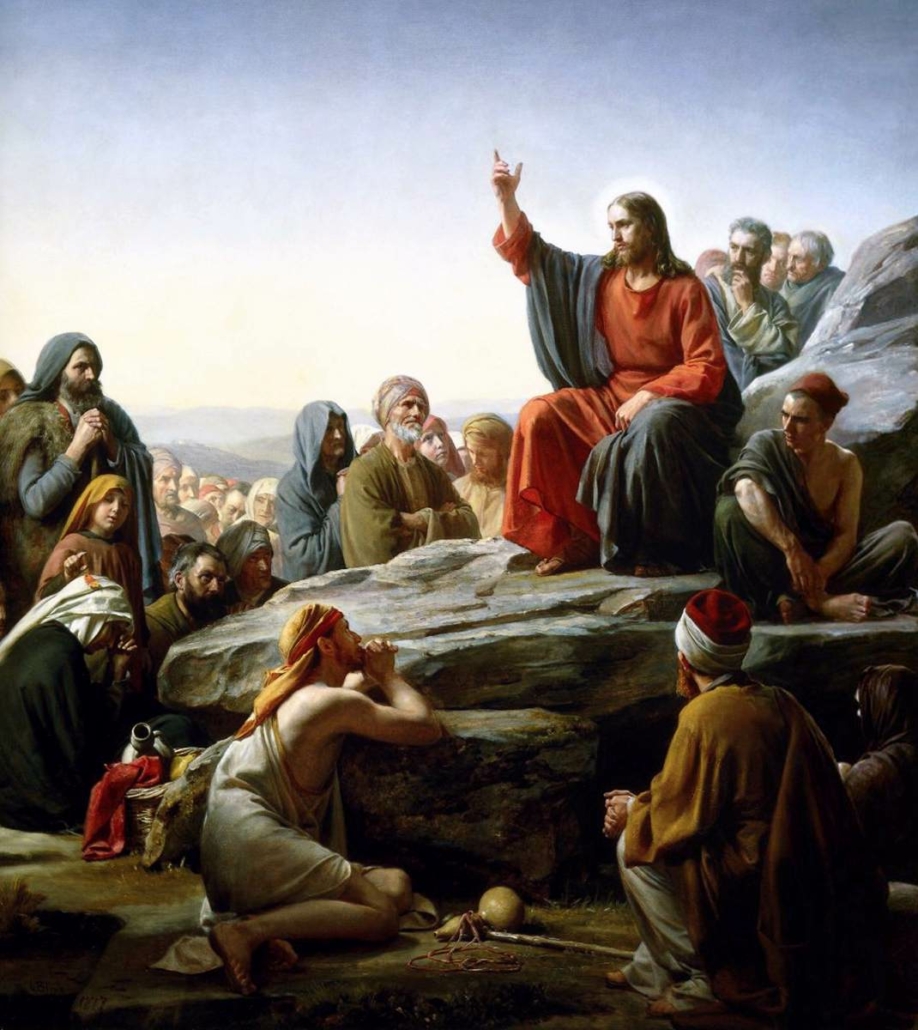
Christ Sermon on the Mount

Register for Any Course Here

For questions, please contact Isaak Abraham Isaak at

(859) 392-1529 or [email protected].

Jesus Christ