
Interests of workers to be protected by the State — part 4 of a 4-part series

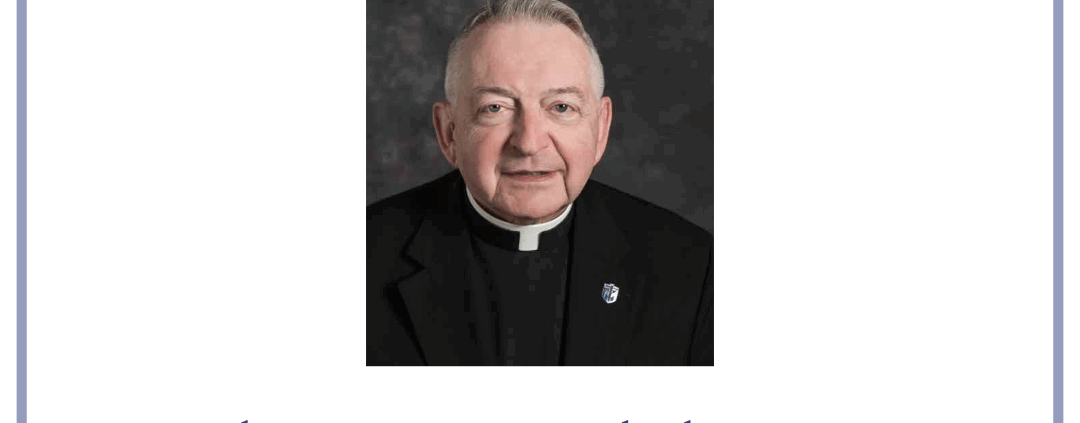
Rev. Msgr. Gerald E. Twaddell, D.Phil., KCHS

Contributor

Once Pope Leo XIII had laid out the duties and responsibilities of employers, employees and the State he emphasized the foundations of his teachings in the dignity of the human person, and the importance of the social dimension of the persons needing to be affirmed.

  1. The interests of the worker’s soul. Life on earth is not the final purpose for which a person is created. This life is only a means to attain truth and love goodness. It is in the soul, created in the image and likeness of God, that lies the sovereignty to rule and make use of creatures for the person’s advantage. All human beings are equal: there is no difference between rich and poor, ruler and ruled. “No man may with impunity outrage that human dignity which God Himself treats with great reverence, nor stand in the way of that higher life which is the preparation of the eternal life of heaven. Nay, more: no man has in this matter power over himself.” No person, then, has the right to consent to treatment incompatible with his human dignity. No one can yield his soul to servitude because what is at stake is not just human rights, but the sacred and inviolable rights of God. (§ 40)
  2. The obligation to refrain from work on Sundays and certain holy days is not about idleness, and less still about spending money, especially for mere indulgences. It is a time to be hallowed by religion.
  3. Rest together with religious observances allows the person to leave aside the tasks of daily life, opening a space to dwell on heavenly matters, and the worship due to God. (§ 41)
  4. The Interests of the material life of the person.

Employees need to be kept safe from the cruelty of greedy employers who would treat them as no more than tools for money-making. It is neither just nor human to grind workers down by excessive labor that stupefies the mind and wears out the body.

  1. Daily labor must not be extended longer than strength admits. How many and how long the periods of rest should be will depend on the nature and circumstances of time and place of the work. Consider, for instance, the particular demands of tasks such as mining or quarrying that call for shorter hours in proportion to the strain of the work and its effects on health. The season of the year also should be taken into account. Further what is suitable for a stronger person is not suitable for a weaker person. Particular care must be taken when the workers are children. The general rule for all is that workers ought to have leisure and rest proportionate to the wear and tear on their bodies and the rest needed to restore them.
  2. Contracts between employers and employees must allow proper rest for soul and body. Anything less is a violation of what is right and just, contravening the duties a person has to God and to self.
  3. Wages, according to liberal thought, are strictly a matter of free consent, so that as long as the employer pays what was agreed upon and the employee does the work specified there can be no other question of injustice. If one or other fails to fulfill their part of the contract, the public authority could intervene to correct the matter. Beyond that there can be no justification for action. (§43)

This notion, however, is incomplete because it leaves important considerations out of account. A person undertakes work to procure what is necessary for different activities of life, especially self-preservation. For that reason, labor has two aspects. First, it is personal since the energy used comes from the very person and is the exclusive property of the one who works. Such strength is given to the person by God. Secondly, work is necessary since without it the person cannot live, and natural law requires human beings to preserve their own life.

Even if these two aspects can be thought of separately, in reality they cannot be divided. Hence, it would be a crime for a worker to contract for a salary less than that needed to preserve life. (§ 44) Consequently, the natural law dictates that any free agreement must at minimum ensure that the wages will be sufficient to support a frugal, modest wage-earner. An agreement for anything less, extorted by force or fear by the employer, is unjust.

The same goes for excessive work hours or unhealthy work conditions, though these would be better addressed by societies or boards that will be seen shortly; but, if necessary, the State should be called upon for its sanction and protection. (§ 45) Extending this line of argument, natural law urges, since marriage is a natural right of every person, that wages should be sufficient for the worker to support a family and even to put aside some savings for the future. Laws should therefore favor ownership of property and encourage as many workers as possible to become owners. (§ 46)

Excellent outcomes can be expected if these provisions are enacted. First, property will become more evenly divided. Civil changes and revolutions have divided people into two classes, one holding power over the whole of labor, trade, and sources of supply because of its wealth, giving it also major influence over the government, the other made up of the needy, powerless majority, always at the mercy of efforts to launch an uprising. This can be avoided if working people have a realistic hope for a share in the land.

A second consequence would be greater abundance of the fruits of the earth since people would be more eager to work the land they own. A third benefit is that people would have a greater desire to remain in the country of their birth that assures them a decent and happy life. These advantages suppose that people’s means not be drained by excessive taxation. (§ 47)

  1. Associations and other organizations can also assist employees and employers in providing aid to those in distress. These include societies for mutual help, benevolent foundations created to provide for workers, their widows and children in case of some calamity, illness, or even death. (§ 46) Most important are workers’ unions. The artisans’ guilds of earlier times demonstrated the advantages that could be obtained from such association. In the present age, unions, adapted to the needs of more educated people, different habits and demands of daily life can supply similar benefits. It is desirable that they become more numerous and more efficient. (§ 49)

Scripture instructs us that: “A brother that is helped by a brother is like a strong city.” (Proverbs 18:19) This is the impulse that binds people together in civil society; it is also the motive that leads them to join in subordinate, but real, independent societies. (§ 50) Civil society exists for the common good, being concerned with the interests of all, and so is called a “public society.” But “private societies” have as their purpose plainly the advantage of their members, within, but not including all members of, the public society. As part of the commonwealth, they cannot be absolutely prohibited by the public authority.

The State must protect private societies, because to try to suppress or forbid their existence contradicts the very principle on which the existence of the State itself rests. (§ 51) Of course, if people join together to pursue unlawful purposes, the State may justly dissolve them, provided precautions are taken to avoid violating rights of persons by unreasonable regulations. “Laws only bind when they are in accordance with right reason, and, hence, with the eternal law of God.” (§ 52)

Private societies in the Church such as confraternities and religious orders should be independent of State control. However, in many places “State authorities have laid violent hands on these communities …have taken away their rights to corporate bodies and despoiled them of their property.” “Catholic societies, however peaceful and useful, are hampered in every way, whereas the utmost liberty is conceded to individuals whose purposes are at once hurtful to religion and dangerous to the commonwealth.” (§53)

Associations of workers are more numerous than in the past, but there is evidence that many are led secretly by persons whose principles are at odds with Christian beliefs. These organizers seek to command the whole field of labor and force Christians to choose between joining them or starving. In the face of such coercion, Christians must form their own associations and unite “to shake off courageously the yoke of so unrighteous and intolerable an oppression.” (§54)

Many Catholics have organized groups to better the conditions of families and individuals by infusing a spirit of equity in the mutual relations of employees and employers, to keep the precepts of duty and the Gospel before their eyes, to inculcate self-restraint, and to establish harmony among divergent interests and classes in the body politic. Some have promoted mutual action to assist people in finding suitable employment. Others have used their wealth to found organizations to create insurance societies for workers. “The State should watch over these societies of citizens banded together in accordance with their rights, but it should not thrust itself into their peculiar concerns and their organization.” (§ 55)

Such societies also have the right to have rules and structures best suited to their purposes. (§ 56) The most important purpose is the true betterment of the members, beginning by helping them fulfill the duties of religion and morality. (§ 57) Next, their organization should foster harmonious interactions, with the offices arranged with clear responsibilities so that no member should suffer any harm. Further, common funds must be administered with strict honesty. Careful consideration and explicit expression must be given to the mutual rights and duties of employers and employees, so that if anyone has a complaint the dispute may be settled according to the rules of the society. Another purpose that must be addressed is the provision of “a continuous supply of work at all times and seasons.” Finally, a fund should be established from which members may be helped in their needs, whether of accident, illness, old age, or distress. (§ 58)

Pope Leo XIII expressed his conviction that if people would obey these rules and regulations that all the prosperity of society would result because the experience of the transformations that came about from the earliest ages of the Church through the centuries put to rest the criticisms and complaints that originally were made against Christianity. (§ 59) If workers will form such associations and pursue policies that contribute to the common good, even people whose prejudices and greed lead them to object will finally be won over when they see that the workers prefer “right dealing to mere lucre, and the sacredness of duty to every other consideration.” (§ 60) The pope even sees in these associations and unions rooted in Christian principles a hope to bring back those who had given up on religion to support and defend them. These associations should offer them “a haven where they may securely find repose.” (§ 61)

The remainder of the encyclical urges the bishops to take up the task of announcing the principles, duties, rights, and interests laid out in its pages not only to the rulers of commonwealths, but also to employers and employees (§ 63) as the way to bring the power of Christian charity to bear in combating the evils of recent times as the “surest antidote against worldly pride and immoderate love of self.” (§ 64)

As we listen to Pope Leo XIV address the same issues about workers and all the connected topics that are presented in “Rerum Novarum” we will hear substantially the same ideas. These are as timely as they were in 1891, or when Benedict XV celebrated the 40th anniversary with “Quadragesimo Anno,” and Pope St. John Paul II with “Laborem Exercens,” in 1981, as well as the hundredth anniversary encyclical “Centesimus Annus” in 1991. We look forward to the contributions that Pope Leo XIV will make to the application of Catholic Social Teaching during his pontificate.
Duties and Responsibilities of a State— Part 3 of a 4-part series

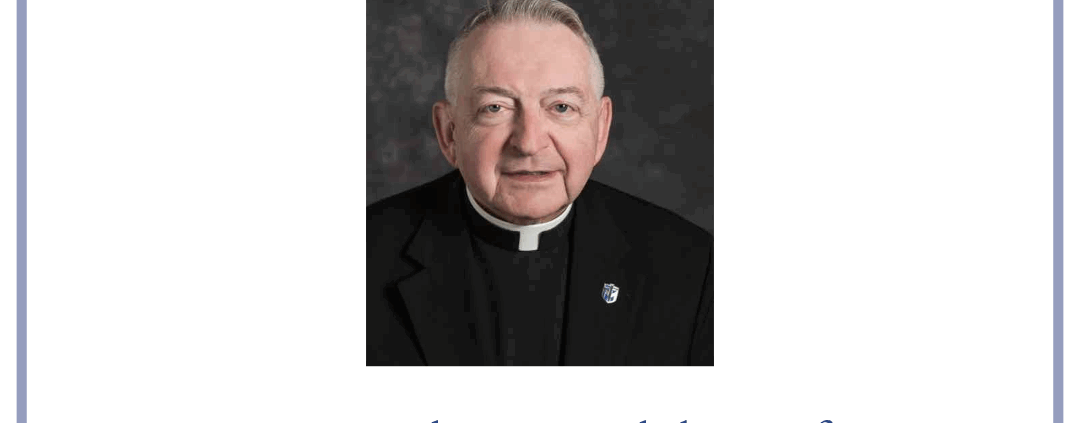
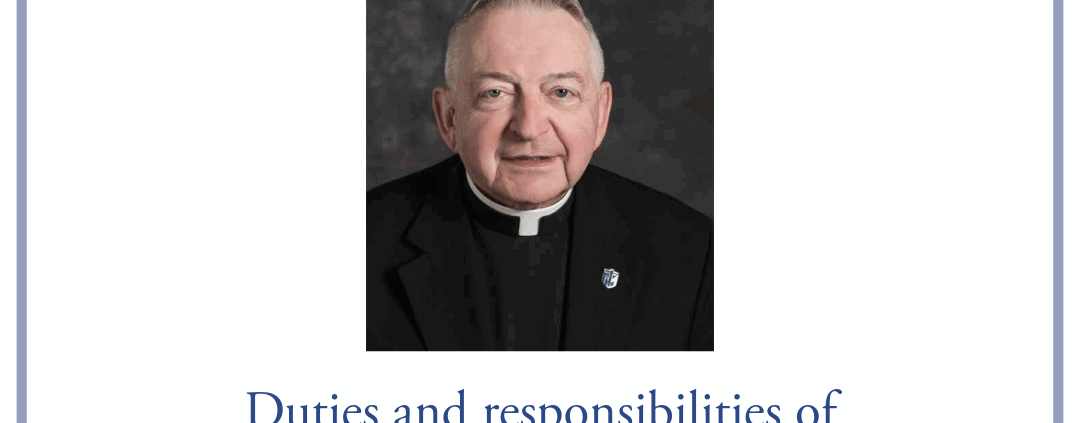
Rev. Msgr. Gerald E. Twaddell, D.Phil., KCHS

Contributor

After laying out the duties and responsibilities of employers and employees to one another, Pope Leo XIII shifted his attention to the proper role of the State in meeting the challenges he had identified at the beginning of “Rerum Novarum.”

First, the pope makes explicit just what kind of entity he is addressing. A State is a government whose institutions conform with right reason and natural law. Its first duty is to ensure that the laws, the institutions, the general character and administration of the commonwealth promote public well-being and private prosperity. A State thrives as a result of moral rule, well-regulated family life, respect for religion and justice, moderate and fair public taxes, progress in the arts and trades and abundant production of the land. In arranging everything in this way every class will benefit and the interests of the poor will be advanced.

In brief, the state must serve the common good. To the extent that the general laws protect the working class, the less need there will be for special means to address them. (§ 32)

A further consideration is that the State must further the interests of all. The working classes are as truly citizens as the rich, and naturally constitute the majority of the members of the commonwealth. Hence, “Among the many and grave duties of rulers who would do their best for the people, the first and chief is to act with strict justice — with that justice which is called distributive — toward each and every class alike.” (§ 33)

Though all citizens contribute to the common good, they do so in diverse ways: some govern, others defend the commonwealth, still others exercise a variety of trades and professions. But since the most important good that a society can possess is virtue, the body politic needs to “to see to the provision of those material and external helps ‘the use of which is necessary to virtuous action.’”

Such goods are principally the product of those whose labor allows States to grow rich. Justice therefore calls for the State to watch out for the interests of those who labor so that “they may find their life less hard and more endurable.” This will serve the advantage of the entire commonwealth. (§ 34)

The State must not subjugate either individuals or families in their freedom of action so long as these are consistent with the pursuit of the common good. The safety of the commonwealth is the central concern of the rulers, and never their own advantage. Their power to rule, after all, comes from God, whom they should imitate in exercising it, that is with a fatherly solicitude, guiding the whole and upholding all its members. (§ 35)

Consequently, should the general interest or some class suffer, the public authority must intervene for the good of the whole community as much as for the protection of those who are enduring some harm. When such troubles arise, the authorities must maintain peace and good order in a manner consistent with divine and natural law.

The pope listed and offered examples of a number of areas to attend to: the discipline of family life, duties of religion, exacting standards of personal and public morality, sacredness of justice, assurance that no one be harmed with impunity. To these he added the evils of employers unjustly burdening their employees or degrading them “with conditions repugnant to their dignity as human beings,” and putting health at risk by excessive labor, or by work unsuited to the worker’s age or sex. In all these matters, “there can be no question but that, within certain limits, it would be right to invoke the aid and authority of the law,” provided the law does not reach beyond what is necessary to remedy the evil. (§ 36)

Respect for Rights

The Public authority has a duty to prevent and to punish injury to the rights of every individual, and particularly those of the poor and badly off. The wealthy have resources to shield themselves from harm so that they have less need of assistance from the State. The poor, though, have no such resources and stand in need of State assistance. Wage earners, then, who belong to the mass of the needy should receive special care and protection from the government. (§ 37)

However, public authority has a duty to provide legal protection for private property, especially when passionate greed crosses the line of duty. For though it is just for all to strive to better their condition, “neither justice nor the common good allows any individual to seize upon that which belongs to another.” The vast majority of workers prefer to improve their lot by honest labor; nevertheless, there are many who are eager for revolution who would like to incite others to the violent takeover of lawfully owned property. The authority of the law must restrain such firebrands. (§ 38)

This is not to say that worker strikes are not justified by excessive hours of labor, or exceedingly hard work or insufficient wages. Such situations need to be prevented by “public remedial measures” because of the impact of strikes on both workers and employers, on trade and on the general public. “The laws should forestall and prevent such troubles from arising; they should lend their influence and authority to the removal in good time of the causes which lead to conflicts between employers and employed.” (§ 39)

The final article of this series will present Pope Leo XIII’s teachings on the implications of all these principles for the responsibility of the State to protect the interests of workers.

Duties and responsibilities of employees and employers— part 2 of a 4-part series

Rev. Msgr. Gerald E. Twaddell, D.Phil., KCHS

Contributor

Turning to the second of the concerns noted at the beginning of his encyclical “Rerum Novarum,” namely the changes in the relationship between employers and employees, Pope Leo XIII, first observes that another great mistake in his day is the assumption that the owning class and the working class are necessarily in conflict. In reality, “capital cannot do without labor, nor labor without capital.”

Mutual agreement between the two leads to “the beauty of good order, while perpetual conflict necessarily produces confusion and savage barbarity.” The most effective intermediary in disputes is the Church’s teaching on the duties of each side to the other, “especially the obligations of justice.” (§ 19)

In Section 20, Pope Leo XIII catalogs duties flowing from the obligations of justice.

Workers duties are the following:

  • to perform fully and faithfully the work equitably agreed upon;
  • never to harm the property, nor outrage the person of the employer;
  • never to resort to violence, riot or disorder in defending their cause;
  • never to rely on people with evil principles who mislead them with empty promises and foolish hopes of impressive results that lead only to “useless regrets and grievous loss.”

Employers are duty-bound to the following:

  • never to look down upon their workers as though they were in bondage;
  • always to respect the dignity of every person;
  • never “misuse workers as though they were things in the pursuit of gain,” because working for pay is honorable, not shameful, since it allows the person to earn a decent livelihood;
  • never shamefully and inhumanely to value workers solely for their physical powers;
  • keep in mind the good of the worker’s soul by seeing to it that workers
    • have time to attend to their religious duties,
    • are not exposed to corrupting influences,
    • not be led to neglect home and family,
    • not be led to squander their earnings;
  • never overwork employees beyond their strength;
  • never employ people in work unsuited to their sex or age;
  • most importantly, the employer’s “great and principal duty is to give everyone what is just.”

This last point leads to the condemnation of several unjust practices regarding the fair remuneration of workers, namely:

  • exercising pressure on the indigent and destitute for the sake of gain;
  • gathering one’s profit from the need of others;
  • defrauding anyone of the wages they are due;
  • cutting down the worker’s earnings by force, fraud, or usurious dealing.

Each of these injustices “is a great crime which cries to the avenging anger of Heaven … because the laboring man is, as a rule, weak and unprotected, and because his slender means should, in proportion to their scantiness, be accounted sacred.” (§ 20)

Beyond these demands of the natural law, the Holy Father reminds us that the Church proposes still higher precepts rooted in the hope for eternal life brought by our Savior. Every person is called to use the things of this world, however abundant or scarce, out of a motive of virtue and in pursuit of merit. (§ 21)

“Riches do not bring freedom from sorrow and are of no avail for eternal happiness, but rather are obstacles.” The pope cites St. Thomas Aquinas who teaches that, “Man should not consider his material possessions as his own, but as common to all, so as to share them without hesitation when others are in need. Whence the Apostle says (1 Timothy 6:17): ‘Command the rich of this world … to offer with no stint, to apportion largely.’” “It is a duty,” Pope Leo XIII proclaims, “not of justice (save in extreme cases), but of Christian charity” on which Christ will judge us. The person who has received an abundance of material goods or gifts of the mind from God’s bounty “has received them for the purpose of using them for the perfecting of his own nature, and at the same time, that he may employ them, as the steward of God’s providence, for the benefit of others.” (§22)

In contrast, those who lack the gifts of fortune learn from the Church “that in God’s sight poverty is no disgrace, and that there is nothing to be ashamed of in earning their bread by labor.” Christ, after all, “for our sakes became poor” (2 Cor 8:9) and labored much of His life as a carpenter. (§23) When we contemplate this divine Model, we see that “the true worth and nobility of man lies in his moral qualities, that is in virtue; that virtue is, moreover, the common inheritance of men, equally within the reach of high and low, rich and poor.”

When all people come to this realization, the pride of the well-to-do will be diminished and they will become generous to the less well-off, who in turn will moderate their desires. The separation and opposition between the two groups will tend to disappear in favor of friendly cooperation. (§24) The Church does her utmost to hand on these principles, relying on the tools given by Christ to reach people’s innermost hearts and consciences, to lead them to the love of God and their fellow human beings, to break down every barrier to virtue. (§ 26)

History displays evidence of such effects. For example, Christian institutions from the earliest centuries managed to renew civil society by the light of the Gospel message, lifting up and restoring life to the human race wherever it was proclaimed. Nothing so great had been known before. The only way society today can be healed of its class oppositions is by a return to Christian life and institutions that had been undermined and rejected in the name of “enlightenment.” (§ 27)

The work that the Church undertakes goes beyond the spiritual to address also the temporal and earthly conditions of workers. She is particularly concerned that the poor be helped to rise above poverty and wretchedness to achieve a better life. Christian morality “powerfully restrains the greed of possession and the thirst for pleasure — twin plagues.” (§ 28)

In addition, the Church from the time of the apostles established many means to offer relief from poverty, whether the voluntary sharing of goods seen in the Acts of the Apostles, the establishment of the diaconate, or the collections gathered by St. Paul. (§ 29) The pope lamented that in his day many sought “to blame and condemn the Church for such eminent charity,” wishing instead to have the State supply such relief. (§ 30) The effective way to achieve the goal of reducing the effects of poverty would be to obtain the cooperation of all human agencies to be of one mind with the Church and act together according to each’s capacity. Part of that effort would be to look into what role the State should play. (§ 31)

In the next article the duties and responsibilities of the State that Pope Leo XIII discerned will be examined.

What Pope Leo XIII had to say —Part1 of a 4-part series

Rev. Msgr. Gerald E. Twaddell, D.Phil., KCHS

Contributor

Since the election of Pope Leo XIV, we have heard many observations about his admiration for the teachings of Pope Leo XIII. Frequent comments have referred to the encyclical “Rerum Novarum” that brought Catholic Social Teaching (CST) into the spotlight in 1891. That was not really something new, since CST is simply the application of long-established moral principles to situations that develop in the relationships of people in their social interactions. Moral theology extends to more than just the choices of individual persons.

We should first recall the turmoil that marked the end of the 18th and the whole of the 19th centuries, the “new concerns” that the title of the encyclical refers to. Intellectually, there was the rise the Enlightenment which sought, in the name of progress and reason, to sweep aside all religion as nothing more than sentimental, superstitious  nonsense. It was an era of rising individualism and liberation from all forms of authority, whether of Church, or King, or any other.

Politically, Enlightenment ideals were embodied in the American Revolution, the French Revolution, the War of 1812, the various European revolutions in 1848,  the FrancoPrussian War, etc., all of which disrupted the stability of monarchies, introduced republics (condemned by Blessed Pope Pius IX) and wrenched the Papal States out of the control of the Catholic Church.

Economically, there was the rise of industrial capitalism which shifted the control of productive forces from traditional artisans and small family shopkeepers into the hands of wealthy individuals pursuing ever greater concentration of political and economic power. The Popes were dismayed, and did their best to dampen such destructive forces, and advance the alternative of the teachings of the Gospel to the people being trampled and oppressed in these circumstances. Pope Leo XIII had addressed several of the issues in a suite of documents. “Rerum Novarum” must be read against the backdrop of the many disturbing trends that surrounded the life of the Church in his  day. This is why it is important for people, Catholic or not, to know what he had to say. The purpose here is to get a sense of the teaching of Pope Leo XIII in just this one encyclical.

The pope’s concern was the condition of workers in a time marked by conflict brought about by the factors shifting the landscape. The first he lists is the expansion of industrial pursuits and scientific discoveries in the 19th century. Second were the changing relations between owners and workers. Third, he noted the enormous fortunes of a few and the utter poverty of the vast majority. Next were the increasing self reliance and mutual organizations among workers. Finally, the pope pointed to the “prevailing moral degeneracy.” (§ 1) Each of these factors receives attention in the encyclical.

In this first part of this series of articles, we will focus on how Pope Leo XIII presented the underlying problem.

Property and Society

In the first portion of the encyclical, the pope reflects extensively on the economic conditions that had emerged with the rise of industrialism in the 19th century.

Leo XIII wanted to bring the principles dictated by truth and justice to bear in confronting those taking advantage of these changes to pervert people’s judgment and stir up revolts. (§ 2) He saw a need to find a remedy quickly for “the misery and wretchedness pressing so unjustly on the majority of the working class.” (§ 3)

As a result of the elimination of ancient protections by public institutions and laws, “working men have been surrendered, isolated and helpless, to the hardheartedness of employers and the greed of unchecked competition.” In addition, usury, long condemned by the Church, was being practiced under new guises “by covetous and grasping men.” The pope’s judgment was that “a small number of very rich men have been able to lay upon the teeming masses of the laboring poor a yoke little better than that of slavery itself.” (§ 3) After this critique of the workings of industrial capitalism, Pope Leo XIII turns his attention to another morally unacceptable proposal.

One answer being put forward came from socialists who sought to eliminate private ownership of the means of production, seen as the root of the problem. The pope did not state specifically whose theory of socialism he had in mind. There were several, and not all agreed on every point. In any case, the false solution of eliminating all private property long ago introduced by Plato in his “Republic” would have had the effect of taking away from workers themselves what little they had.

Laborers have a right both to be paid for their efforts, and to use that pay as they see fit. The socialist plan to transfer people’s possessions to the community at large would deprive the laborer of all hope for improved living conditions. (§5) These practical problems call for a deeper consideration of the implications of human nature itself.

A distinctive feature of human beings, flowing from the capacity for rational thought, is the right of every person to possess property not just for immediate use as in other animals, but also to hold it on a stable basis to meet future needs. (§6) Reason links the future with the present, enabling humans to make choices about what might be advantageous at a later date. All this is grounded in humanity itself, so before any State ever comes into existence, possession of property already provides for the needs of the body. (§7)

The pope explains that the fact that God gives the earth for the use and enjoyment of the whole hu-man race can in no way exclude the owning of private property. (§8) For in giving the earth to all in general, “no part of it was assigned to anyone in particular,” thereby leaving the limits of private ownership to be worked out by people themselves. So private ownership “is in accordance with the law of nature.” (§9) An important means by which people come to own things is by their own labor. Thus, the pope asks, “Is it just that the fruit of a man’s own sweat and labor should be possessed by and enjoyed by anyone else?” (§10)

Civil laws affirm this provision. Given that such laws are just, the law of nature gives them their binding force, and the divine law against covetousness adds further sanction. (§11) These rights are also affected by the right of each person to choose a state of life, single or married, so that provision for whatever is necessary for the preservation and just freedom of the family is also a right. No state can hinder or control the life of the family. (§13)

Indeed, “if a family finds itself in exceeding distress, utterly deprived of the counsel of friends, and without any prospect of extricating itself, it is right that extreme necessity be met by public aid, since each family is a part of the commonwealth.” Likewise, when, within the family, mutual rights are not respected, the public authority must intervene to safeguard and strengthen those rights. Still, parental rights cannot be abolished or absorbed by the State as the socialists would have it. (§ 14) Since the result of applying the idea of communal holding of all goods would upset all relations among people, leaving them in a situation worse than slavery, the socialist “solution” must be rejected. (§15)

A true solution to the challenge of industrialism must be found by involving State leaders, employers of labor, the wealthy, and the working classes as well. But their efforts will fail if the Church is not permitted to contribute her services in endeavoring to uplift the working classes. (§16) The variety of capacities, skills, strength, etc. that people possess need to be recognized. Each person should be able to choose what best suits their own situation. (§17) In making such choices, people need to see the world as it truly is, with all its ills and troubles. It is a mistake to deceive oneself about some simplistic solution that will supposedly make them disappear. (§18)

In the next article in the series we will discover the mutual duties and responsibilities of employees and employers that Pope Leo XIII identified.