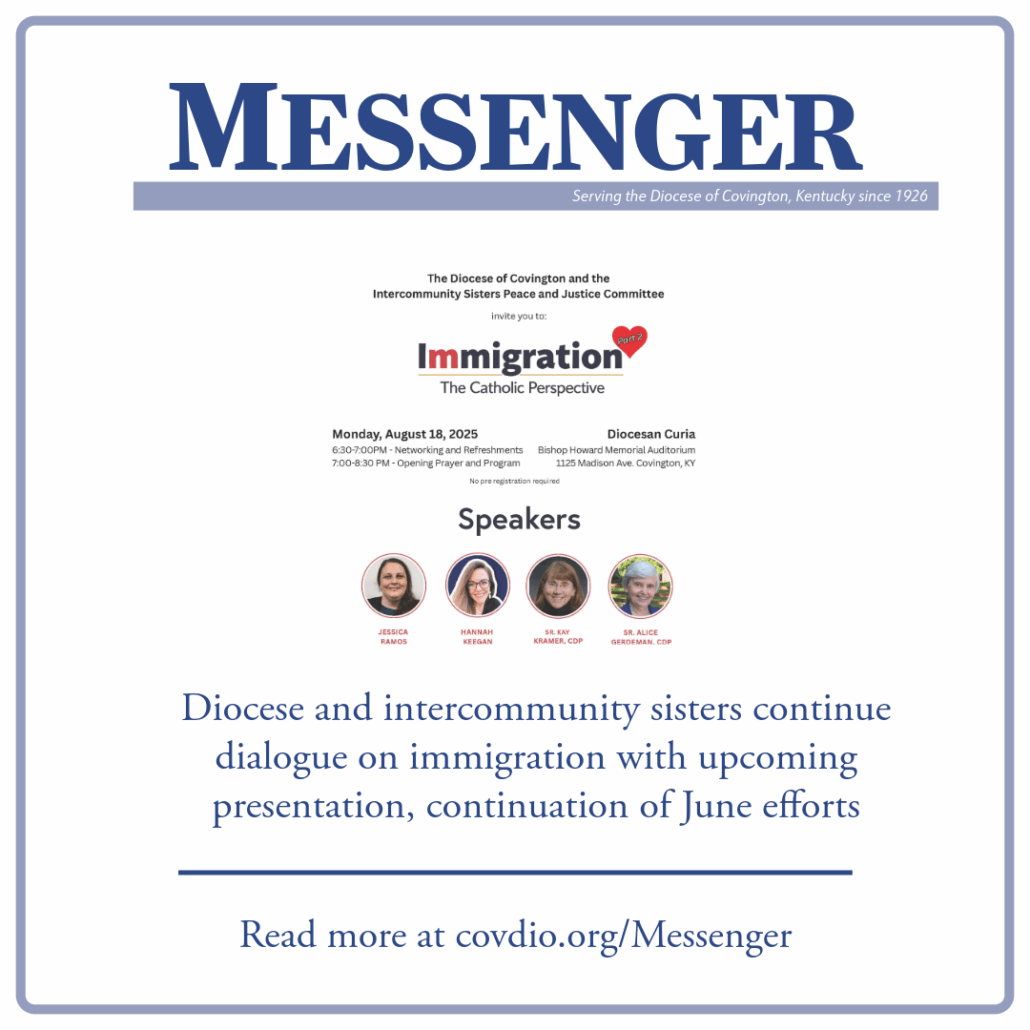
Diocese and intercommunity sisters continue dialogue on immigration with upcoming presentation, continuation of June efforts
Maura Bailey
Staff Writer
This past June, the Intercommunity Sisters Peace and Justice Committee, in a collaboration with the Diocese of Covington, held a presentation attended by near 200 participants on the topic of immigration — the Catholic perspective.
On August 18, the sisters aim to continue this dialogue with the second part of the immigration series, once again to be held in the diocesan Curia, Covington, from 6:30–8:30 p.m.
The August presentation will begin with a “deeper look at Catholic social teaching as it pertains to immigration,” said Divine Providence Sister Kay Kremer, one of the hosts and speakers of the event. “At the first session, Hannah Keegan,” of Thomas More University, “gave more of an overview of those parts of Catholic social teaching … but, this time, she’ll delve deeper into what it means specifically in regards to how we are called to treat migrants, and how we are called to live in contrast to what’s happened to migrants in the country right now.”
Immigration lawyer Jessica Ramos will also be participating in the upcoming presentation. She will be speaking on the “pathways to legal immigration and citizenship in our country,” said Sister Kay, “and how those things have drastically changed in the last six months.”
Attendees will also be supplied with a resource sheet of discussing immigration in the Catholic context, as well as local ways to help migrant populations.
“We want everyone who attends to feel welcome,” Sister Kay continued, “And we want this to be an opportunity for all of us to continue to learn about what the Church teaches about immigration.”
These conversations are important, she explained, as “people are really suffering right now,” Sister Kay said. “The majority of migrants are good, hard-working people who simply want to live their lives in a place where they’re safe and where they can provide for their families, and where their children have an opportunity for a good education. Their hopes and dreams for their lives are the same hopes and dreams that probably all of our ancestors had when they came to the United States.”