All Hallowtide triduum honors the Faithful Departed
Maura Baker
Staff Writer
When talking about the turning of fall and end of October, the holiday of Halloween often comes to mind. Carving pumpkins, ghost stories, bright costumes and candy are all associated with “All Hallow’s Eve” — just one of the three celebrations actually part of the Christian triduum known as “All Hallowtide.”
All Hallowtide is a season intended for both celebration and prayer, honoring all the faithful departed — both those in Heaven and in purgatory.
For many who grew up Catholic, having a day off school the day after Halloween was a welcome treat. November 1, the day following, is known as All Saints’ Day, or “All Hallow’s”— a solemnity in the Catholic Church. As All Saints’ Day falls on a Wednesday this year, it is a day of obligation.
The origin of All Saints’ Day comes from the 4th century, where early Christians would sporadically hold festivals and commemorations for all martyrs. Years later, during the 8th century, on Nov. 1, Pope Gregory III would dedicate an oratory in Old St. Peter’s Basilica to the relics of “all saints.” This date would eventually become the celebration of all saints and martyrs that we celebrate today, as well as a day of obligation throughout the Catholic Church. However, in 2025, as the holiday falls on a Saturday — the day is not considered a day of obligation for this year.
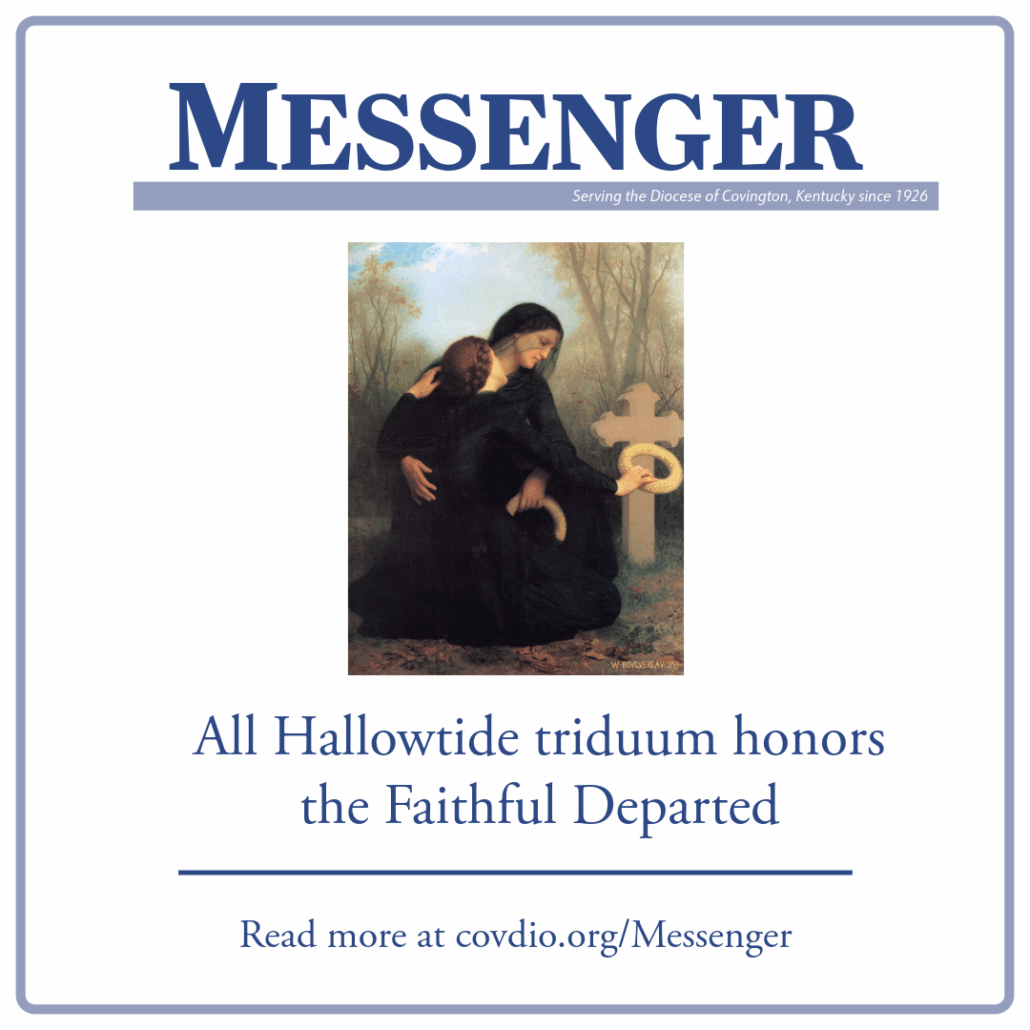
Similarly, the third day of the All Hallowtide triduum occurs on Nov. 2, a day of prayer and remembrance known as “All Souls’ Day,” or “Day of the Dead,” in some cultures. Prior to the establishment of this official date, Catholics would celebrate All Souls’ Day on various dates during the Easter season. These celebrations were much similar to how they’re celebrated today, mostly by remembering and praying for the deceased, specifically for souls in purgatory, and visiting cemeteries.
The Nov. 2 date that All Souls’ is celebrated on today was established during the 10th century by St. Abbot Odilo of Cluny, who originally bid members of his community to pray for the relief of souls in purgatory. This date would soon be adopted throughout the Catholic Church and persists to this day.

