Twenty-Fifth Sunday of Ordinary Time

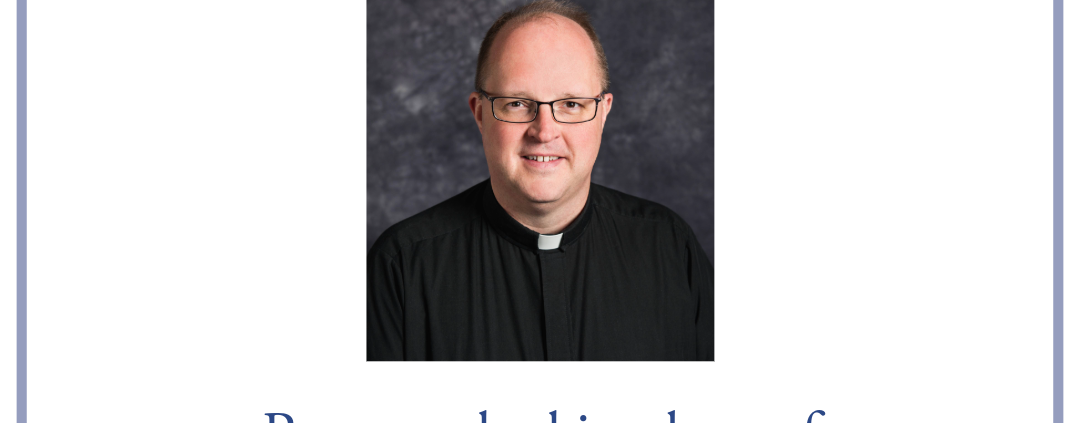
Father Stephen Bankemper

Guest

For the last few weeks, we have been making our way through a section of Luke that contains many, as some describe them, “hard sayings” of Jesus. They have been hard, not to understand, but to do — take the lowest place, give to those who cannot repay, let no one and no thing be more important to us than Jesus. The hard saying we encounter this weekend is a little of both — it can be hard at first to understand, and then also hard to do.

“And the master commended that dishonest steward for acting prudently.” What does this mean? Can a person act dishonestly and prudently at the same time? What is Jesus trying to teach with this parable?

Dr. Brant Pitre, drawing on St. Augustine, explains the parable by highlighting two aspects of the steward’s actions: his foresight (securing a place for himself when his time as steward ends) and his resourcefulness.

The key to understanding Jesus is this sentence: “For the children of this world are more prudent in dealing with their own generation than are the children of light.” Jesus is not saying that the children of light — his disciples — should be dishonest as the children of this world, but that we should be as intelligent and resourceful in our preparations for eternity as they are in living their lives now.

As Dr. Pitre puts it, “What Jesus is saying is that if people in this world go to extreme measures to think about providing for themselves for the future, even so much as to steal, then how much more should Christians — disciples of Jesus — go to extreme measures to prepare for and to ensure for our … eternal life.” (Pitre podcast)

That one day we will leave this Earth and live somewhere else for eternity is surprisingly hard for us to remember; after all, we experience people dying all the time. We focus so much on our earthly lives that we can forget or ignore reality. Even when they remember, however, many people in our modern society make an even worse mistake — they assume that everyone spends eternity with God, that there is no need to prepare for it in this life. Jesus’ parable is a reminder of these two important truths: that there is life after our time on Earth, and that we need to prepare for it.

How should we prepare? Pitre connects the steward’s actions in the parable with a line from a commentary by St. Ephrem: “Buy for yourselves, O sons of Adam, those things which do not pass away, by means of those transitory things which are not yours!”

Just as the steward uses money which is not his (change your promissory note from 100 measures of olive oil to 50) to buy a secure future for himself, so should we use the earthly money that does not belong to us to secure our heavenly future.

What money do we have that does not belong to us? One of the principles of Catholic social teaching is called the universal destination of goods. After we have supplied our legitimate needs with our money, the Church understands that we have a moral obligation to use our excess, at least in part, to care for others in need. “And the multitudes asked him [John the Baptist], ‘What then shall we do?’ And he answered them, ‘He who has two coats, let him share with him who has none; and he who has food, let him do likewise.’”

The word Scripture uses for this practice is almsgiving. In the Bible, alms refer to money — any material goods, really — given to the poor. Almsgiving is different from tithing. Tithing is 10 percent — the first and best — of one’s goods returned to God (it belonged to God by virtue of the fact that all we have comes from God) by prescription of the law. Almsgiving is a practice certainly encouraged in Scripture — some say implicitly mandated — but was money given to other human beings more out of the moral obligation of charity, mercy, or compassion.

We cannot literally buy ourselves into heaven — it is unlikely that St. Ephrem meant that — but almsgiving is a practice that can free us from a spiritually unhealthy attachment to our material goods (“Anyone of you who does not renounce all his possessions cannot be my disciple.” Luke 14:33), increase the virtue of charity in us, and help us to lay up for ourselves “treasure in heaven,” (Matt 6:20)

St. Augustine preached that the steward was “insuring himself for a life that was going to end.” (Sermon 359a, cited by Pitre) Then he asks the question, “Would you not insure yourself for eternal life?” Will we?

Father Stephen Bankemper is pastor, St. Catherine of Siena Parish, Ft. Thomas, Ky.

Exaltation of the Cross

Father Michael Elmlinger

Guest

This Sunday is a rather unique Sunday, because instead of celebrating the Twenty-Fourth Sunday in Ordinary Time, we celebrate a Feast that happens to fall on Sunday — the Exaltation of the Cross, also known as the Triumph of the Holy Cross.

Now, crucifixion in the ancient world, especially the Roman Empire, was considered to be the most brutal form of torture, reserved for the worst criminals. Not only that, it was a very public execution, a sign to all in the empire of what happens when you rebel against Caesar. “Stay in line, or you will suffer this same torture.” Not only is it probably the most painful way to be executed, but it was also a total humiliation. The empire would use crucifixion to make an example of you.

When we consider this, why is it that we hold the Cross in such high regard as Catholics? What is it about the Cross that drove St. Helena to search for it? Why is it that this ancient torture device is considered to be so central to Christianity? The reason is because by his Crucifixion and Resurrection, our Lord, Jesus Christ, has turned what was originally our greatest defeat into the greatest victory ever known in history.

Our Gospel for this Sunday is the famous John 3:16, “For God so loved the world that he gave his only Son, so that everyone who believes in him might not perish but might have eternal life.” John delivers this line in the context of Jesus’ discourse to Nicodemus in the night, where he tells Nicodemus, “Just as Moses lifted up the serpent in the desert, so must the Son of Man be lifted up.” (3:14)

Indeed, the very mission of Jesus Christ was that he would come into the world to give the gift of eternal life to those who would believe in him and follow him. However, the means by which he would accomplish this wondrous act would be through a means that Nicodemus and all of Jesus’ disciples would not expect — the Cross, the very means of execution reserved for the worst of the worst. In fact, St. Thomas Aquinas teaches in his Summa Theologiae, “His body was endowed with a most perfect constitution” (Third Part, Question 6), meaning the pain that he endured would likely have been magnified compared to how we may experience it. But what drives Jesus on towards Calvary? The very love that God — Father, Son and Holy Spirit, has for humanity. He loves humanity so much that he is willing to send his son to endure this awful torture as a means of reconciling the world to himself.

The truth is God could have chosen another means to reconcile the human race; it would have been completely within his power. But this is the way that he chose — the Way of the Cross. He chose to empty himself, “taking the form of a slave, coming in human likeness… becoming obedient to death, even death on a cross.” (Phil 2:7-8)

He chose to endure the most brutal means of execution ever known, and what drove him? His love for each and every single one of us. Indeed, by going through this crucifixion, Jesus takes what would have been our greatest defeat — our Savior being brutally murdered — into the greatest victory, victory over sin and death. It is by his Crucifixion that he becomes a sin offering for each and every one of us, where he bears our sins and offers them to the Father so that we may be forgiven entirely.

This is a love that we cannot earn. This is a love that he freely gives to us, a love that drove him to Calvary, a love that cries out to us, “I thirst.” (Jn 19:28) Indeed, he truly thirsts for each and every one of us to accept his love and to use him as a bridge to the Father.

This love is truly the triumph of the Cross. “We adore You, O Christ, and we praise You, because by your Cross, You have redeemed the world!”

Father Michael Elmlinger is a priest of the Diocese of Covington, Ky. Father Elmlinger is currently studying Canon Law at the University of St. Paul, Ottawa, Canada.

Twenty-third Sunday of Ordinary Time

Father Joshua Whitfield

Guest

A sabbath dinner, Jesus is at the home of a Pharisee.

Jesus heals a man, a scandalous miracle on the sabbath. He justifies the act by saying that of course he should’ve healed the man, that anyone would do the same for his son or even for cattle. What’s strange or wrong, he asks, about this wondrous work? He leaves them speechless (Lk 14:1-6). The miracle, anyway, was meant to give way to talk about the kingdom, which is basically what the rest of Luke 14 is about.

Jesus first tells a parable about humility, about presumption. Remember that he’s talking to Pharisees, to people assuming they were at the front of the line, exclusively elect. “For everyone who exalts himself will be humbled, and he who humbles himself will be exalted” (Lk 14:11). “But when you give a feast, invite the poor, the maimed, the blind” (Lk 14:13).

He’s teaching not just a moral lesson here but also a theological one, an eschatological lesson.

Earlier in Luke, his Blessed Mother sings this truth, about how God “has put down the mighty from their thrones, and exalted those of low degree” (Lk 1:52). Here, Jesus makes it dinner conversation; at table, the Lord it seems can’t help but teach.

Next comes the parable of the “great banquet.” It is a story about the kingdom of God, about how “many” are invited. Yet many make excuses. “I have bought a field, and I must go out and see it.” “I have married a wife, and therefore I cannot come.” The excuses made are worldly, involving possessions or the flesh. That’s why the master in the story says, “Go out to the highways and hedges.” He means to invite anyone free enough to come.

Again, remember that he’s talking to people presuming that simply by being who they are guaranteed them a place in the kingdom, to people who may have grown too accustomed to rely on notions of status or success or ethnicity or election, believing such things by themselves merited the kingdom of God. But that presumption is precisely the problem; awkwardly at a Pharisee’s dinner table, that’s precisely what these stories are getting at, that such presumption is not a sure bet.

And then, in this Sunday’s reading, Jesus repeats the lesson he’s been teaching for several chapters (Lk 14:25-33). He is trying to pry his disciples and would-be followers from relying on everything they are normally accustomed to rely on. Religious identity and status? Stop. Possessions? Definitely stop. Family status? Stop relying even on that. Putting it in the starkest terms possible, talking about “hating” even family members, what Jesus is calling his disciples and potential disciples to accept is that they are to renounce every instance of earthly reliance for the sake of following him.

Jesus is not ultimately saying his disciples should erase or ignore all family bonds, but that they should be decisively subordinated to their following Jesus. He is calling his disciples to consider a truly radical reordering of their lives. Which is why Jesus suggests his would-be disciples think about it a little, that they “count the cost” (Lk 14:28). Because there really is no such thing as a part-time disciple. Being a Christian can’t be a side gig. Being a fake Christian can, but not a real one.

The questions, therefore, which these stories and this Sunday’s reading bring to the fore are questions about false reliance and presumption. Do we rely solely on ourselves and on our wealth, chasing after the security we think money or worldly success offers? That’s as much a problem today, and an eternal danger, as it was then; we should beg for the gift of faith.

Or do we think our religious status affords us a guaranteed ticket to the kingdom? Congratulations, you were baptized a Catholic and went to Catholic school, but do you know the Lord? Just outside the doors of the heavenly kingdom, will the Lord say he knows you on that day? “Not everyone who says to me, ‘Lord, Lord,’ shall enter the kingdom of heaven,” Jesus says (Mt 7:21). You see what’s at stake here?

When reading the Gospels, I always ask myself if I can identify not just with the saint but also with the sinner in the story, or the ignorant or the villain; often I can. It’s always a sobering but ultimately helpful spiritual exercise. Would I have been an offended Pharisee were I there listening to this radical rabbi tell his stories? Would I have been upset by Jesus’s stories, so pointed that they seemed to target me?

I’ll be honest, I think in many ways I would have been shocked, hurt a little or maybe a lot. But maybe that’s the point. Maybe that’s the beginning of my redemption, seeing where I need to repent.

Father Joshua J. Whitfield is pastor of St. Rita Catholic Community in Dallas and author of “The Crisis of Bad Preaching” and other books.

Twenty-second Sunday of Ordinary Time

Staff Report

The Gospel passage for today presents us with two very important lessons which Jesus taught upon attending a dinner at the house of a leader of the Pharisees.

First, Jesus observed how the guests were vying for the places of honor at the table, the places that would have been reserved for the special guests of honor or at least for the more important among them. It gives Jesus the opportunity to present a little lesson on humility.

Humility is an often misunderstood virtue. Sometimes humility is perceived as an opportunity to degrade ourselves, to deny the gifts and talents the Lord has given us, to make ourselves less than we are. This is a negative perception of this virtue, and it is far from the truth. After all, the Lord created us, He gave us life. All that we have and all that we are, the sum total of our gifts, our achievements, our talents — all these come from God. Ah, and there it is! Humility is not denying who or what we are but realizing that all these gifts come from God.

The pharisees in Jesus’ time were very conscious of the law, of every jot and tittle of the law. They prided themselves (there’s that word — the antithesis of humility — pride) on the fact that they not only knew every aspect of the law but that they scrupulously observed it. Unfortunately, they believed — or at least their actions lead us to believe that they believed — that this justified them. They didn’t need any help from anyone, including the Lord. They were self-made. They deserved the best place at table. They deserved to be held in high esteem because they were better than anyone and everyone else — or so they thought.

They exalted themselves — and what was the response of Jesus to that: “. . . all who exalt themselves will be humbled and those who humble themselves will be exalted.” (Luke 14:11) The lesson: acknowledge that every good gift we have comes from the Lord. We do not need to degrade ourselves, to deny our gifts, our talents — only to realize from whom they come and give God the glory! It is the Lord who saves us, the Lord who justifies us.

Second, Jesus gives his host a little lesson on who ought to be recipients of his generosity. Simply put, don’t invite those or give to those from whom you expect something in return. Give generously to those who cannot return the favor. Give from the heart not looking for or expecting something in return. Don’t give to be recognized or honored. Give because God has given to you. Give as God gives. Share your blessings with others.

Two very practical but important lessons for us. May the Lord give us the grace and fortitude to put them into practice.

Most Rev. Roger J. Foys, D.D. is Bishop Emeritus of the Diocese of Covington, Ky

Twenty-first Sunday of Ordinary Time

Father Phillip DeVous

Contributor

“Lord, will only a few people be saved?” This, surely, is one of the most important existential questions raised in the Gospel. It is the question that everyone who follows Christ, or who would follow Christ asks, albeit in a more personal way: will I be saved? Are those I love to be saved? These are the hard, searching questions we are to ask and to consider if we truly desire to follow Jesus Christ.

There is a too frequent tendency in contemporary Church life to demur and deflect on the hard questions, especially if we sense the answer might be radically at odds with the consensus of the unbelieving world. As the philosopher, Walter Kaufmann, provocatively states it, “the present age is the age of Judas … To be sure, it is not literally with a kiss that Christ is betrayed in the present age: today one betrays with an interpretation.”

Surely the question of how many people will be saved, and the related question of whether I will be saved, is a question that tempts us to conjure congenial interpretations that would wave away the question’s seriousness. The good news is the word of God is made for our heart, and our heart is made for the Word of God. Consequently, under the tutelage of the Holy Spirit we can rise to occasion of both contemplating a deep question and living with its answer- requirements for the following Jesus.

First and foremost, we must understand that God the Father “has blessed us in Christ with every spiritual blessing in the heavenly places”(Eph 1:2). These spiritual blessing are the Holy Sacraments and the Church, which is the grace of the Incarnation of Christ extended throughout history until the Second Coming and final judgment. So, we must not fear that sufficient grace and truth for salvation is lacking for salvation.

Our Blessed Lord suggests to us that what might be lacking is our will to acknowledge, accept and engage the graces that are revealed and on offer when he teaches, “strive to enter through the narrow gate, for many, I tell you, will attempt to enter but will not be strong enough.” Of course, salvation depends first and foremost on God’s grace. Once the grace has been given then surely our cooperation, conversion and obedience to the grace and truth that has been given is required. We know, even as we struggle, we must not be after as we were before such grace is given. So much “interpretation” in the air today tempts us to remain the same.

The Lord Jesus is laying out for us the difficulties of the spiritual life necessary to correspond to the grace of salvation. Further, he seems to be indicating that many will not want to take it up precisely because of the hardship it entails. I cannot help but think Jesus is referencing the “Two Ways” teaching of Deuteronomy: “See, I have set before you this day life and good, death and evil.” (Deut 30: 15). Jesus envisions the ease with which we pass through the main gates of worldly ways, living according to what’s egotistic, popular, pleasurable, socially accepted and necessary for material advancement in world.

The few, who have seen and heard the Lord, who have encountered his grace and truth, who wish to live according to “life and good” must exert greater effort to pass through the narrow gate of holiness and Godly virtue. This narrow gate, which gives one access to God is none other than Jesus himself. We pass to and through him to the Trinitarian life and eternal existence of Divine Love through receiving the Holy Sacraments and the Word of God with faith and obedience.

This is why we pray in the opening collect of the Holy Mass that our minds might be united in a “single purpose”, so that we might love what God commands and, most significantly, desire what God promises. We will not pursue the path through the narrow gate, which is the imitation of Jesus Christ, if we do not desire the grace and truth that has been revealed and gifted to us. If we do not desire it, will be tempted to interpret and reduce the Catholic faith to therapeutic bromides; to deploy compassion as a solvent of the truth, not its servant; and we will end up with a mush of nice, but not the utter fullness and holiness of God, which is our dignity, destiny and fulfillment as human persons.

Father Phillip W. DeVous is the pastor of St. Charles, Flemingsburg and St. Rose of Lima, May’s Lick.

Twentieth Sunday in Ordinary Time

Father Stephen Bankemper

Contributor

We have from Scripture many images of God that are comforting — Jesus as the Good Shepherd (John, chapter 10), who leads us safely through death and darkness (Psalm 23); Jesus, come not as judge but savior (the famous John 3:17); and many more. There are also many passages in Scripture that show a different side, so to speak, of God, with which we are not so comfortable, for example, God who destroys the wicked (Psalms 101 and 92), raining down brimstone and fire upon Sodom and Gomorrah (Genesis 19). The image we hear in the Gospel for this weekend — the image of fire — is hard to put in one or the other category, but it is worthwhile to contemplate both its “positive” and “negative” aspects.

“I have come to set the earth on fire,” Jesus says to his disciples, “and how I wish it were already blazing!” What is this fire our Lord desired to set?

In his book God and the World, Joseph Ratzinger, Pope Benedict XVI, wrote, “When Jesus talks about fire, he means in the first place his own Passion, which was a Passion of love and was therefore a fire; the new burning bush, which burns and is not consumed . . .” (p. 222) This is a fire with which we can feel comfortable, the fire of God’s love that saves and frees us. And yet, it is a fire, as Benedict continues, “that is to be handed on. Jesus does not come to make us comfortable; rather he sets fire to the earth; he brings the great living fire of divine love, which is what the Holy Spirit is, a fire that burns.” (ibid.)

This is a fire that, as Jesus says in today’s Gospel, brings, not peace but division. This is a fire that makes us uncomfortable because it divides, not just “three against two and two against three,” but even divides us from ourselves. When we accept God as our God, we allow into ourselves and our lives a “consuming fire,” (Hebrews 12:29) a “devouring fire, a jealous God,” (Deuteronomy 4:24), a God who desires all of us, who wants to be our first love (“You shall love the Lord your God with all your heart, with all your soul, with all your strength . . . ”) a God who consumes anything in us that is not of God, because in his presence no evil can abide. Do we want this fire?

We tend to think and talk of heaven, hell, and purgatory as three different “places,” but in the last few years I have found myself thinking of them as one place: the presence of God. (I am not claiming this to be Church teaching; it is only an idea, an image.) God, who is all Love, burns eternally with this love. Those who resolutely refuse to let themselves be changed by this love and cling to their sin and selfishness and other loves, are only made miserable by this flaming love, and are thus in eternal hell. Those who desire to be transformed but struggle to abandon themselves to love, who still hold on to some of their own will and other loves, experience God’s love and presence as consuming flames, as purgatory, until they are able to let go of all in themselves that is not God. But those who have given themselves over to God, seeking only His will, and who have let themselves be purified and love God with all their hearts, souls, and strength, rejoice in the Fire, because they themselves are on fire, burning joyfully with God, and are, as Benedict puts it, made “bright and pure and free and grand.”

Many of the saints not only knew about this consuming and purifying fire but experienced it and desired it. Read, for example, St. Thérèse of Lisieux’s experience of God’s fire of love. In her Act of Oblation to Merciful Love she expresses her desire for this love, even as she knows it will destroy her. It is telling that she uses the word “martyr” in her prayer, and “holocaust” — not “sacrifice”: in a sacrifice, part of the animal was consumed by fire, while as a holocaust the entire animal was consumed. The following is a short excerpt:

“In order to live in one single act of perfect love, I offer myself as a victim of Holocaust to your merciful love, asking you to consume me incessantly, allowing the waves of infinite tenderness shut up within You to over- flow into my soul, and that thus I may become a martyr of Your Love, O my God!”

Another saint worth consulting in this context is St. Gemma Galgani, a 20th-century Italian mystic, who described her heart as “all on fire with the love of Jesus.” In a letter to her spiritual director, St. Gemma describes her experience of God’s love as an actual physical burning: “For the last eight days I have felt something mysterious in the area of my heart that I cannot understand. . . this fire has increased, oh so much, as to be almost unbearable. I should need ice to put it out, and it hinders my eating and sleeping. It is a mysterious fire that comes from within, then goes to the outside. It is, however, a fire that does not torment me, rather it delights me, but it also exhausts and consumes me . . . Great God, how I love You! Oh, how I love You!”

Her spiritual director related that “When I questioned her about it, Gemma herself had to acknowledge that the suffering that she felt from this mysterious fire, although it was a joy to her, was really very painful. She said to me: ‘In order to get some idea of it, imagine a red-hot iron, kept constantly heated in a furnace, has been placed into the very center of this poor heart. Thus I feel myself burning’. And yet she would not have exchanged this excruciating torture for all the delights of the world. For while she thus suffered in her body, the sweetness it caused in the depths of her soul was truly beyond all description. Thus in ecstasy she exclaimed, “Come then, Oh Jesus! Your heart is a flame and you wish mine to be turned into a flame as well … Jesus, I feel I must die when you are throbbing so in my heart.”

Jesus expressed the desire that the fire of his Passion and love was already blazing. It will blaze if we surrender to His love and allow ourselves to burn  with it. One of the invocations in the chaplet of St. Michael is, “By the intercession of St. Michael and the celestial choir of Seraphim, may the Lord make us worthy to burn with the fire of perfect charity.” May we be willing to let that love consume us, so that we may spread that fire to others.

Father Stephen Bankemper is pastor, St. Catherine of Siena Parish, Ft. Thomas, Ky.

Nineteenth Sunday in Ordinary Time

Father Joshua Whitfield

Contributor

Last Sunday’s Gospel reading and this Sunday’s Gospel reading are really one reading. You should read them together. The teaching Jesus offers is layered and rich and radical. He is trying to liberate his disciples, liberate us. You would do well to dive deep here to hear what Jesus has to say. Chances are it will make you uncomfortable. Chances are it will be good for you, especially eternally.

Jesus has been preaching against what causes fear, about what we should really fear instead. We shouldn’t fear what can kill the body, for instance, but instead fear him who can cast the soul into hell (Lk 12:5). We shouldn’t worry about things like inheritance, money, food or possessions, for “your Father knows that you need them” (Lk 12:30).

Jesus is not telling his disciples to shun possessions or money or food completely; he is not saying that each Christian should become a beggar like St. Francis. Rather, he is talking about the proper perspective believers should have and how such perspective should order their lives. That is, unlike the birds of the air or the lilies of the field, human beings have an eternal destiny to account for and prepare for.

What Jesus is trying to do is to get his listeners to focus on one treasure rather than another. That is, he is saying that when we fail to account for eternity, for the kingdom of God, our fear will too likely cause us to store up treasures for ourselves to hedge against the future. Which is plainly foolish, Jesus says; for once you’re dead, he asks, “the things you have prepared, whose will they be” (Lk 12:20-21)?

Instead, Jesus tells his disciples to focus on “a treasure in the heavens that does not fail” (Lk 12:33). And you do that, Jesus says, by selling your possessions and giving alms (Lk 12:32).

Here Jesus is simply underlining good rabbinic wisdom, wisdom almost completely forgotten today. It is the wisdom found in Proverbs 10:2 and 11:4, the idea that wealth “does not profit in the day of wrath” but that only “almsgiving delivers from death.” The notion of a treasury in heaven is thoroughly Jewish; Jesus didn’t pull it out of thin air. “Store up almsgiving in your treasury, and it will rescue you from all affliction” (Sir 29:12).

This, simply and radically, is what Jesus teaches, but with an emphasis and urgency befitting the advent of the Messiah: “it is your Father’s good pleasure to give you the kingdom,” he says (Lk 12:32). These words have the same punch to them as those he spoke at Nazareth at the beginning of his ministry, that “Today this scripture has been fulfilled in your hearing” (Lk 4:21).

What Jesus is saying is that his disciples are to enact the ethics of the kingdom now, to sell possessions now and to give alms now. “I tell you, make friends for yourselves by means of unrighteous mammon,” Jesus will later say, “so that when it fails they may receive you into the eternal habitations” (Lk 16:9).

This is not something to put off, Jesus clearly teaches, for that’s the warning of the parable of the rich fool (Lk 12:20). Disciples are meant to begin heaven now not simply by believing in Jesus but also by living as he taught us to live as sharers with one another and as friends with the poor.

Now we may understand better the strange ethics found in Acts, why the first Christians “had all things in common,” selling their possessions and distributing goods “as any had need” (Acts 2:44-45). Now we know why Luke said of that community, “There was not any one needy among them” (Acts 4:34).

These first Christians were simply being faithful to Jesus’ rabbinic teaching made real and contemporary by his continued Messianic presence in the community, the same Messianic presence we believe is present in the church today. The kingdom has been given in Christ today too, so what are we waiting for? Why aren’t we sharing our possessions now?

Which is the question, I said at the beginning, would make you uncomfortable. But I also said it may just save you, eternally at least. And please know how serious the question is: Why aren’t you sharing your possessions now?

Please don’t make the mistake of thinking this is not a question immediately connected to your salvation. Please don’t think you can get into heaven while ignoring this question, passing it off with excuse after excuse.

The whole wisdom of the Scripture, the clear teaching of Jesus, can’t be set aside. The matter is urgent. As St. Basil the Great preached once, “Think reasonably about that which is and that which shall come, and what you might lose through shameful profit.”

Really, I can’t say anything more chilling or truer than that. Just that maybe it harrows the soul to think of so many Christians who ignore such teaching, so weighed down by their possessions, unaware how eternally weighed down they really are.

Father Joshua J. Whitfield is pastor of St. Rita Catholic Community in Dallas.

Seventeenth Sunday of Ordinary Time, Go and Glorify

Father Phillip W. DeVous

Contributor

For many years now I have thought the main reason people drift away from the practice of the faith is due to the total fragmentation of our attention and our capacity to pay attention to God. Attention is a sacred act for the simple reason that we become that to which we pay attention.

Because of our frayed and fractured attention spans, we have become less capable of paying attention to anything important, especially God. At a fundamental level, faith may be understood, at a minimum, as the attention we pay to the God who has revealed himself to us in Jesus Christ.

How do we recover that attention which is so essential to the life of faith; that in some sense IS the life of the faith? Let us turn our mind’s attention to our Blessed Lord: “Jesus was praying…”

We must take the time to pray. Prayer, which as the philosopher and mystic Simone Weil understood it, is “laboring to give our attention to God.” When I have struggled in prayer over the years, I have always found comfort in Weil’s understanding of prayer. My very labor to pay attention to the living God was itself prayer.

It is essential to note that prayer, deep prayer, is hard and we, like the disciples, turn to the Lord and pray for the gift of prayer, asking, “Lord, teach us to pray.” And the Lord answers that prayer.

“Father.” Jesus reveals to us that God is not some cold, distant first cause or prime mover, but the source of my existence and life. He is Father to each of us and all of creation. Though our heavenly Father is certainly almighty, he revealed by Christ to be in familial relation of generativity and intimacy to us.

“Hallowed be your name.” When we enter in the labor of praying, we recognize the one to whom we direct our attention is like no other. To call upon the Father is to do more than enter some kind of random chat. When we are praying, we enter a communion with the all-holy God and in so doing, His holiness becomes transformative to us. His holiness hallows us, that is, makes us holy, for prayer is one of the means by which our Father shares the divine life with us.

“Your kingdom come.”  In the person of Jesus Christ, the Kingdom of God is at hand! The Kingdom of God is made present and personal in Jesus Christ. In prayer we come to see that a whole new manner of being, and relationship of God has come to us as we receive Jesus Christ in prayer, which is the most fundamental act of faith.

“Give us this day our daily bread.” We pray for our daily bread — the things we need to sustain life. This, however, goes beyond the earthly and material life, for what we really need to sustain us is the “bread of life” wherein we feed on the very life of God. Thus, the “true bread come down from heaven” that sustains us in the divine life of God is the Most Holy Eucharist. Every Holy Mass that is celebrated is the Father’s direct and personal answer to this prayer.

“Forgive us our sins, for we ourselves forgive everyone in debt to us.” This single line embodies the absolute primacy of divine mercy in our lives. Having received the divine mercy of Jesus in His paschal mystery, we are enjoined to liberally extend forgiveness to others. If we pay close attention to this petition, we get the sense that we are not forgiven of our sins if we do not forgive others. Therefore, essential to our Eucharistic Communion with the Lord is active sense of mercy sought, mercy received, and mercy extended-from God, to us, and from us to others.

“Do not subject us to the final test.” The Christian life is a life of spiritual warfare against the forces of the world, the flesh and the devil. We must turn to the Lord and ask him to deliver us from evil and give us the grace of final perseverance in our communion and friendship with Him as we navigate life’s trials and sufferings. It is precisely this grace for which we pray when we say, “that through the powerful working of your grace (that) these most sacred mysteries may sanctify our present way of life and lead us to eternal gladness.”

Father Phillip W. DeVous is the pastor of St. Charles Parish, Flemingsburg and St. Rose of Lima Parish, Mayslick, Ky.

Fifteenth Sunday of Ordinary Time, Go and Glorify

Father Joshua Whitfield

Contributor

The readings for the fifteenth Sunday in Ordinary Time — Cycle C — are: Deuteronomy 30:10–14, Colossians 1:15–20 and Luke 10:25–37.

“In the face of so much pain and suffering, our only course is to imitate the Good Samaritan,” Pope Francis wrote just a few years back. These words, found in “Fratelli Tutti,” remain true and urgent as ever. They are moral words I’ll never forget.

He was talking about how in our connected world, a world of global communication and commerce — our world of purchasable splendor and the supply chains that support them, often labor exploitation too; also our online world of information and misinformation, love and hate — we mustn’t lose sight of the humanity comprising our connectedness nor the moral responsibility we must own for one another both locally and globally, in person and even on social media.

We must not, Pope Francis said, elegantly shift our gaze from the poor and the exploited, crushed underneath either inhuman economic systems or nature-denying ideologies, simply because if we honestly accounted for the marginalized or, for example, the unborn, it would disturb us, disturb our pretty world, showing us that we are not as moral as we like to think we are.

No, Pope Francis said, we must see these brothers and sisters, all of them — Todos! We must not turn our gaze away from such people even if seeing them makes us uncomfortable or calls into question our conventional morality or is bad for profits.

That’s what I think Pope Francis meant by saying our only moral option is to imitate the Good Samaritan. He was, of course, simply iterating New Testament truth, the truth that faith without works is dead and that a person who claims to love God while hating neighbor is a liar (Jas 2:17; 1 Jn 4:20).

The point is we can boast all we want about our achievements and our knowledge, our success or our theology, but if none of it compels us to care for others, it’s basically a lie, rubbish, no good at all. We must see others, even those we may not want to see, if we are to see God; that’s the point.

Which is the first lesson of the parable of the Good Samaritan found in Luke’s Gospel. The lawyer’s correct theology did not by itself matter. The challenge was whether he wanted to live out the orthodox theology he proudly professed. “You have answered right; do this, and you will live,” Jesus said to him (Lk 10:28). These are some of the most challenging words Jesus ever said to anyone, words not simply of truth but words also of action.

But again, the demand is that we followers of Jesus are the kind of people who can see. We must be able to see the suffering, the poor, the vulnerable, our fellow human beings. But not just see, we must also see with compassion.

For the story is clear: the priest and the Levite did in fact see the man on the side of road, beaten and half dead, it’s just they saw him without compassion. They saw him and “passed by on the other side.” The Samaritan, on the other hand, “came to where he was; and when he saw him, he had compassion” (Lk 10:32-33). Then the Good Samaritan served him, caring for him at his own expense; his seeing, his compassion and his charity materially benefitted a man who was to him a stranger, whom he made his neighbor by the practice of tangible charity.

Which I guess is the point, that this sort of real love and real mercy should shine like the sun on everyone, like God’s love and mercy does — shining through believers who dare to love beyond boundaries and beyond fear. Or at least that’s the idea.

Which is the unsettling question. In your life as a Christian is love simply an idea? As a Catholic, are you merely sentimental? Is there no morality, no ethics, attending your belief or your devotion? Do you not serve others or care for the poor at all? Are you proud of your Catholic belief, your grasp of theology, but never, say, volunteer? Have you never thought about either the positive or negative effects of your participation in the economy? Have you never wondered who makes all those affordable things you buy, never wondered about their wellbeing?

You understand what I’m getting at? There are plenty of people suffering on the many sides of the many roads of today’s world, but do we see them? And further, do we care? If we are Catholics, we must care. That’s why Pope Francis insisted we imitate the Good Samaritan. He was saying nothing different than what Jesus said to that lawyer. “Go and do likewise,” Jesus said to him. Those words are meant for us too. But will we listen?

Father Joshua J. Whitfield is pastor of St. Rita Catholic Community in Dallas, Texas. His column has been provided by OSV News.