Fourth Sunday of Easter

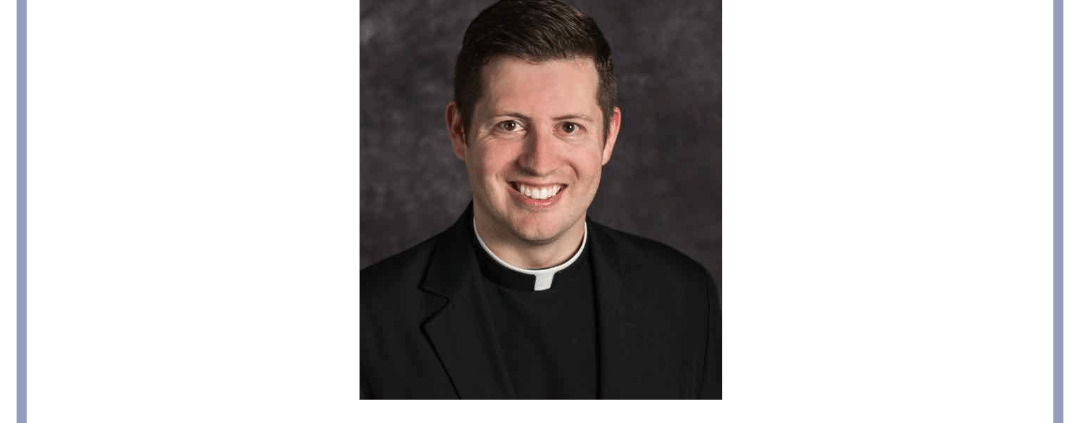
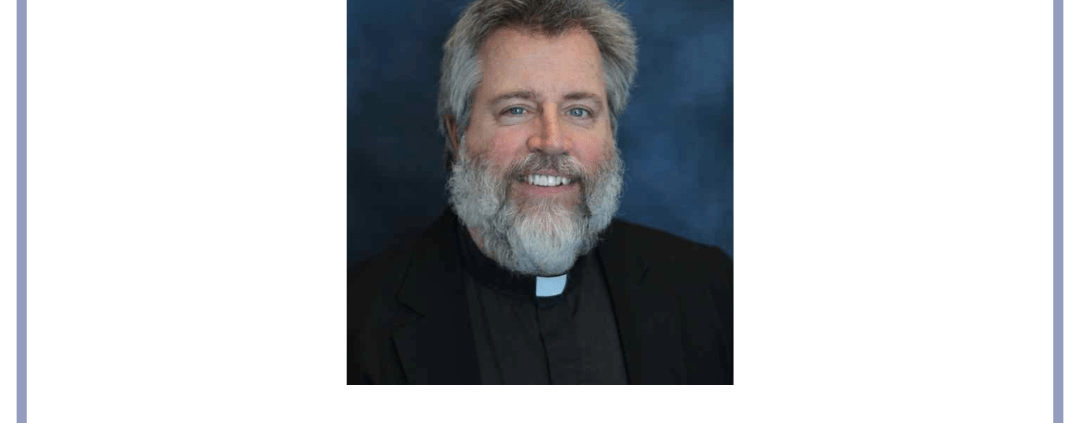
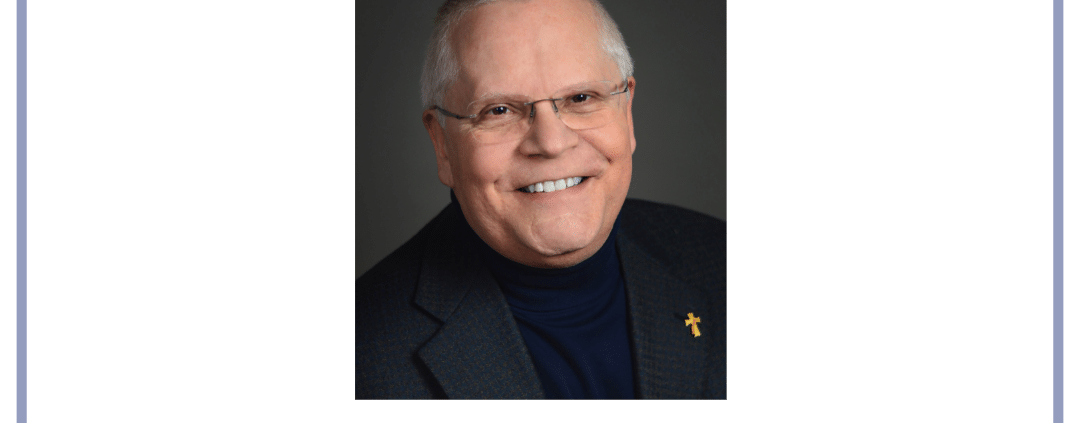
Father Phillip DeVous

Guest

Just a few short years ago, a moral panic cascaded through the chattering classes, sacred and secular, as they announced we had arrived at a “post-truth” society. There was more than a little truth to their concern, however tardy the recognition. Our post-truth reality, however, long predates the recent issues and developments the talking heads found so unnerving.

It occurs to me that our post-truth condition has morphed into an anti-truth metastasis. We deceive ourselves if we think the “natural” state of mankind is truth. Truth, in its greatest and most significant sense, is always a grace and Revelation. This is an uncomfortable reality to contend with in our age dominated by pragmatism as the highest good, which tends to suffocate the sense of the spiritual.

Recently, I was reading parts of an excellent biography of Václev Havel. Havel was an intellectual, playwright, anti-Communist dissident, the last President of Czechoslovakia, and then the first President of the Czech Republic after Czechoslovakia split up. He was a man who, by his temperament and the circumstances of the Communist domination of his nation, was disposed to thinking seriously about what was true when all around him was dominated by lies, especially lies born of convenience. He was a man who risked everything to avoid living by lies. In the biography, I encountered Havel’s arresting exhortation: “Therefore, faithful Christian, seek Truth, listen to the Truth, hear Truth, love Truth, speak Truth … until death”

The seeking of Truth should be the morning star of the life of a Catholic. Our Blessed Lord clearly thinks we are capable of the Truth when He says, “my sheep hear my voice; I know them, and they know me.” This is a call to a living relationship with Truth Incarnate in the person of Jesus Christ and his body, the Church. Our Holy Communion with Jesus Christ is built upon the conviction that truth is something that can be known, received, understood and lived by us — that is why it is both a revelation and a grace!

This is no small thing to have in an anti-truth age. The anti-truth society we inhabit and whose air we breathe is informed by the paradoxical assumption that there is no truth of any kind, while at the same time presuming and demanding that one’s every emotion be recognized as an absolute truth, requiring total submission from everyone around me. That is a pretty good summary of our contemporary situation of anti-truth.

Without an orientation towards truth, we cannot “know that the Lord is God” because we cannot receive the grace or see the Revelation that Truth brings. It should come as no surprise that as the grasp of the of post-truth civilization tightens, with ever more people submitting to the power of anti-truth, that we would see less true goodness because we think truth a fiction. The result is that beauty and authentic love become ever more difficult for us to perceive because we have lost the vision of God.

In ways we perhaps we never could have anticipated, this is a painful time to live, when so much appears to be false. It is in the time of the great distress of the post-truth era, and the anti-truth ferment which characterizes it, that God’s Providence has designated for us for us to live and to bear witness.

Witness to what? That God is real. That the Lord is holy. That we are his people, the flock he tends. That Christ is alive. That his word is true. That Christ remains with us. To living the Truth with integrity. We witness to the world, raising our voices, proclaiming: “Let the whole house of Israel know for certain that God has made both Lord and Christ, this Jesus whom you crucified!”

How do we witness to this? We repent! We seek the forgiveness of our sins! We pray for the gifts of the Holy Spirit! We stay faithful to the Truth revealed to us in the Word of God, taught to us by the Church, and verified by the witness of the saints. We seek to live obediently to God’s commands. We stay close to Jesus Christ in His Word and the Holy Sacraments. We pray fervently and regularly. We give generously to the poor and protect the vulnerable. Fundamentally, we witness when we refuse to tell lies, no matter how comfortable, convenient, or socially acceptable the lies might seem.

Father Phillip W. DeVous is the pastor of St. Charles Borromeo, Flemingsburg and St. Rose of Lima, May’s Lick.

Third Sunday of Easter

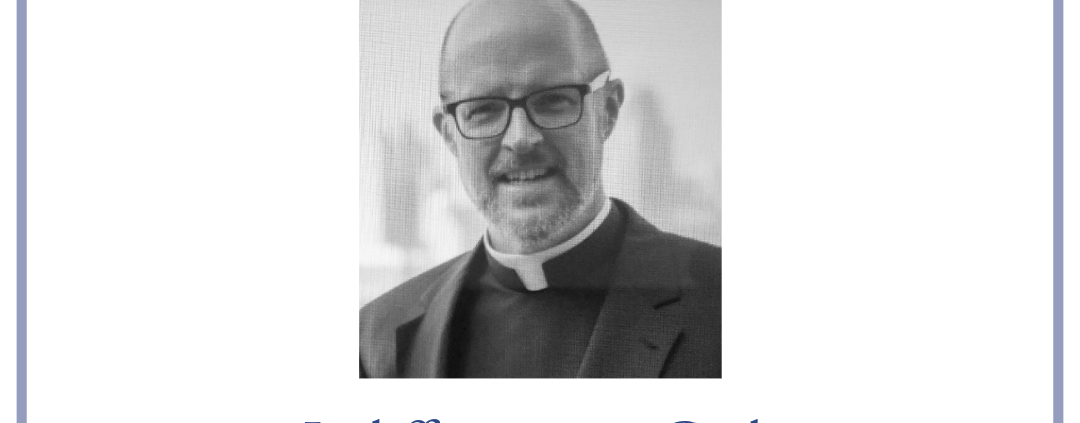
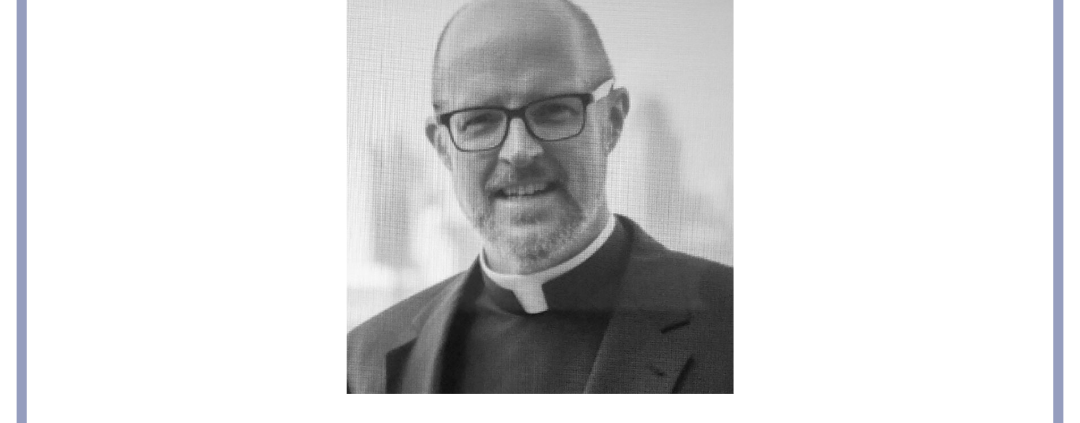
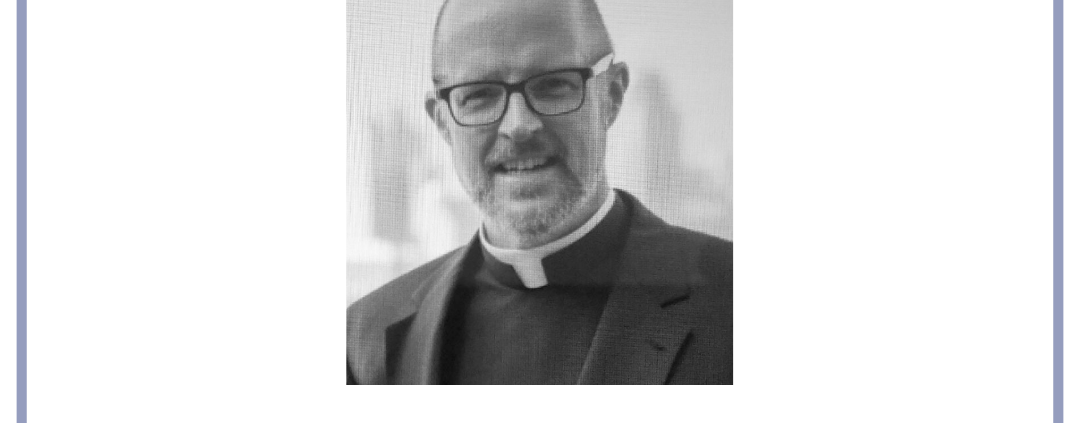
Father Stephen Bankemper

Guest

Most Catholics know that there are two creeds we use at Mass, the Apostles’ Creed (the shorter of the two, the one most people pray at the beginning of the Rosary) and the Niceno-Constantinopolitan Creed, which title we, thankfully, usually shorten to Nicene Creed. In the Nicene Creed, which we use most of the time, we pray these words: “For our sake he was crucified under Pontius Pilate,/ he suffered death and was buried,/ and rose again on the third day/ in accordance with the Scriptures.” Many Catholics seem to understand the phrase — “in accordance with the Scriptures” — to refer to the Passion narratives in the Gospels. While that thought is not completely incorrect, the more fully correct understanding of it is that it refers to the types and prophecies in what we call the Old Testament. For instance, in Paul’s first letter to the Corinthians he wrote, “For I delivered to you as of first importance what I also received, that Christ died for our sins in accordance with the scriptures, that he was buried, that he was raised on the third day in accordance with the scriptures, . . .” (1 Cor 15:3-4) Since Paul wrote this around the year 55, and the first Gospel was written somewhere around 65-70, Paul could not have been referring to the Gospel accounts, but was clearly referring to the Hebrew scriptures (what we call the Old Testament) he knew so well.

The fact that Paul uses the phrase and the Church incorporated it into her creed shows the importance of it, but one scholar, John Bergsma, goes even further: “The inclusion of this line, the most widely-used and recognized statement of the Christian faith, should cause us to realize this fact: that Jesus’s Passion and Resurrection fulfilled the oracles of the prophets is central to the Gospel message. (Emphasis in original.) Moreover, in the early Church, it was of considerable apologetic and evangelistic power because no other religious or political leader could claim to have fulfilled ancient prophecies in the way that Jesus had.” (THE WORD OF THE LORD: Reflections on the SUNDAY MASS READINGS for YEAR A, p.131)

We have two examples this weekend of the early Christians coming to understand Jesus’ Passion, Death and Resurrection in terms of the Old Testament narratives, types (events and people in the Old Testament that prefigure New Testament events and people, particularly Jesus), and prophecies. In the first reading, Peter helps the Jews to understand Jesus’ life, death, and resurrection through Psalm 16, and Jesus himself, in the Gospel account of the disciples on the road to Emmaus, apparently goes through all the Old Testament references to him to help the two understand the events of the previous week.

In the first reading this weekend, from the Acts of the Apostles, the Church presents Peter’s sermon after the outpouring of the Holy Spirit at Pentecost. It is important to understand that the general belief of the Jews of Peter’s time was that the psalms were written by David. Psalm 16 must have been a puzzle to them, especially the line, “nor will you suffer your faithful one to undergo corruption.” But to Peter, reading the psalm through the perspective of Jesus’ death, burial and resurrection, the psalm makes complete sense, and he uses his new understanding to begin to evangelize his listeners. The psalm, Peter contends, could not be about David, because David’s tomb is yet in their midst. Rather, it is a prophecy about the Messiah and has been fulfilled in Jesus the Nazorean. You killed him, Peter says, but God raised him up. Now, “. . . because you will not abandon my soul to the netherworld,/ nor will you suffer your faithful one to undergo corruption,” makes perfect sense.

Jesus makes a similar move with the two disciples on the way to Emmaus, for even they, who knew and followed Jesus and heard him teach, had no understanding of the events they themselves witnessed. Jesus, “beginning with Moses and all the prophets, . . . interpreted to them what referred to him in all the Scriptures,” explaining why it was “necessary that the Christ should suffer these things and enter into his glory.” What a monologue that must have been!

All this stands as a reminder to us of the importance of the Old Testament. So many Catholics, if they read scripture at all, tend to stay with the Gospels. While it is good to read and re-read the Gospels, we can come to know Jesus through the Old Testament as well. Some passages from the Catechism of the Catholic Church may serve to encourage us:

  1. The Church, as early as apostolic times, and then constantly in her Tradition, has illuminated the unity of the divine plan in the two Testaments through typology, which discerns in God’s works of the Old Covenant prefigurations of what he accomplished in the fullness of time in the person of his incarnate Son.
  2. Christians therefore read the Old Testament in the light of Christ crucified and risen. [And] the New Testament has to be read in the light of the Old. Early Christian catechesis made constant use of the Old Testament. As an old saying put it, the New Testament lies hidden in the Old and the Old Testament is unveiled in the New. [St. Augustine]
  3. The Church “forcefully and specifically exhorts all the Christian faithful . . . to learn ‘the surpassing knowledge of Jesus Christ,’ by frequent reading of the divine Scriptures. ‘Ignorance of the Scriptures is ignorance of Christ.’” [Phil 3:8 and St. Jerome]

If you are new to the Old Testament, try this: read a passage that the Church uses in the liturgy (the first reading or the psalm) and ask the Holy Spirit to show Jesus to you in that passage. Then ask yourself, how does this apply to Jesus, or how does Jesus fulfill this passage. You might be surprised at how easily you can come to know Him in this manner of reading.

Father Stephen Bankemper is pastor, St. Catherine of Siena Parish, Ft. Thomas, Ky.

Easter Sunday

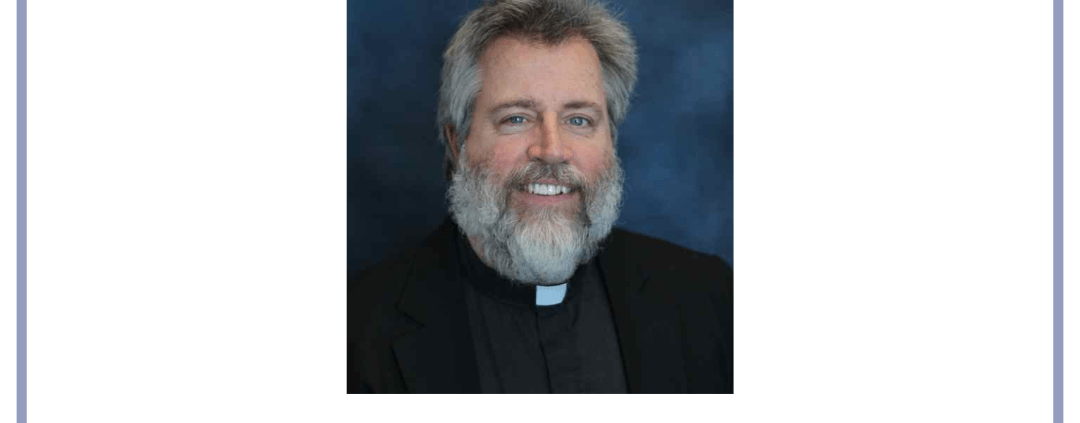
Father Daniel Schomaker

Guest

Christos Anesti! Alithos Anesti! This is a customary greeting of the Eastern Churches on Easter — hence why it is said in Greek. Instead of saying “Hi” on Easter Sunday, you say: “Christ is Risen!” and the response is “Truly he is Risen!”
We gather today to celebrate Jesus overcoming the tomb. Death was not in the original plan of creation. Death is the consequence of sin — specifically the sin of our first parents, in their desire (via the temptation of the devil) to make themselves God. What they didn’t realize is that they were already like God, for they had been made in his image and likeness. Their pride unfortunately got the better of them and had them cast out of paradise and put them at odds with the Almighty One.
Jesus entered into human history so as to bring about reconciliation between God and humanity. By his Passion (suffering and death) he took upon himself the consequence of our sin. And in his Resurrection from the dead, he restored humanity to its rightful place in creation. Paradise is once again opened for us!
On this Easter Sunday, let us give particular thanks and praise and adoration and glory to Our God, who never abandons us — ever!
Father Daniel Schomaker is pastor, Blessed Sacrament Parish, Ft. Mitchell and director, Office of Worship and Liturgy for the Diocese of Covington, Ky.

Sixth Sunday of Lent

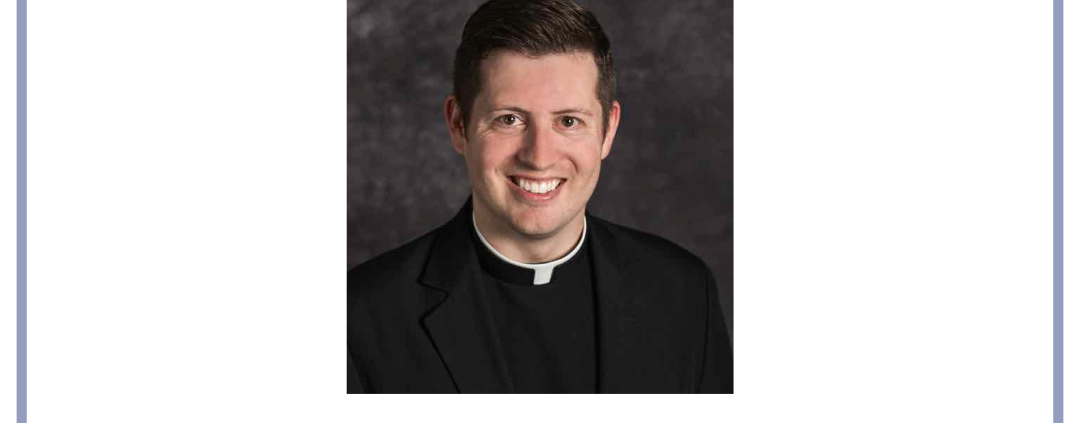
Bishop Emeritus Roger Foys

Guest

Holy Week. The holiest week of the year for all Christians. A week filled with emotion. We move from joy to wonder, to betrayal, to denial, to grief and back to joy.  We relive that week during which Jesus would suffer and die. We walk with him, as it were, the path to his passion and death. But we begin with joy.

On Palm Sunday, Jesus was welcomed with great fanfare into Jerusalem. Throngs of people lined the streets and shouted his name. Hosanna, they called to the Son of David! What exhilaration must’ve filled the air! The Lord had arrived! The Savior was to save his people! But, unfortunately, that joy would not last. By the end of the week, it would turn to grief and sorrow.

On Holy Thursday, Jesus dined with his apostles to celebrate the Passover meal. During this meal, he would wash the feet of his apostles, a ritual ordinarily conducted by a servant. Jesus, the Son of God, stooped down to wash the feet of his apostles — and when he was finished, he would tell them that what he had just done, they were to do for each other.

This was a sign of His love, His humility. He wanted his disciples to do likewise. This is the kind of community he desired his followers to live — one of service, one of love. The apostles must have wondered what all this meant.

Further on Holy Thursday, Jesus would bless and break the bread, would bless the wine and proclaim that this was his body and his blood and that his apostles were to do this in memory of him. Notice, he didn’t say this was a symbol or a sign of his Body and Blood. He said this IS my body, this Is my blood. And so, he gave us the Eucharist to sustain us on our journey, to strengthen us amid the vicissitudes of life. Thus, was given to us the gift of the Eucharist and of the Priesthood. It was a marvelous wonder!

But then came the betrayal. Judas, one of the disciples of Jesus, sold him to those who wanted to kill him. And he betrayed Jesus with a kiss. With a kiss, a sign of love, a sign of friendship.

And once Jesus was taken away, his most trusted disciple, Peter, would deny him — not once, not twice, but three times. He proclaimed that he didn’t know Jesus and was certainly not one of his followers.

The next day, Good Friday, we recall the passion and death of Jesus on the cross. What grief must his followers have experienced. What sorrow must have filled his mother, Mary, as she beheld her beloved son beaten and bruised as he carried his cross to Golgotha, the place of his death. What emptiness filled the earth on that dreadful day.

On Holy Saturday, the disciples of Jesus must have experienced that loss. They had thrown their lot in with Jesus. They had given up everything to follow him. And now, it had all come crashing down. Would they ever experience joy again?

What can we learn from this Holy Week as we walk with Jesus?

We have all at some point in our lives experienced the joy that the apostles must have felt on that Palm Sunday when Jesus was welcomed to Jerusalem — that exhilarating feeling that we would like to bask in for the rest of our lives. But we know that the joys of this world are fleeting, that our true joy — the joy that will last — can only be found in the Lord and in our obedience to His word. When life gets difficult, it is good to remember the joys we’ve experienced and to thank God for them. We also know that life is made up of joys and sorrows, of good times and bad, of success and failure. So, we do not lose hope, we do not give up or give in.

There are also times in our life that we experience wonder just as the apostles did when Jesus washed their feet and when he gave us the Eucharist and the Priesthood. They might not have understood at that moment all that these gifts of Jesus implied, but they accepted them, knowing that they were acts of love, acts of friendship. When we experience this kind of wonder in life, we give thanks to God for providing it for us. We have experiences that we don’t always understand, but it is enough to understand that God provides these moments for us because He loves us.

Betrayal, unfortunately, is sometimes a part of our lives. Perhaps we’ve been betrayed by a spouse, a friend, a co-worker, a neighbor. A relationship that we imagined would last forever suddenly ends. We are left stunned, we don’t understand. How could this happen? What or who caused it? Is it irrevocable? Was it me? Did I do something wrong? It seems to be a pain too difficult to bear. How will we ever survive? When these moments happen, we remember Jesus and His betrayal by Judas, by one he trusted, one he chose, one he loved. We will survive, we will conquer the grief, the hurt, even the anger. We pray to the Lord Jesus, who experienced the betrayal of one he loved, and ask Him to ease the pain, to ease the hurt, to heal the emptiness we feel at that moment.

And finally, grief. Sometimes people discount grief, as though grief is something to be embarrassed about, as though grief is a sign of weakness. Grief, believe it or not, is a byproduct of love. If we never loved, we’d never grieve. But if we never love, we never live. When someone we love dies, no matter how strong our faith is, we feel a loss, there is a void, an emptiness in our lives. The passing of a loved one leaves a hole in our hearts. You can imagine how the apostles grieved when the one in whom they had placed all their trust, all their hope, for whom they had given up everything and everyone, died. Their hopes and dreams hung on that cross with Jesus, and they saw those hopes and dreams dashed. How would they go on, how would they survive? But they did. We are blessed to know that the death of Jesus on the cross was not the end. We know the rest of the story. We know that the grief the apostles were experiencing would turn to joy when the Lord Jesus would be raised from the dead. This was not the end — it was the beginning. So too with us. When we experience grief from some significant loss, our grief can be turned into joy when we remember that Jesus died for us but that he also rose. He is with us always. This is our hope. This is our faith. This is our joy.

And so, we end as we began — with joy. The joy of Palm Sunday, the wonder and betrayal of Holy Thursday, the grief of Good Friday, the emptiness of Holy Saturday will give way to a new joy with the resurrection of Jesus Who conquers sin and the grave.

A blessed Holy Week and a joyous Easter to all!

Most Rev. Roger J. Foys, D.D. is Bishop Emeritus of the Diocese of Covington, Ky.

Fifth Sunday of Lent

Father Phillip DeVous

Guest

Every single Sunday we profess the Creed and proclaim, “I look forward to the resurrection of the dead and the life of the world to come, Amen.” Perhaps those words are so familiar to us that we fail to give them deep consideration. Yet, it is important to recall that prior to the coming of Jesus Christ, few in the history of the world thought that the resurrection of the dead was something even thinkable, much less a real possibility.

Faith is many things. One of the characteristics of faith, brought to us by the Holy Spirit, is that the Holy Spirit expands our sense of what reality entails in order that we might see clearly. We call such clear seeing Divine Revelation.

Nothing expands our sense of reality more than the idea of the Resurrection of the dead. The theologian, N.T. Wright writes, “Jesus’s resurrection is the beginning of God’s new project, not to snatch people away from earth to heaven, but to colonize earth with the life of Heaven” The resurrection does not invalidate the value of our present bodily life just because it will die. Rather, it shows us that what we do with, and in, our present bodily life matters because God has a great, eternal future in store for it, a purpose first revealed in his Incarnation.

To realize this glorified communion, we must contend with the lack of glory we now experience as part of our conversion from sin to sanctity; from vice to virtue; from death to life himself. St. Paul makes this clear when he says, “those who are in the flesh cannot please God. But you are not in the flesh; on the contrary, you are in the spirit, if only the Spirit of God dwells in you.”

The word “flesh,” as St. Paul uses it, does not mean the body. It means the whole of fallen and mortal nature, body and soul. And “spirit,” as used here, does not mean “soul,” but the whole of redeemed human nature now under God’s Holy Spirit. “The Holy Spirit is God. God performs miracles by the Holy Spirit,” as the theologian, Peter Kreeft explains. “That’s how he raised Jesus from the dead, and that is how he will raise us with Jesus, in Jesus, as part of his Body the Church.”

We are given pause to consider the first miracle all of us in the Church have received: the gift of faith in Jesus Christ. This is no small thing given how God has been eclipsed in contemporary life, where the ego and its desires are now paramount. As the darkness consequent of the eclipse of God rolls menacingly across the landscape of contemporary life, we can see just what a miracle the gift of faith is. It is gift that gives us a personal relationship with Jesus Christ, the light of the world.

The Holy Gospel relates that Martha and Lazarus were close friends of Jesus. Martha had a stronger intuition than most as to who Jesus was and of what he was capable. Yet, the death of her brother Lazarus was incomprehensible to her. Jesus himself was overcome with grief at his friend’s passing — he too wept. This teaches us that our suffering is not outside of God’s attention. Christ holds it before the Father. As the Eternal Son of God gazes at the Heavenly Father and the Heavenly Father gazes back, we are all seen and beheld in every aspect of our existence by God.

Before Jesus raises Lazarus from the dead, he first raises Martha’s faith from the temptation to despair spurred by grief and death. From her he elicits an act of faith in the Spirit and power of God. “Yes, Lord. I have come to believe that you are the Christ, the Son of God, the one who is coming into the world.”

For a person to receive the gift of faith is a miracle greater than that of raising a corpse to life. A living person can resist Jesus; people resist faith. A dead body, however, has no power to resist Jesus.

Martha’s act of faith expands her sense of reality; of what’s possible with Jesus. Now she can then see with the eyes illumined by faith, with the gift of knowledge from the Holy Spirit. She knows who Christ is. Her revivified faith gives her confidence in Jesus’s power to restore life in ways we can perceive, as well as in ways we are not yet ready to see but will.

Father Phillip W. DeVous is the pastor of St. Charles Parish, Flemingsburg and St. Rose of Lima Parish, Mayslick, Ky.

Fourth Sunday of Lent

Father Stephen Bankemper

Guest

How blessed we are in Lent to have such rich fare in the Scriptures provided for us! We heard the story of Jesus’ temptations on the first Sunday, then the Transfiguration, the Samaritan woman at Jacob’s well last week, and this week the story of the man born blind.

If part of your Lent is to read more Scripture, you could do no better than to read these stories two or three times again, slowly, savoring the details. The details on which this article will focus will be the question Jesus’ disciples ask him about the man born blind and his answer, what Jesus does to bring sight to the man, and what he tells the man to do as his part in gaining his sight.

In the background of Lent and Holy Week is Adam and Eve’s disobedience in the Garden of Eden; after all, that is the reason we needed a Savior. Although some people think that “Original Sin” refers to Adam and Eve’s disobedience, this is a misunderstanding. “Original Sin” refers to the wounded state that all of humanity inherited after their sin.

As the Catechism of the Catholic Church explains, Adam and Eve did commit a personal sin, but what we inherit from them is not their sin, but the “fallen state” of human nature. The Catechism continues: “That is why original sin is called ‘sin’ only in an analogical sense: it is a sin ‘contracted’ and not ‘committed.’” (CCC 404) To the question, “Rabbi, who sinned, this man or his parents…?” Jesus answers, “neither he nor his parents sinned . . .” We can hear in his answer a reference to Original Sin. We did not commit Adam and Eve’s sin, rather we inherit a human nature that is “fallen” or wounded. We needed someone to save us; we received more, which we will see a little later.

Many people have wondered at the strange way that Jesus brings sight to the man. Modern Christians are likely to think immediately that Jesus is being unhygienic, but some biblical scholars explain Jesus’ actions in terms of a Rabbinic tradition about creation. Genesis relates that God formed the first man out of clay, but one needs water to make clay from dirt, so the tradition says that God used spittle to mix with the dirt. This means that Jesus is not “healing” the man, as one sometimes hears. In fact, the text of the Gospel never uses the word “heal,” rather, the text reads “gained his sight” and “able to see” and four times some version of “opened his eyes.” The implication is that this is an act of re-creation restoring what God originally intended, undoing the damage brought about by Adam and Eve.

After smearing the clay on the man’s eyes, Jesus tells him to go wash in the Pool of Siloam. How does a person appropriate for herself or himself this restoration? By washing, or more properly, by being washed in the waters of Baptism. This restoration will not be complete until “the resurrection on the last day,” but Baptism begins the process of that restoration.

The theme of light versus darkness/blindness versus sight is woven throughout this Gospel, highlighted by the Church’s choice of the second reading: “Brothers, you were once darkness, but now you are light in the Lord.” (Eph 5:8) Notice the present tense: now you are light in the Lord. We are born into darkness — as St. Thomas Aquinas puts it, a double darkness: “. . . removing from me the double darkness into which I was born, namely, sin and ignorance.” (Prayer Before Study)

We are born under the condition of Original Sin but need not remain in sin. We are born in the darkness of not knowing God, not living for God, but need not remain in that ignorance. In baptism we have been freed, our eyes have been opened, let us now live in that freedom and sight, as Paul exhorts us. Let us live as children of the light, and children of the Light.

Father Stephen Bankemper is pastor, St. Catherine of Siena Parish, Ft. Thomas, Ky.

Third Sunday of Lent

Father Joshua Whitfield

Guest

Preaching on this story from John’s Gospel, I like how St. Augustine put it. Describing the dialogue between Jesus and the Samaritan woman, he said that the Lord was “little by little finding a way into her heart.”

Layered, veiled, critical and pointed at times, what the Lord was ultimately doing in his conversation with this woman on the margins was drawing her close to him. Carried by his words and her interest and desire, Jesus draws her to him “in spirit and truth” and then says to her “I am he.” (John 4:24-26) The conversation, you see, is mystical; it’s revelatory.

I also like how St. Augustine said that we should “recognize ourselves in her.” That makes this story from John’s Gospel also about us. That means these words may little by little find their way into our hearts too.

Indeed, that’s how the Church has long read this story of Jesus and the Samaritan woman, as a story that is also about us. For centuries, this passage has been read during Lent in association with the ancient practice of the Scrutinies.

Over the next three weeks, by ancient custom, the Gospel readings are all from John. They were proclaimed alongside the final purifying rites which the Church applied to those seeking baptism; they still are. Recalling the ancient context, however, is important as we listen to these stories over the next several weeks.

You see, as rites of exorcism and repentance, the Scrutinies in ancient times were often mysterious and somewhat frightening. Sometimes involving physical examination or hissing at the devil, strange and primitive things like that, the Scrutinies in antiquity were dramatic renunciations of the demonic, the symbolic performance of the rebellion of conversion, the revolt started from within the kingdom of Satan, the fallen world, liberating the faithful for the kingdom of Christ.

This, it’s helpful to remember, was the liturgical setting in which ancient catechumens heard this story. It was clearly meant by ancient Christians to be heard as a parable of their own conversion, a conversion which they saw more clearly to be an act of cosmic rebellion against the rule of Satan rather than, as many see it today, the mere expression of religious preference.

What I mean is that, in the past, conversion was conceived in far more radical terms. Which is precisely what is worth remembering as we read this story from John today in tamer times and alongside less exciting rituals, for it helps us to understand that what we are still talking about here is real conversion, deeper conversion, complete conversion, life-changing conversion.

Again, we moderns have difficulty thinking about conversion so totally; we must deconstruct much of our conventional thinking about what it means to be religious in order to remind ourselves that Christ means to convert the whole of us.

But such a total conversion is not something that we achieve on our own. Rather, conversion is completely a gift of the Spirit. This is one way to interpret Jesus’s offer of “living water.” He draws the Samaritan woman into conversation simply asking for a drink; that conversation then moves from the material to the mystical when he begins to talk about the “living water” able to satisfy every thirst. “Sir, give me this water,” she says to him. (John 4:15) He has brought her to the moment of spiritual desire — to prayer. Now she longs for what she realizes she does not possess.

Thus, in the state of spiritual desire, now she may hear the brutal truth. Now Jesus talks to her about her five husbands and how she worships what she does not know. (John 4:16-22) The Lord’s words here, open to various interpretations, are nonetheless morally and theologically convicting. Their conversation now is penitential; she must be brought to the point where she renounces her past sin and ignorance. Only then may she hear the words, “I am he.” (John 4:26)

As I said, it’s a story about conversion. It’s a story that teaches us that conversion is about desiring the living water of God. That water is the water that flows from the heart of Christ; it’s the water of baptism. (John 7:37-38; 1 Cor 12:13) Nothing like any water we’ve ever known, which has never really satisfied us, this water we can only desire, beg for it. We must also renounce whatever keeps us from drinking this new living water, whether it be our past sins or past error.

Desire and purification, that’s what this story is about. By this story, Mother Church whispers in the womb to her unborn children, to those soon to be born in baptism. Here are but the final few steps.

Is your desire for God this deep? But, of course, these are questions fit not only for those not yet baptized but also for the rest of us. Do we desire Christ like she did? Like that Samaritan woman so like ourselves?

Father Joshua J. Whitfield is pastor of St. Rita Catholic Community in Dallas.

Second Sunday of Lent

Father Daniel Schomaker

Guest

On this, the Second Sunday of Lent, we hear the account of the Transfiguration of our Lord on Mt. Tabor. As Jesus converses with Moses and Elijah, Peter, in awe and shock of what is happening, says to the Lord: “It is good that we are here.” In this encounter had by the Lord, we see the fullness of the Church — the Old Testament and the New Testament — brought together through the teachers of the faith of old (Moses and Elijah) and the “new” teachers of the faith (Peter, James and John), with the Lord in their midst.

This made me start to reflect on when the Lord Jesus is most in our midst — at the Holy Sacrifice of the Mass. It is there that we encounter the Lord in four ways:

  1. In the community gathered at prayer.
  2. In the minister who is in persona Christi capitis (in the person of Christ the head).
  3. In the proclamation of the Sacred Scriptures.
  4. And most importantly, in his Body, Blood, Soul and Divinity really and truly present in the Eucharist.

We believe that when we participate in the celebration of Holy Mass, we are partaking in a Divine Mystery — where the whole Church, across space and time, gathers in worship. So, not only do we get to have an encounter with Jesus, but with the Church. Therefore, we should echo the words of St. Peter: “It is good that we are here!”

Our beloved Catholic faith is very personal, but it is not individualist — it is communal. I need you, and you need me, and we need each other in order to get to heaven. In a real way, we NEED to be here at Mass!

That personal relationship with the Lord is developed primarily at Holy Mass through its twofold end — the glorification of God and the sanctification of his people. And it’s not a one-off. Every time we go to Mass, we glorify God in our worship of him, and hence we are made holy. The more we are made holy (sanctification), the greater the desire one has to enter into worship (glorification). This then leads to holiness and then back to worship, and on and on and on and on until we stand before the throne of the Almighty. It’s kind of the Church’s version of the chicken and the egg.

So, let us be sure this Lent we are showing up so that we can express like St. Peter: “It is good that we are here!”

Father Daniel Schomaker is pastor, Blessed Sacrament Parish, Ft. Mitchell and director, Office of Worship and Liturgy for the Diocese of Covington, Ky.

First Sunday of Lent

Father Phillip W. DeVous

Guest

At the outset of Lent, we are brought into the cosmic confrontation between Jesus Christ and the devil. This is a spiritual reality revealed to us: the state of spiritual combat we are always within, but which is brought to the fore during this penitential time. As St. John Chrysostom noted concerning Jeus’s battle with Satan: “Jesus’s victory sets an example for Christian obedience. Earthly life is a wilderness trial for God’s people en route to the land of heaven … God wills the faithful to overcome temptations from the world, the flesh and the devil. Triumph is possible through penance and obedience to God’s word. Rather than earthly bread and power, the faithful must desire the food of God’s will and the humility of Christ.”

In tempting Jesus with the things of the flesh, symbolized by the bread, we are shown the “night of senses.”  If we resist the temptation to indulge our bodily appetites without reference to the order of creation and grace, there is no reason for the devil to keep tempting us in this way. Jesus shows us the necessity of ascetism and fasting in the face of the temptations emanating from the unruly cravings of the flesh. Our Blessed Lord shows us how fasting is a prayer of the body, as well as how it can fortify us against powerful temptations of this sort, bringing our flesh under subjection to grace and truth.

Moving from the lower to the higher in the order of temptation, the devil tempts Jesus to living according to the spectacle and approval of the world. If Jesus would only grandly manifest himself, then people would fear and follow him! He could become a showman instead of the savior. As we contemplate this temptation of Jesus, we consider how often we are tempted by the attractions and entertaining things of the passing world. We can begin to see how we seek consolation and affirmation, not in God and spiritual things, but in material things, always wanting more and better stuff and higher quality experiences. Consequently, we lose sight of what lasts because we are blinded by what does not.

Failing to tempt Jesus with the blinding lights of the world’s approval, the devil moves to tempt Jesus to reject his identity as the Son God. Satan encourages Jesus to embrace an earthly and political mission to rule over the kingdoms of the world. The evil one is trying to prompt Jesus to forgo his mission as the suffering servant of the Kingdom of God.

As we consider this temptation of Jesus, we see the heart of the temptation is to substitute truth for the simulacrum of truth, which we think can be realized in power. This is pride. Pride, wherein we assume and assert “our truth” is what must be thought and our will is what must be done. When we fall to this species of pride, our hearts become hardened to the Eternal Word of God. Then, the way of Christ, which is the way of the Cross, is deemed impossible, undesirable and unnecessary. We end up living a self-enclosed, self-referential, selfish way of life. The result: we become possessed by the world and miss the mark of communion with Christ and heaven.

The diabolic illusion is always one of Godless self-sufficiency, personal aggrandizement and self-justification. In essence, the devil’s proposition to humanity is this: I will give you everything you think you want, and I will make you feel you will “be like gods.” And in so doing, the devil will make you forget that you are dust and to dust you shall return.

In the face of these primordial temptations to relentless worldly satisfaction, to self-sufficiency and to that of personal aggrandizement, we take up with the Lord the spiritual combat of prayer, fasting and almsgiving. These disciplines of the soul and weapons of the spirit are given to us so that hardened hearts can be cracked open to the grace and the glory of God. These weapons of the spirit must be wielded so that we might learn anew to worship the Lord, our God, serving him alone with undivided hearts. The goal of this spiritual combat is to move us from vice to virtue, from sin to sanctity, from death to life, Himself — the one who is the “joy of our salvation.”

Father Phillip W. DeVous is the pastor of St. Charles Parish, Flemingsburg and St. Rose of Lima Parish, Mayslick, Ky.

Sixth Sunday in Ordinary Time

Father Stephen Bankemper

Guest

In the Gospel for the Sixth Sunday in Ordinary Time, we continue through what we call Jesus’ Sermon on the Mount. In the section of the sermon we hear this Sunday, Jesus addresses various commandments — about murder, adultery, divorce and oath-taking — but the key to understanding his teaching about these and other commandments is three sentences from what we could call his introduction to his teaching.

Jesus begins this part of His sermon saying, “Do not think that I have come to abolish the law or the prophets. I have come not to abolish but to fulfill.” It is clear from this statement that Jesus is not positioning himself against the law of Moses, which only makes sense, as God cannot be divided against himself. Remember that the evangelists record Jesus as saying, “I and the Father are one,” (Jn 10:30) and “… no city or house divided against itself will stand.” (Matt 12:25)

It might seem obvious what Jesus means by juxtaposing ‘abolish’ and ‘fulfill,’ but it is worth risking the obvious to discuss it. Abolishing “You shall not kill” would mean, of course, that Jesus is making murder legal, that we could do less than the Mosaic law. Fulfilling the law implies that there is more to the commandment than the words on the page (or the stone), that our goal should be to do more than the letter of the law, and not more quantitatively, so to speak, but qualitatively; not more as in more things to do, but more as to go more deeply into the commandment. So to insult and vilify and blast someone with my anger, but say, “I did not kill her,” is to miss the point of the law.

A third sentence in Jesus’ introduction makes this even more clear. Jesus tells his disciples, “I tell you, unless your righteousness surpasses that of the scribes and Pharisees, you will not enter the kingdom of heaven.” We might ask ourselves how this can be: the scribes, and especially the Pharisees, were highly respected as the ones who observed the law to the highest degree. In fact, they were so careful to observe the law that scripture scholars describe their approach as “building a fence around the law,” referring to their practice of adding oral regulations that were stricter than the law to prevent accidental transgressions of the law.

What Jesus could mean is that the Pharisees were so focused on obeying the mandates of the law — bodily obedience, we might say — that they did not allow the law to change their hearts. “Woe to you, scribes and Pharisees, hypocrites! For you tithe mint and dill and cumin, and have neglected the weightier matters of the law, justice and mercy and faith; these you ought to have done, without neglecting the others.” (Matt 23:23) “Woe to you, scribes and Pharisees, hypocrites! For you cleanse the outside of the cup and of the plate, but inside they are full of extortion and rapacity. You blind Pharisee! First cleanse the inside of the cup and of the plate, that the outside also may be clean.” (Matt 23:25)

Jesus could also be referring to the fact that the law itself cannot save. There are many passages in St. Paul’s letters that comment on this, but here is how he expressed it to the church in Rome: “But now the righteousness of God has been manifested apart from law, although the law and the prophets bear witness to it, the righteousness of God through faith in Jesus Christ for all who believe.” (Rom 3:21-22)

We might express all this by saying that mere obedience to dictates of the law is not the purpose of our Christian faith. Becoming “good” is not the purpose. Placating God by being perfect is not the purpose. The purpose of our Christian faith is to be transformed, to become like Christ. There was a book published in the 1970s with a chapter entitled, “How Far Can We Go?” referring to how much sexual activity can an unmarried couple engage in before they sin. The question itself is Pharisaic. The true Christian attitude is the opposite: not how little can I do and still say I belong to God, but how much of myself will I allow to be transformed, how much like Christ can I become?

Notice the passive tense of the last part of that last sentence: how much of myself will I allow to be transformed. Obeying the letter of the law will not transform us, because we are still in control. Obeying the law in its fullness — fulfilling the law — transforms us because we allow God to be in control, because we have handed ourselves over to him. It is interesting that obeying the law is easier than fulfilling the law; that is because we can obey the law by our own strength, our own willpower, but to live the law in its fulness, we need God’s grace.

Notice one final and lovely thing. Jesus does not say that he has come to get us to fulfill the law; he uses the word ‘I’: “I have come to fulfill the law.” Jesus asks nothing of us that he does not do. He leads, in obedience and humility, in fulfilling the law, and then invites us to follow. Let us accept his invitation. Let us follow him, not disregarding God’s law but living it to its fulness, allowing it to transform us into the likeness of our Savior, bringing us finally to love.

And let us pray for each other and help each other in that endeavor.

Father Stephen Bankemper is pastor, St. Catherine of Siena Parish, Ft. Thomas, Ky.