How one prayer group uses Franciscan at Home to grow in their faith— consider a new Lenten practice
Laura Keener
Editor
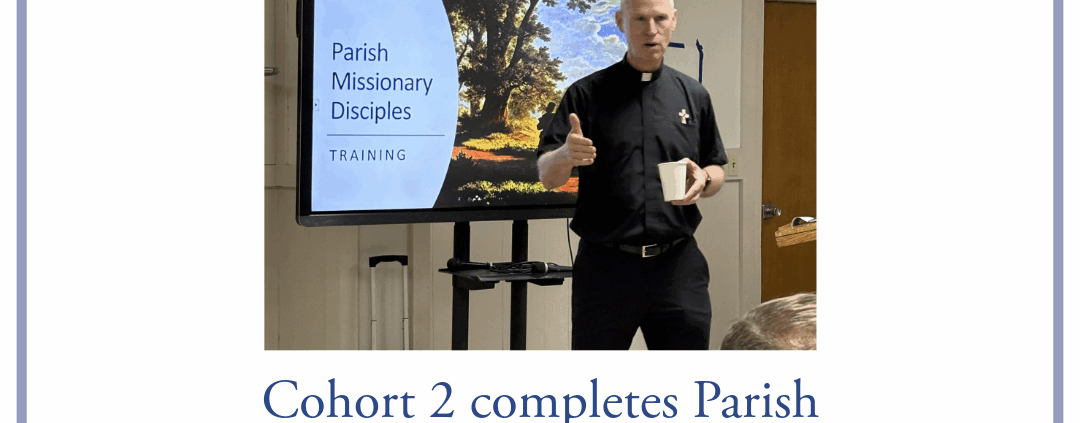
As part of the Diocese of Covington’s With One Heart pastoral plan, a collaboration with Franciscan University’s Catechetical Institute allows every individual in the Diocese of Covington free access to the Franciscan at Home library of Catechetical materials.
These materials, accessed via https://franciscanathome.com/ diocese-covington, offer learning tracks for any members of the diocesan community with courses covering many aspects of Catholic teaching, as well as offering “tracks” that cater to the needs of an individual or group no matter their role in their parish and diocesan community.
These courses go hand-in-glove with many parish pastoral plans as adult faith formation and education was identified as a priority for many parishes.
Currently, one friend group who gathers weekly for prayer is utilizing these free resources to follow a mentor track titled “A Vision for Caring for Others Personally.”
Jenni VonLehman, one of the group’s friends, reports a positive experience with the programming. “When my team first started viewing the Franciscan at Home videos, I expected to fill my brain with good information,” she said. “What I wasn’t expecting was to experience a real sense of calm while having a retreat-like encounter with God. I started looking forward to the videos, especially the ones presented by Dr. Willey. Not only were they helpful — they were actually fun to watch.”
She continued, saying, “In the catechetical formation classes, we were given the unexpected opportunity to work on our own catechesis and our own personal relationship with Christ. We learned that we can’t give what we don’t have ourselves, so we were immersed in it first. It was exhilarating,” she said. “I’ve actually watched a couple of the videos again on my own, and I learned even more the second time … the fact that the Covington diocese generously provides this free program to every member of the diocese is pretty awesome. I’m sure most people aren’t even aware of this treasure.”
This Lent, parish groups are asked to consider how Franciscan At Home might benefit members by hosting a similar prayer/study session. There are over 200 tracks to choose from, or you can start with the same track that Ms. VonLehman has found inspiring.
“It’s an excellent tool for your own personal growth,” said Ms. VonLehman, “or to use to help others growth in their faith.”
For details regarding registration and usage of Franciscan at Home learning materials, visit https://covdio.org/catechetical-institute/.