
Twenty-sixth Sunday of Ordinary Time
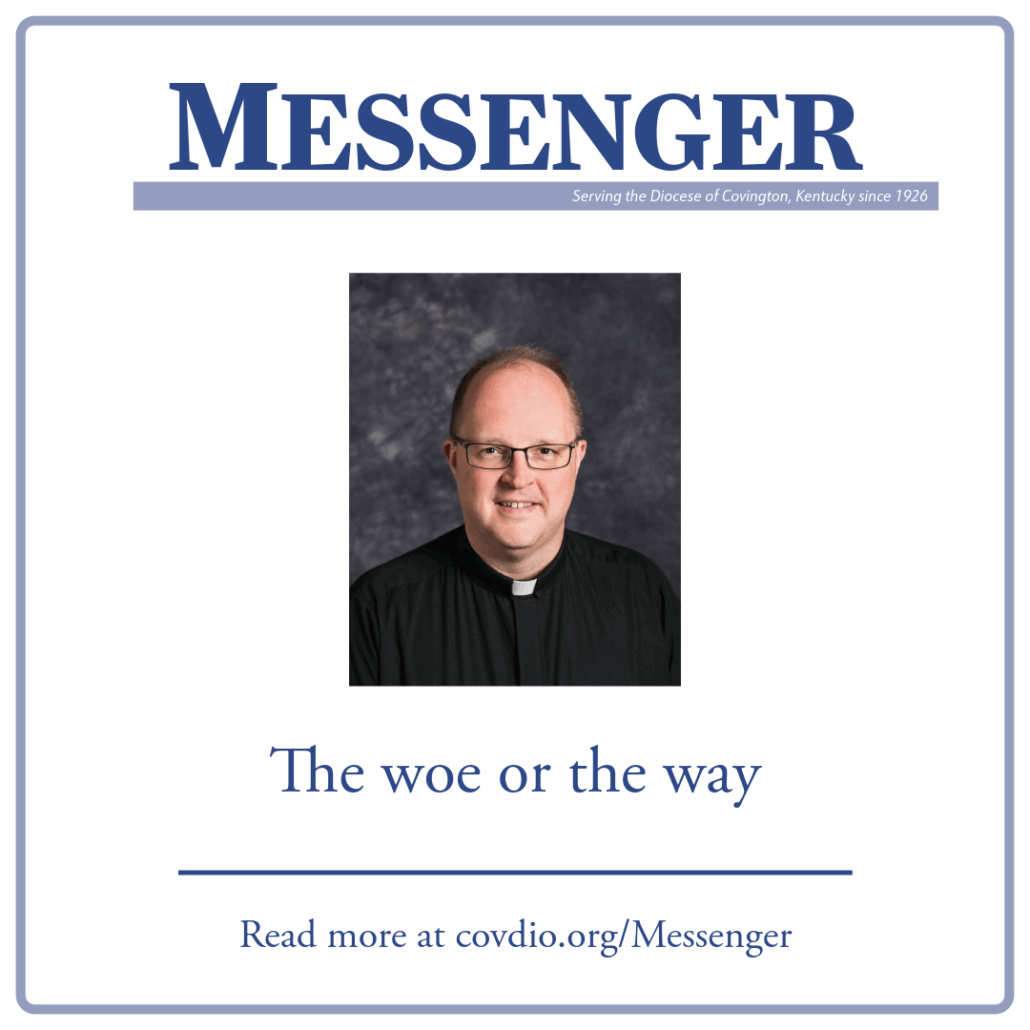
Father Phillip DeVous
Guest
“Woe to those the complacent in Zion!” For us to grasp just how thoroughly the Prophet Amos is calling us to task with his proclamation, it is imperative to understand the essence of the prophetic “woe.”
A woe is an anguished cry or lament by those mourning the dead, the future prospect of death, or cataclysm. Prophets pronounce woes as warnings about God’s judgment on sinful cities or nations. They also serve as urgent appeals for repentance from sin.
One of the primary ways we become complacent in our pursuit of holiness is to presume we are good enough; to presume that mercy will just “work” no matter my disposition. Zion, the biblical Jerusalem, finds its fullest expression and fulfillment in the Church, the Body of Christ. In the Church there dwells the fullness of grace of salvation.
Despite the extraordinary reality of Christ dwelling among us, it is easy to fall prey to a kind of presumption that makes us spiritually complacent and neglectful, causing us to slouch towards the prophetic “woe” being pronounced upon us.
How does such spiritual complacency about something as important as our eternal destiny in the Trinitarian God come about? Very often, distracted by the relentless tempo of the unexamined life, we treat the Church like a mere system for good works and emotional uplift, not the place of encounter and communion with the Holy of Holies, the Trinitarian God. When the Church is understood in this manner, the Holy Sacraments get reduced to something like mere signs of aspiration and affirmation, personal goodness, and/or community togetherness, not the means of our repentance, conversion, and sanctification.
When the Church, the Gospel message, and the Holy Sacraments are rendered as a ceremonial system of “moral therapeutic deism,” a phrase coined by the sociologists Christian Smith and Melissa Sundquist Denton, we have entered the realm of complacent idolatry. There are five basic tenets (really senses) of moral therapeutic deism (MTD); senses that hollow out an authentic spiritual life in Christ.
- A God exists who created and orders the world and watches over human life on earth.
- God wants people to be good, nice and fair to each other, as taught in the Bible and by most world religions.
- The central goal of life is to be happy and to feel good about oneself.
- God does not need to be particularly involved in one’s life except when God is needed to resolve a problem.
- Good people go to heaven when they die.
It would be entirely correct to describe the tenets of MTD as “my way, my truth, and my life” vs. Jesus, the way, the truth, and the life. It is obvious the tenets of the worldly ideology of MTD, with a sprinkling of the spiritual, are rather generic, resisting any definition or direction. Everyone is left to pick whatever meaning one wishes — the notions they find most affirming.
The prophet Amos was trying to stir people from a complacency, which assumed a false sense of spiritual security among the people, despite the evildoing that thrived in their midst, within them and among them. It was the prophet’s task then, and the Church’s now, to exhort us to the higher and harder path, as St. Paul teaches us, to “pursue righteousness, devotion, faith, love, patience and gentleness. Compete well for the faith. Lay hold to eternal life, to which you were called…”
To lay hold of the eternal life, to which we are called, a question confronts us: Do we experience urgency in the need to repent from sin?
In praying the Michaelmas Novena in my parishes, we have been reminded that it is primarily through unexamined, unrepentant and unconfessed sin that the Satanic rebellion takes root in us, hardening our hearts to the truth, love and presence of Jesus Christ. This lulls us into complacency and makes us vulnerable to spiritual evils.
The greatest of all spiritual evils, of course, is a hardness of heart, which leads us down the path towards the spiritual cataclysm of rejecting Jesus Christ. The way to ensure we are not spiritually complacent is to make a searching examination of conscience and a devout, thorough Confession. It is through our Holy Communion with Jesus, ever more perfected by the regular reception of his Divine Mercy that “we keep the commandment without stain or reproach until the appearance of our Lord Jesus Christ.”
Father Phillip W. DeVous is the pastor of St. Charles Parish, Flemingsburg and St. Rose of Lima Parish, Mayslick, Ky.

