Archive for category: Featured Stories

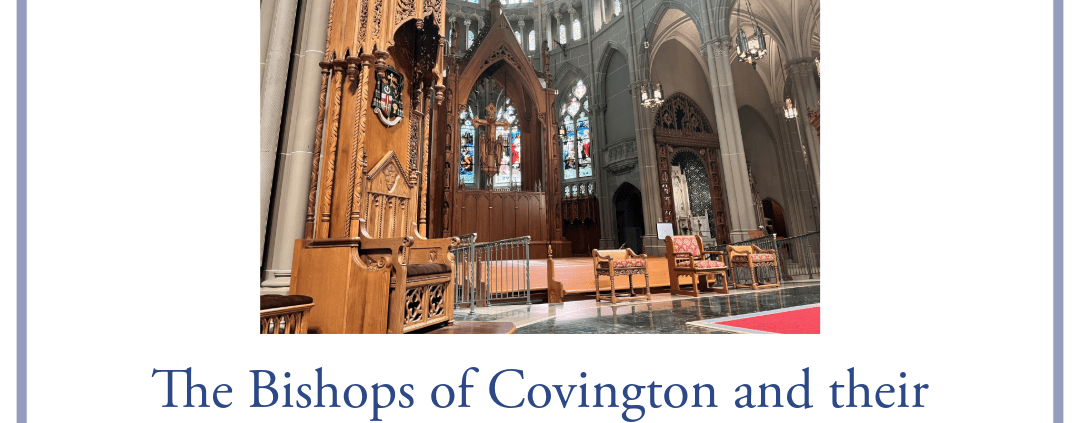
The Bishops of Covington and their contributions to the Cathedral Basilica of the Assumption

Bella Bailey

Multimedia Correspondent

When Bishop Maes built the Cathedral Basilica of the Assumption, Covington, many projects were left unfinished, like the façade and stained-glass windows. Over the last 100 years the Bishops of the Diocese of Covington have each added to the interior of the Cathedral, contributing to the vision and hope of Bishop Maes to have a Cathedral worthy to be the house of God.

Bishop Camillus Maes, the third Bishop of the Diocese of Covington

– Erected the Cathedral Basilica of the Assumption including the original chimera and gargoyles, as well as most of the façade.

– Installed many of the large stained-glass windows in the Cathedral, with few being left unfinished due to the first world war.

– Bishop Maes left instructions to his Vicar General (and future Bishop) Father Ferdinand Brossart to install mosaic stations of the cross.

Bishop Ferdinand Brossart, the fourth Bishop of the Diocese of Covington

– Coordinated the logistics and managed the money for the Cathedral under Bishop Maes.

– Installed the mosaic stations of the cross as directed by Bishop Maes.

– Completed the installation of the stained glass windows.

Bishop Francis Howard, the fifth Bishop of the Diocese of Covington

– Added a baptistry to the side of the Cathedral, making the baptistry the only structure of the Cathedral not present during Bishop Maes’ lifetime.

– Installed the Wicks pipe organ which is still in use today.

Bishop William Mulloy, the sixth Bishop of the Diocese of Covington

– Attempted to repair the damaged chimera with concrete and rebar.

– Installed much of the wood detailing seen in the Cathedral today, including the large crucifix, baldacchino, choir stalls, pulpit, cathedra and decorative wood screens around the Mary and St. Joseph altars.

– Restored the Duveneck artwork in the Blessed Sacrament chapel.

– Enlarged the sanctuary to fit the choir and organ, with a new altar being situated just in front of the baldacchino.

– Installed new communion railing.

– Cleaned and repaired the entire interior of the Cathedral, including the ceiling, windows and walls.

– Replaced original electrical wiring and installed the light fixtures seen today.

Bishop Richard Ackerman, the seventh Bishop of the Diocese of Covington

– Created the Sacred Heart altar.

– Brought the Schwab Organ, which resides under the rose window, to the Cathedral.

Bishop Robert Muench, the ninth Bishop of the Diocese of Covington

– Completed major renovations to the interior of the Cathedral including the addition of the baptismal pool, the reconciliation chapel, air conditioning, ramps up to the altar.

– The renovations included moving the altar forward to be in the architectural center of the Church, a new altar which was fashioned from Bishop Mulloy’s altar and communion rails, reconfiguring the pews, cleaning of the interior and exterior of the building and upgrading the sound system.

Bishop Roger Foys, the tenth Bishop of the Diocese of Covington

– Completed the façade which Bishop Maes was unable to complete with the addition of 24 saint statues representing the parishes of the Dioceses, and the tympana over the north and south portal doors.

– Fashioned the reliquary altar using the same type of wood Bishop Mulloy used for the baldacchino.

– Commissioned the stencil work which is seen behind the Mary, St. Joseph and Sacred Heart altars, as well as behind the tabernacle in the Blessed Sacrament chapel.

– Recommissioned the old baptistry to be the final resting place of Bishop Maes, and returned Bishop Maes’ remains to the Cathedral.

Bishop John Iffert, the eleventh Bishop of the Diocese of Covington

– With the completion of the Restored in Christ restoration, Bishop Iffert will have many notable contributions to the Cathedral attributed to his episcopacy.

– These include the restoration of the chimera and gargoyles, the cleaning of the entire edifice and façade, the restoration of buttresses, piers, belt courses, balustrades, colonnades, stained glass, tracery and delicate decorative elements.
Transfiguration Mission church completes renovations one year after devastating flood

Bella Bailey

Multimedia Correspondent

One year ago, in the early spring days of 2025, Transfiguration Mission church, Perry Park, situated near the Kentucky River, was rendered unusable after three feet of flood water destroyed all in its wake. The carpets, the pews and anything touching the floor had to be removed. After a painstaking year of renovations, the Church has opened its doors once more, inviting visitors and parishioners alike to come worship in a new space that inspires the “awesomeness” of the faith, said Father Thomas Picchioni, pastor.

To mark the occasion of the completion of the interior renovations, Bishop John Iffert traveled to the mission church, consecrated the altar, blessed the church and dedicated the new space, so that it might serve as a gateway to eternal life with Jesus for years to come.

The original Transfiguration Mission church was built in the seventies, and the interior reflected the design choices of the time, explained Father Picchioni. “It had a crucifix and everything, so you knew you were in a church, but that sense of awe seemed to be missing,” he said. When it came time to renovate the church post flood, Father Picchioni focused on deep liturgical themes and the want for a sacred space.

“I wanted people to feel a sense of peace just being here … a piece of ‘I’m in a different world now,” he said. “The intent of the whole redo was to get people to walk in here and just feel the awesomeness of what it means to be in a church.”

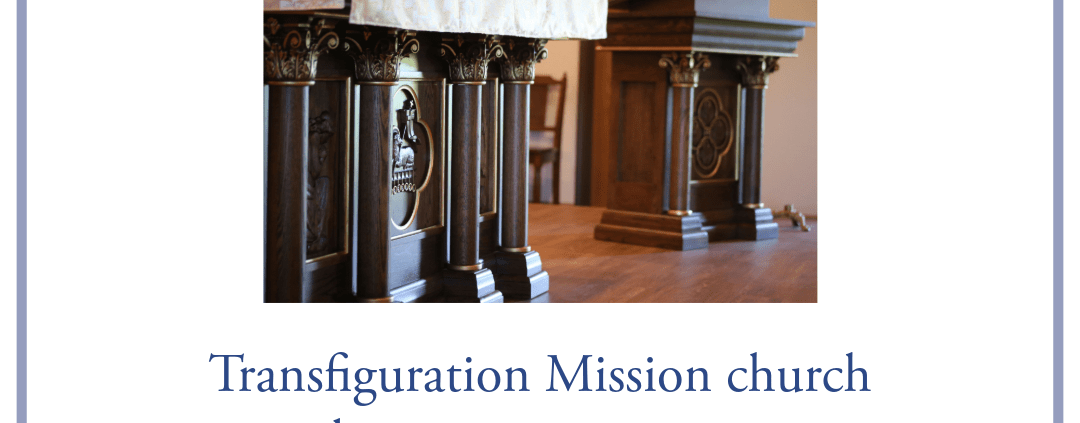
Because of the devastation caused by the flooding, the church was able to get an entirely new interior look. Originally, the tabernacle was off to the side, and the priest sat in the middle of the altar. Now, the tabernacle is situated on a new, wooden, high altar, adorned on the front with the carved image of the last supper. In addition, a new eternal flame was installed on the wall of the Church, replacing the one that was beside the tabernacle prior. The altar of sacrifice is also new, matching the gold detailing of the high altar, it depicts the sacrificial lamb with angels on either side. To match, the ambo is also a dark wood, with the imagery of the four evangelists.

The new sanctuary is larger than the old and was designed by Father Picchioni with the space in mind. “I wanted the sanctuary to be as big as possible … I designed it, gave it a unique look.” In addition, the crucifix that now hangs above the tabernacle, with a base of wood and gold detailing to match, was also handmade by Father Picchioni.

His vision for the new space came together, through determination and help of his parishioners, “I said, ‘I’m going to fight to put something together that is what I think is going to give glory to God,’” he said.

Parishioner Diane Webster said, “people were very impressed walking in and seeing all the new fixtures and just how refreshing and … it became more of a sacred space.”

“Seeing the time, effort, and money that got put into restoring it has definitely been very positive in our neighborhood, in our community, and it has definitely uplifted spirits … In some ways, it’s helped restore faith in some of our neighbors,” she said. “I think it makes them feel like their faith life is valued.”

FIRE Foundation of Northern Kentucky to host ‘A Mass of Belonging’ celebrating inclusion and community

Staff Report

The FIRE Foundation of Northern Kentucky invites families, educators, parish communities and supporters to join “A Mass of Belonging,” a special Mass celebrating inclusion and creating a greater sense of belonging for individuals with learning differences and disabilities throughout the Diocese of Covington. This Mass will be the third annual Mass of its kind.

The Mass will be held Sept. 15, 6 p.m., at the Cathedral Basilica of the Assumption, Covington. Father Ryan Maher, the cathedral’s rector, will be the celebrant.

The event is designed to celebrate the belief that there should be no separate Church for persons with disabilities, but “rather one flock that follows a single shepherd”, according to the FIRE Foundation. The Mass will bring together members of the Diocese, families, Catholic schools, parishes, educators and advocates to celebrate the gifts and contributions of people of all abilities to the Catholic Church.

Representatives from the FIRE Foundation of Northern Kentucky will be in attendance. FIRE Foundation’s mission is to champion the inclusion of students with disabilities in Catholic schools by providing educational resources, fundraising and promoting a culture of belonging. This year, the FIRE Foundation was able to provide grant funding to six schools in the Diocese of Covington towards accessible education.

“A Mass of Belonging is an opportunity for our Catholic community to come together and celebrate that every person has a place at the table,” said Missy Hail, president of the FIRE Foundation of Northern Kentucky. “We want families and individuals with disabilities to know that they are valued, welcomed, and an important part of our parishes, schools, and Diocese.”

Following the Mass, attendees are invited to participate in a family ice cream social, providing an opportunity for fellowship and connection.

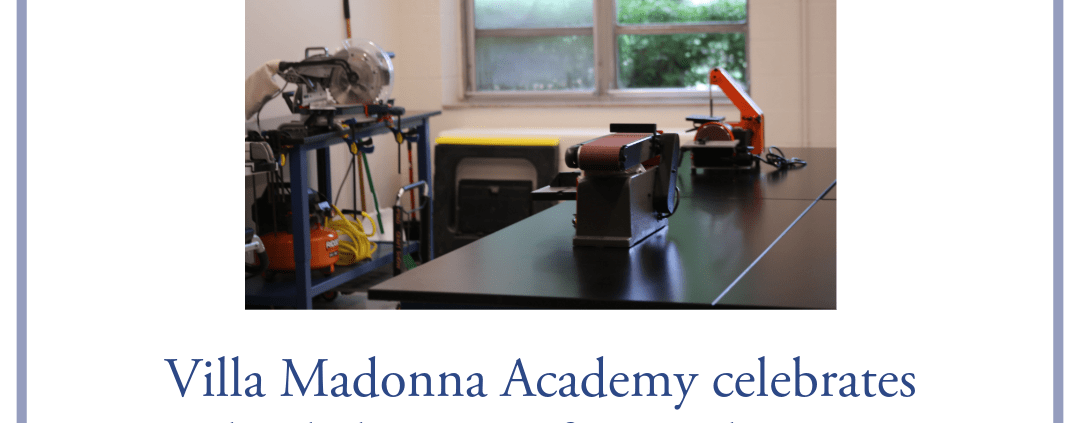
Villa Madonna Academy celebrates the dedication of new Chase & Cole Fischer STEM Wing

Maura Baker

Staff Writer

Faculty, staff and students gathered with members of the Villa Madonna Academy, Villa Hills, community to celebrate the blessing and dedication of the newly opened Chase & Cole Fischer STEM Wing. Named for brothers and Villa Madonna students Chase and Cole Fischer, who tragically died in 2023, the renovated classrooms and laboratories will be opening for students in the freshly begun 2026–2027 school year.

“So many in our Villa community have helped transform our campus, creating learning environments that reflect the excellence of a Villa education. We remain deeply grateful to all who help lay that foundation,” Pamela McQueen, president, Villa Madonna Academy, remarked during the wing’s dedication. “And now, the Chase and Cole Fischer STEM Wing represents the next step in that commitment — a place where curiosity is encouraged, creativity flourishes and students are challenged to prepare for the opportunities of tomorrow.”

Made possible through the generosity of private family donors and St. Elizabeth Healthcare, the STEM wing, which includes equipment for engineering and dedicated laboratories for scientific disciplines such as biology, chemistry and physics, will allow for “students and teachers will design and prototype solutions, build and test engineering projects, explore robotics and automation, investigate scientific questions, create digital media, collaborate across disciplines and solve authentic, real-world problems,” said Mrs. McQueen. “And, as they do, they will discover that the greatest innovations are those guided by wisdom, compassion and a desire to bring love and light into the world.”

Scott Seifert, a mathematics and physics teacher at Villa Madonna Academy, remarked that he was “amazed” when the faculty first walked in the newly renovated space.

“This new STEM spot,” he said, “it encourages us to create, to innovate, to learn, to enjoy and to dream. It compels us to do those things … what I like about science is that when you study it, you start seeing it all around you … But beyond that, which is probably most important, is you start seeing the order in the universe when you study science, you start seeing intelligent design, you start seeing God’s hand at work, and this STEM wing is going to help us in that endeavor. What a blessing.”

Bishop John Iffert who was present at the dedication, blessed the space. After his blessing, he reflected on the Gospel of Matthew, where Christian people are described as the “salt of the earth.”

“Jesus teaches that we are the flavor and the joy of life,” Bishop Iffert said. “Jesus, with these words, extends that mission to all of us in everything we do. In the face of the many problems of the world, like violence, materialism, poverty, moral relativism, Jesus challenged us to ask, ‘What can I do to share God’s love in the world?’”

“Christians are called to be light to the world,” he said, “and the world will be impacted for better or for worse by the way we live our lives. … When we misuse creation and its scientific principles, without any regard for the wisdom God has planted within us, we add to the chaos. But when we imitate Christ’s love, mercy and generosity — when we use our minds to effectively serve the dignity of our brothers and sisters — well, then we glorify our heavenly Father.”

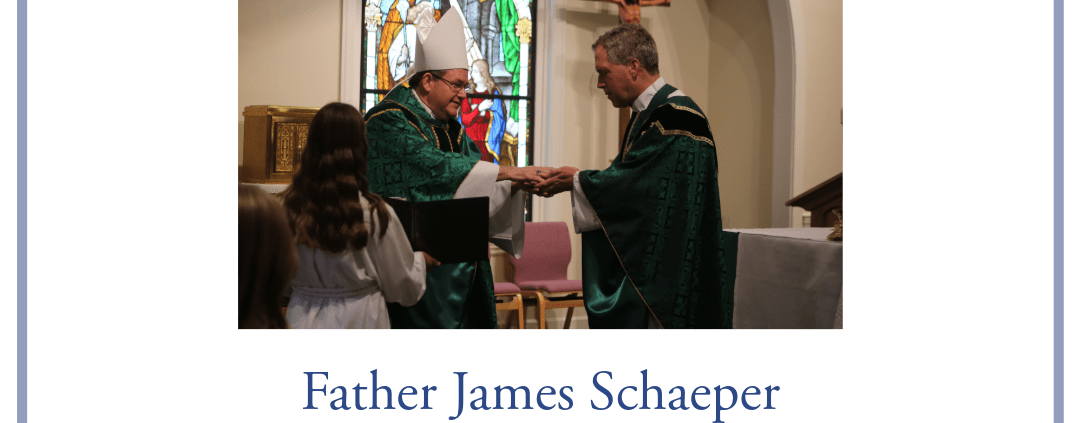
Father James Schaeper installed as pastor at St. Joseph Parish and St. Edward Mission

Bella Bailey

Multimedia Correspondent

Bishop John Iffert officially installed Father James Schaeper pastor of St. Joseph Parish, Warsaw, and St. Edward Mission, Owenton, through the Rite of Installation of a Pastor, Aug. 16. Father Schaeper was gifted the keys to his parish, and vowed to fulfill his duties as pastor, making sacraments regularly available to his flock and sharing the word of God in accordance with the Church.

Father Schaeper’s elevation to pastor comes after two years as Parochial Administrator to the parish and its mission. “What’s the difference? What’s the difference between a priest who is an administrator and a priest who is a pastor,” asked Bishop Iffert to the congregation of St. Joseph Parish. Answering his own question he said, “To us biblical language, you might say it’s the difference between a hired hand and a shepherd … When a man becomes pastor, he becomes the shepherd of a local flock.”

This role comes with increased duties and responsibilities, said Bishop Iffert, explaining that Father Schaeper now has “responsibilities toward you,” he said to the congregation. “As pastor, he is in a sacred obligation to provide for you all of the instruments of sanctification that the Church extends. To assure that you have access to regular sacramental life, to the Eucharist, to the forgiveness of sins. He has a responsibility for the catechesis of every person in the parish,” said Bishop Iffert.

To Father Schaeper, being a pastor means “leading others to Christ,” he said. Through regular use of the sacraments, of Communion and reconciliation. “With faith … and with love and an open heart,” he said. “We bring the sacraments, and being there for people in difficult times, but also in joyous times … helping them to do God’s will and to live out their vocation with faith and cooperating with God’s will.”

The Gospel story for the day of Father Schaeper’s installation was the story of the Canaanite woman who was begging Christ for the healing of her daughter, who was wrought with evil spirits.

“Her only thought is the freedom of her child,” said Bishop Iffert, “and she has come to believe that Jesus can free her child, and in freeing her child, free her.” The woman pleaded with Jesus, calling out to him, “Lord, help me,” said Bishop Iffert.

“Father Jim,” said Bishop Iffert addressing Father Schaeper, “everything you and I do in service to the people of God should begin with that prayer of faith. Everything we do must begin with trust in the Lord God, and with crying out to the Lord to help us in everything we do.”

In begging for the healing of her child, the woman makes Jesus and his disciples “uncomfortable,” said Bishop Iffert, for they believe there is no way they can help her. This uncomfortable tension exists in the world today, said Bishop Iffert, “Our life together as the family of God is not going to be perfect this side of Heaven.”

From this Gospel reading, it is taught that amidst that tension “to persist in charity, to persist in love … always in enduring love, always go on teaching, pleading administering mercy with a persistent need in Christ,” he said.

“It’s great instruction for us today, we celebrate this priest who has become your pastor, and this people who has become your flock. Begin everything you do together in faith,” said Bishop Iffert.

During his remarks at the conclusion of Mass, Father Schaeper said, “we’ve done really great things here by cooperating with God’s grace … God bless you all and thank you.”

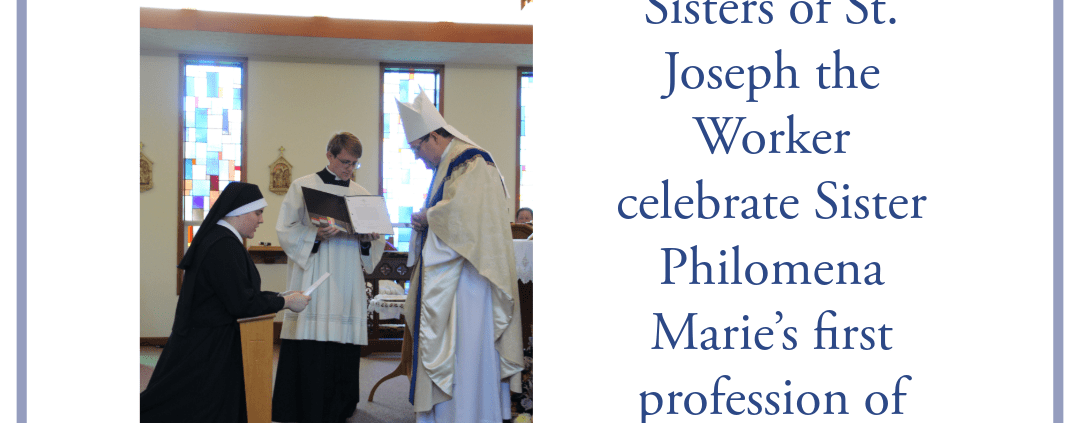
Sisters of St. Joseph the Worker celebrate Sister Philomena Marie’s first profession of vows

Bella Bailey

Multimedia Correspondent

Tucked away from the rest of the world, down a winding drive in Walton, Ky., occurred a moment of total abandonment to the Lord as Sister of St. Joseph the Worker Philomena Marie made her first profession of vows, Aug. 15. Inside the small convent chapel gathered Sister Philomena’s mother, father and brother who traveled from Oklahoma, along with friends of the Sisters St. Joseph the Worker.

The profession of first vows is an important milestone in the life of any consecrated religious as it leads them deeper into life with their community and prepares them for their final vows, where they become fully consecrated to Christ. Sister Philomena professed these vows during Mass celebrated by Bishop John Iffert, concelebrated by Bishop Emeritus Roger Foys; Father Matt Cushing, chaplain for the Sisters of St. Joseph the Worker; Father Daniel Schomaker, pastor of Blessed Sacrament Parish, Ft. Mitchell; Father Kelly Edwards, a priest of the Archdiocese of Oklahoma City and Sister Philomena Marie’s former campus minister and spiritual director during her vocational discernment. Also in attendance were Deacons Hudson Henry, St. Joseph Parish, Crescent Springs, and Chuck Melville, St. Barbara Parish, Erlanger, as well diocesan seminarian, Will Fuller.

In preparation for her first vows, Sister Philomena participated in a silent retreat, where she spent six days reflecting on this next step in her discernment to consecrated life. When the day came to profess her first vows, Sister Philomena said she felt only, “a profound sense of peace.” Though nervous in the days leading up to the event, “when I walked into the chapel right before Mass, I just felt this space, like the peace that surpasses all understanding that the Lord gives and it’s like, ‘yes, I’m here. I’m ready, and here I am Lord. I come to do your will,’” she said.

During the profession of vows, Bishop Iffert blessed the crucifix and chain that each sister of the order wears, as an outward manifestation of their union to God, something that Sister Philomena likened to a wedding ring. She recalled a moment, the night before she was to profess her vows, “sister was setting up the chapel, and she had the crucifix on a little table, and that was the moment, like ‘oh, this is for real.’”

Prior to the profession of vows, during his homily, Bishop Iffert said to Sister Philomena, “You are choosing today, with these vows, a life filled with blessing … Those who are consecrated to the Lord Jesus Christ, who go all in on that single most central loving relationship of our lives, is all for gain. Even the hardships you encounter, even the difficulties that come with life, they are for something. They are for learning the language of sacrificial love.”

Sister Philomena Marie will continue to renew these “temporary vows” once every year for at least three years before professing final vows, where she will be bound forever in consecration to Christ.

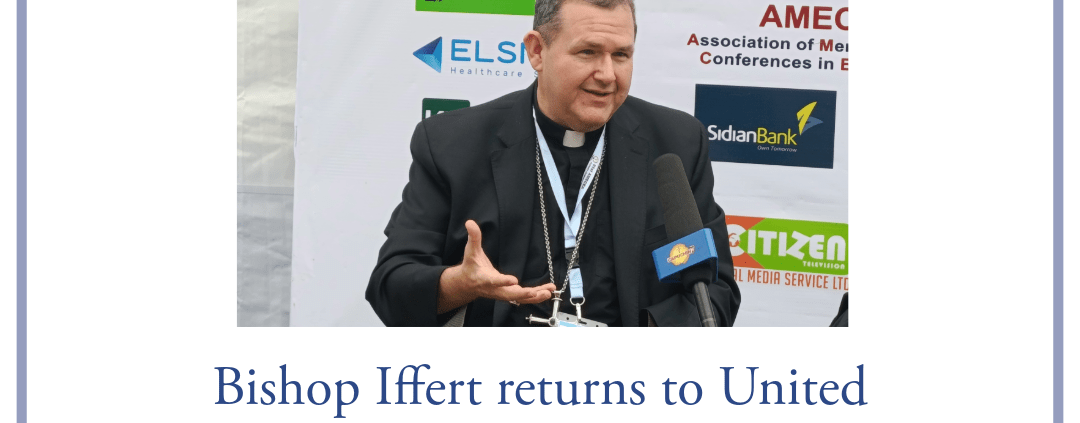
Bishop Iffert returns to United States from Africa, having met with local Church, faithful

Maura Baker

Staff Writer

From July 12 to August 3, Bishop John Iffert travelled halfway across the globe to Africa. His trip took him to the countries of Kenya and Madagascar on the East side of the continent, where he met with African bishops and religious sisters, visited the humanitarian compound Akamasoa (“good friends” in Malagasy) in Madagascar and even encountered briefly wildlife such as a white rhino in Kenya and lemurs in Madagascar.

As a member of the United States Conference of Catholic Bishop’s Subcommittee for Solidarity with the Church in Africa, Bishop Iffert’s trip first had him attending a meeting of the Association of Member Episcopal Conferences in Eastern Africa (AMECEA) in Nairobi, the capital of Kenya.

With one session every three years, Catholic bishops from Tanzania, Zambia, Malawi, Uganda, Kenya, South Sudan, Sudan, Eritrea, Ethiopia and associate members Somalia and Djibouti all come together. This year, Bishop Iffert alongside USCCB consultant Fritz Zuger, attended the session for dialogue on how the USCCB Subcommittee for Solidarity with the Church in Africa’s yearly national collection — which genereates three and a half million dollars annually given as grants to the Church in Africa — can best support the needs of the people in these nations. While the Diocese of Covington has previously never taken the subcommittee’s collection for Africa, the diocese plans to begin taking it in 2027 as part of the international missions collection, according to Bishop Iffert.

“This year, the plenary session focused on accompanying young people,” Bishop Iffert said. “Young people from all of these countries came to Nairobi to give their input to the bishops on how they thought the Church could better accompany them as young Catholics.”

While in Nairobi, Bishop Iffert also visited the Sisters of Notre Dame there.

“The Sisters of Notre Dame were founded in East Africa by two sisters from Covington and two from California,” he said, “and started their presence there.”

The Sisters of Notre Dame now have their own province in East Africa, with Bishop Iffert visiting one of their houses of studies and one of their schools.

After Nairobi, Bishop Iffert and Mr. Zuger flew to the island nation of Madagascar, where they visited the National Episcopal Conference there — meeting with Malagasy bishops and staff of the conference and Catholic Relief Services and continuing dialogue of how the USCCB can best assist the nation’s needs.

“The whole mission was to get to know people,” Bishop Iffert said, “to get to know the Church and again to help them understand what our program can do and how we can help them.”

Bishop Iffert’s final visit on the trip was to Akamasoa. Founded in 1989 by Vincentian missionary Father Pedro Opeka, the compound of houses built to aid Madagascar’s poor has turned into a proper community and humanitarian effort — providing food, shelter and education.

The late Pope Francis, who visited Akamasoa himself in 2021, said “This is what one priest can accomplish. This is what one life can accomplish when they follow the will of God,” Bishop Iffert quoted.

“It was just extraordinary,” Bishop Iffert said, reflecting on a Mass of around 5,000 people held at the parish in Akamasoa. “Madagascar is the ninth poorest country in the world … extraordinary poverty, and they’re really struggling to develop. There’s a lot of political corruption there.”

Bishop Iffert commented further on the volunteers and missionaries at Akamasoa. “Just so many good people,” he said, “So many holy people who want to contribute to the life of this church. It was a wonderful visit.”

Diocesan strategic planning process prepares for fall session on governance

Bella Bailey

Multimedia Correspondent

The public portion of the Diocese of Covington’s spring strategic planning process has all but concluded, with Bishop John Iffert preparing to hear the priorities identified from the three commission.

“The committees have brought their data forward, and probably in the next two weeks we should have a good idea on the priorities that have bubbled up across the three commissions,” said Deacon Jim Fortner, chief operation officer for the Diocese of Covington. “Then, we will draft the priorities based on what we heard. We are going to review that with the commission leaders,” he said, “Then they look at it and then they make adjustments based on what they heard.”

Once the commission leaders, Deacon Fortner and the strategic planning consultants are aligned on the identified positions, they will be presented to Bishop Iffert. His feedback will then be taken back to the commission leaders for an update. At the end of this process, “we got the priorities ready to go, publish, and then we work on the actual plan underneath it. So, we’ll have the goals, priorities, and then we’ll have an actual planning team…their job is to then take it into a specific action plan,” said Deacon Fortner.

A key element of the strategic planning process so far has been the input of the faithful throughout the diocese, with lay leaders, clergy and religious all coming together. “It’s been beautiful,” said Deacon Fortner, “you’re putting responsibility on the people to help us make these decisions.” He continued saying, “It’s been phenomenal. The amount o support that we got, the passion from people has been invigorating because folks recognize that this is a big opportunity to provide input into a strategic plan,” he said.

Part of the spring’s strategic planning process was gathering data, both quantitative and qualitative, in the form of anecdotal evidence from committee members. Deacon Fortner referred to the data gathered as, “rich insights,” which was gathered by, “listening to people, looking at other diocese, which we’ve done across the board,” he said. This data, and the priorities identified from it, will be key when beginning the fall portion of the strategic planning for diocesan governance.

“We started with the spring commissions, they give input on what they need from the Curia,” said Deacon Fortner. “That’s why it was really important to start with those spring commissions and let that feed the Curia.”

“This is a synodal process,” said Deacon Fortner, “at the end of the day, this is all about salvation of souls, this is all about leading people to a sacramental lifestyle. Everything we do in this strategy work needs to ultimately lead to that.”

Diocesan Pastoral Council and Deanery Council receive name changes, other changes

Maura Baker

Staff Writer

Changes were announced at a Deanery Council meeting, Aug. 8, affecting both the Deanery Council and the Diocesan Pastoral Council — with their name changes, Deanery Pastoral Council becoming Deanery Council and Diocesan Council becoming the Diocesan Pastoral Council, being the first distinction made.

“Both councils go along with the notion of synodality,” according to Jamie Schroeder, chancellor, “as well as consultation and walking together in terms of decision making and discernment about issues that impact the diocese and the local Church.”

The Deanery Council — which consists of “deans” from each deanery in the diocese, two lay representatives from each parish and a representative of clergy and religious from each deanery as well — as well as the Diocesan Pastoral Council, consisting of two of the lay representatives as well as the Vicar for Religious and Vicar General, both communicate and collaborate with the bishop and the chancery regarding the needs of the parishes and the diocese at large.

Lay members of both councils are chosen typically from their parish councils, so that they may serve as direct liaisons.

The name change was done in an effort to “distinguish” between the two councils, according to Mrs. Schroeder, as the Diocesan Pastoral Council was established later by Bishop John Iffert to allow for more open dialogue with lay people — and the names had previously caused confusion.

In addition to the change of names, it was announced at the meeting that deans, while remaining in leadership positions, can now delegate leadership responsibilities, such as “the logistical and practical duties of leading the deanery council” to Diocesan Pastoral Council members as they deem fit or necessary at their discretion.

“So many things happen in the Church behind the scenes,” Mrs. Schroeder said, “and your average person in the pew doesn’t realize that that’s happening. I think it’s good when the lay people of the diocese can stay informed of these changes at work.”

Bishop Iffert reflects on the virtue of hope at deacon rededication vespers

Bella Bailey

Multimedia Correspondent

On Aug. 10, deacons from across the diocese gathered with Bishop John Iffert, their wives, fellow clergy, family and friends for solemn vespers at the Cathedral Basilica of the Assumption, Covington. The vespers, celebrated on the Feast of St. Lawrence, Roman martyr and deacon, celebrated the rededication of the deacons to their diaconal promises of obedience, respect and commitment to sharing the word of God.

Bishop Iffert, who led the vespers, addressed the deacons in his homily. He told the story of a man he’d met the day before. George, who was concerned for his son, set up to accompany him in prayer — committing to praying all four sets of mysteries of the Rosary daily.

Bishop Iffert said that George told him that, “Until this point in my life, I never really thought that I ought to be trying to be a saint. … It never really occurred to me that it was something I should be trying to do with my life, or that it was even possible. And now, it’s all I think about.”

“That conversation with that man reminded me of the virtue of hope,” said Bishop Iffert.

“We have to believe that it is possible for us to be saints. We have to believe — and even longing for the desired possibility of being a martyr like Lawrence — that we might be capable of laying our lives down for the poor,” he said.

Speaking more directly to the deacons present, he continued, “We have to believe that it’s capable for all of us here who share in Holy Orders that have been ordained deacons. We have to believe that it’s possible for us to serve the Word of God with our whole heart.”

“Our hope is Christ Jesus the Lord,” Bishop Iffert said. “His charity, his grace, is what makes it possible for us both to know that we might live worthily according to these orders we have receives and that without him, we are almost certain going to fail.”