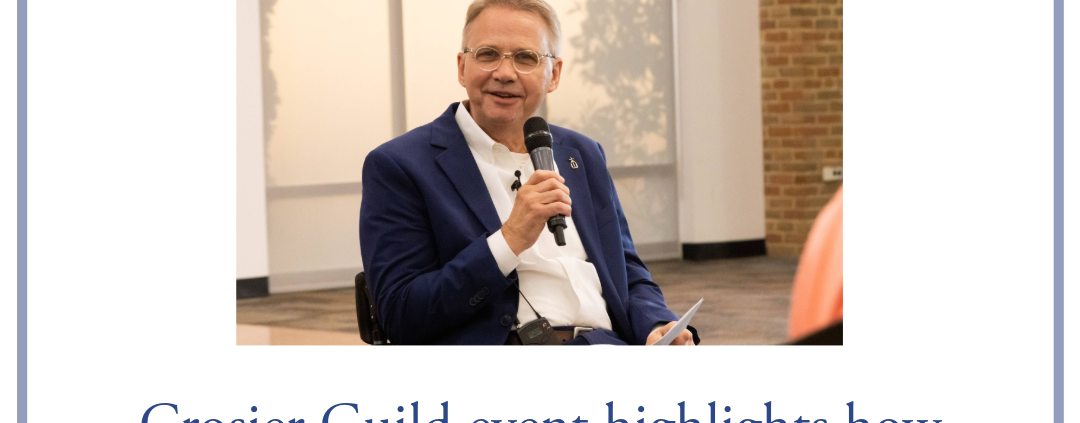
Nominations now being accepted for Outstanding Catechetical Leaders

Staff Report

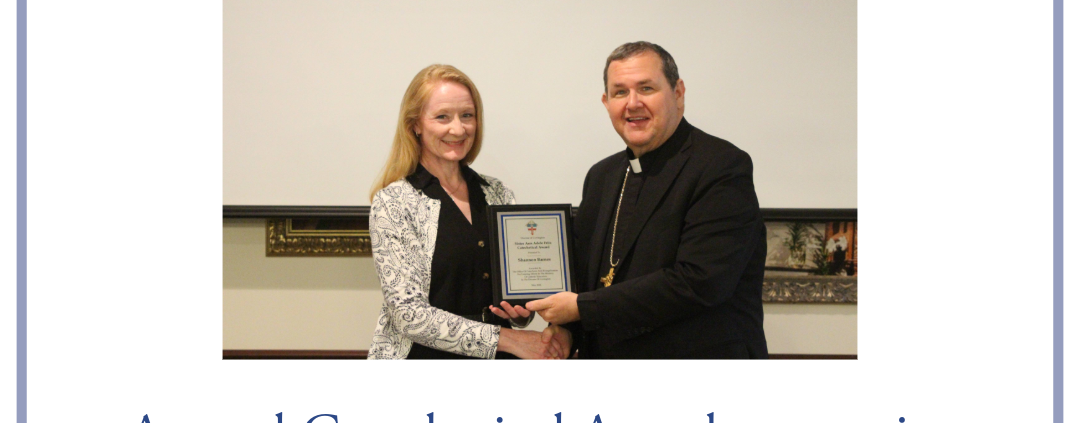
Every parish and school has at least one — a teacher, catechist or homeschool educator, whose love of the faith informs everything they do and say, a leader whose love of the Lord is so palpable that people naturally gravitate toward them and want to emulate them. The Office of Catechesis and Evangelization (OCE) will once again be honoring these Outstanding Catechetical Leaders at the Catechetical Leadership Awards, May 14.

“Recognizing the work of our catechists is not only a joy for us — it is essential,” said Isaak A. Isaak, director of the OCE. “These awards remind us that the Church is strengthened every day by men and women who witness the faith with humility, compassion and deep devotion.”

The OCE needs help in identifying these outstanding catechists. There are eight awards and nominations are now being accepted for each. Catechists are not limited to teachers in a classroom but also recognize homeschool educators and those leading ministries like marriage preparation and youth and young adult ministry.

The premiere award is the Sister Ann Adele Fritz Catechetical Award. For 47 years, Sister Ann Adele (born 1930; died 1998), a Notre Dame Sister, gave her whole heart in service to the Diocese of Covington and Archdiocese of Cincinnati. She served as both teacher and principal, and is remembered for her high expectations, organization, creativity, friendliness and service projects. The recipient of this award reminds us that we are all called to be joyful witnesses to Jesus Christ and are willing to make personal sacrifices so that others may come to know and love Jesus. This person embodies what it means to be a missionary disciple.

“Sister Ann Adele’s legacy reminds us that the work of a catechist is not simply instructional; it is missionary,” said Mr. Isaak.

The other categories include:

— Outstanding Early Childhood Teacher/Catechist

— Outstanding Teacher/Catechist (middle school, junior high, high school)

— Outstanding Catechetical Leader (catechetical leader, principal, director or coordinator of Religious Education)

— Outstanding Family Life Minister (marriage preparation or enrichment, natural family planning instruction, ministry for separated or divorced, and widows and widowers)

— Outstanding Catechetical Minister (youth, young adult, and campus ministers)

— Outstanding Catholic Retreat Minister

— Outstanding Homeschool Educator

“Our catechists are the quiet heroes of evangelization. Whether they serve in classrooms, parish ministries, family life programs, youth and young adult outreach, or in the dedication of homeschooling, each one helps others encounter the living Christ in a personal and transformative way,” said Mr. Isaak. “Their love, creativity and commitment form the heart of ministry.”

Nominations are due by Wednesday, March 18. The awards will be distributed May 14, 6–8 p.m., Bishop Howard Memorial Auditorium at the Diocesan Curia. Criteria for each of the awards and nomination forms are available online at https://www.covdio.org/catechetical-awards/.

Just as with the Eucharistic, God transforms the work of our hands to reveal his Kingdom and unite his people

Laura Keener

Editor

During a Holy Hour for Peace, Feb. 8, at the Cathedral Basilica of the Assumption, Covington, Bishop John Iffert offered a reflection on what true peace means for Christians and for the world today. He began by reminding those gathered that peace is God’s desire for every person. When Jesus appeared to his disciples after the resurrection, his first words were, “Peace be with you.”

Bishop Iffert said that the peace Christ offers is different from the peace the world promises. The world often views peace as the result of power or domination, he said, but such peace is “no peace at all.” Instead, true peace comes from becoming part of the Body of Christ and learning to set ourselves aside so that Christ may grow within us.

The Holy Hour was a part of a national prayer effort in response to increased violence within the United States and in the world. Archbishop Paul Coakley, president of the United States Conference of Catholic Bishops, Jan. 28, invited all bishops and priests in the United States to offer a Holy Hour for peace, “for reconciliation where there is division, for justice where there are violations of fundamental rights and for consolation for all who feel overwhelmed by fear or loss.”

At the Holy Hour in Covington, Bishop Iffert encouraged the congregation to pray not only for peace but also for the return of Christ, who will gather all people into His kingdom.

“The only way we can have peace is by sharing the body of Christ, being drawn into his body and by the gift of his Spirit, to take the Father’s Will as our will in Christ; to put ourselves aside, to decrease so that he can increase; to become small, so that he can become all. This is the only way, we pray, that peace will move in our world. It’s the same thing as saying we pray for Jesus to return,” said Bishop Iffert. “We pray for Jesus to come gain. To draw us to himself and to gather us into his kingdom”

Until then, he said, Christians must work to live as brothers and sisters and make their communities signs of God’s kingdom on earth.

“We pray in the meantime that our efforts to be peaceful with one another, to live as real brothers and sisters to one another and to our neighbors, that these efforts will be a real sign of the Kingdom of God that can lead to the development of people; the gift of a real human, joyful, life shared together,” he said.

As part of the Holy Hour, Bishop Iffert read from “Sollicitudo Rei Socialis,” an encyclical written by Pope St. John Paul II in 1987. The document reflects on the development of people and the barriers that keep many in poverty and hardship despite global efforts to improve economic conditions. It also explains that peace and human development are deeply connected with the Church’s mission and with the common good.

The encyclical teaches that even though no earthly achievement can be confused with the Kingdom of God, Christians must still care about people’s real needs in society. Knowing that the poor will always be among us is not an excuse to ignore suffering or injustice.

“Even though we know that economic growth, that political freedoms, are not themselves the goal of the Christian life or the Kingdom of God, there is no excuse that can be found in the Christian gospel for ignoring the needs of others, what they need to grow and develop and be educated and share these blessings with their children. There’s no excuse in the Gospel for ignoring that,” said Bishop Iffert.

Instead, every effort to improve human life — however small or imperfect — can be used by God for good. “However imperfect and temporary, all the things that can and ought to be done through the combined efforts of everyone and through Divine Grace at any given moment in history in order to make people’s lives more human,” he said. “Nothing will be lost.”

Bishop Iffert emphasized that the Eucharist shows most clearly how God uses human work for his purposes. In the Mass, the simple gifts of bread and wine, “the work of human hands,” are transformed into the Body and Blood of Christ through the Holy Spirit. In this way, God uses ordinary things to reveal his kingdom and unite his people with himself and with one another.

This same pattern, the bishop said, applies to efforts for peace.

Just as God transforms bread and wine, he can transform our actions — our advocacy, our service and our care for the poor — into something greater than we could achieve alone, he said. Because of this, Christians should never give up working for human dignity, fighting injustice or resisting violence, even when progress seems slow or discouraging.

“We are not to be discouraged when the forces of the world work against human dignity,” said Bishop Iffert. “We are to see and we are to continue to work for the building up of that dignity precisely because we know that God will take the work of our hands, he will bless them. He will break them. He will offer praise over them. He will unite those efforts to the power of his Spirit and our shared life together in God will be plenty for all the world.”

Bishop Iffert concluded by reminding those gathered that every act of love and every effort for peace will bear fruit when united with Christ. “We never give up praying for peace,” he said, because God will use the work of our hands to bless the world.

Have a Beatitude Lent — Part 1, Poverty of Spirit

Most Rev. Bishop John Iffert

Bishop of Covington

My homilies and pastoral reflections are almost always a product of what I have seen and heard in the days and weeks prior. It is true again as I sit to think with you about how to enter the season of Lent in 2026.

This past Sunday I joined with others to pray for peace during a Holy Hour at the Cathedral Basilica of the Assumption. I was amazed at the number of people who came out to pray late in the afternoon on Super Bowl Sunday with little notice or planning. I was taken by the profuse expression of appreciation I received for providing this opportunity to pray for peace in our hearts and minds, in our families, our Church, our communities, our nation and world. Many people seemed eager for an opportunity to bring their concerns to the Lord and to be led in turning our minds and hearts toward the mind and heart of Christ — who always greets his disciples with assurances of peace.

Just a week before that Holy Hour for Peace, the Church gave us the Beatitudes as the Gospel for the Fourth Sunday of Ordinary Time.

It is with these experiences in mind that I invite myself, and you, to consider shaping our Lenten practice this year by asking how we might contribute to the peace that Christ wishes for his Church and his world. I propose to focus on the first three of the beatitudes as an entry-point for this Lent: poverty of spirit, mourning and meekness of heart. Today I will write about poverty of spirit. Next week’s Messenger will include my reflection about mourning and meekness.

Poverty of Spirt is another way to speak of freely chosen humility. Humility is that virtue that clearly recognizes that every good has its origins in God and gives due deference to the debt of gratitude and worship owed to God for his graciousness. It works against the corrupting influence of pride, self-aggrandization and entitlement that can eat away at the individual, the community or the nation that indulges in self-promotion. In the end, it works against the kinds of idolatrous attachments to honor, greed, power and pleasure that lead to a “We-They” oppositional and acquisitional view of the world. It works against the kinds of attachments that can be taken as causes for (I might say excuses for) self-assertion, manipulation, violence and war.

We might focus on humility this Lent by adding the Litany of Humility to our daily prayer. Perhaps we could fast from something we take particular pride or delight in. It might be a type of food or drink that is luxurious, but it might also be a piece or type of clothing for which we get particular compliments, our impressive pen than draws attention in business meetings, or anything that speaks to us of high status or our own accomplishment.

We might take up a daily practice of gratitude, identifying each day an additional reason to be grateful for a gift that is important to us and our success, that ultimately came to us as gift — like a supportive family, educational opportunity or being born into a society that respects the rule of law. As an expression of gratitude and devotion, we might make a sacrificial gift of talent or treasure to assist those who have not so benefited.

It has been said that the virtue of humility is first in Jesus’ list of Beatitudes because it is the virtue that is necessary for the development of all other human virtue. It works for the establishment of the Kingdom of Peace by fostering a healthier sense of self that is not in competition with others for honor, respect or any other good. It is the foundation for the edifice of temperance, prudence, fortitude and justice.

Next week I will write about the virtues of mourning with those who grieve loss and embracing meekness. Whatever Lenten observance we choose, may it lead us to become instruments of the peace Christ wills for his people and his Church. May the Holy Spirit guide you and pour out blessings upon you in this sacred time.

A story of forgiveness in the face of tragedy inspires students during Catholic Schools Week

Bella Bailey

Multimedia Correspondent

A story of tragedy, loss, grief and despair turned into a story of love, hope, forgiveness and mercy when Matthew and Rebecca Seifried turned to their faith after the death of their eight-month-old daughter, Lucia Iris. The Seifrieds traveled from their home in Michigan to St. Henry District High School Erlanger, alma mater of Mr. Seifried, to tell students their story.

On April 26, 2025, just days after celebrating the risen Christ at Easter, the young family of four was enjoying a peaceful evening by the lake when, “We see this massive white Toyota Tundra coming straight for us,” said Mr. Seifried. “It ended up continuing to come and hit Lucia. We knew instantly that she had died.”

Mr. Seifried sustained injuries to his knee and leg after the truck pinned him against a tree before tumbling into the shallow lake. The driver, relatively uninjured, was later arrested for operating a vehicle under the influence and was charged with seconddegree murder. The driver pleaded no contest to the felony charge in a January court appearance.

Mrs. Seifried and the couple’s eldest son were uninjured and accompanied the ambulances to the hospital where Lucia was pronounced dead. “We don’t even really have the words to explain the feeling other than just a complete and empty hollowness,” said Mr. Seifried. “It felt like a darkness that was shredding us apart from the inside.”

When the Seifried family was able to see Lucia in the hospital, they made a conscious decision that, “No matter what emotions we feel in the coming days, we will not let this take us from our God, from faith, from Christ. This is the cross that God wants us to carry, and we will bear it,” said Mr. Seifried.

In the days and weeks following Lucia’s passing, the Seifrieds felt God’s presence and knew that he was accompanying them through this journey of loss.

“We say nobody should have to go through what we’ve been through. But we do wish everybody could experience what it was like to have the presence of God in those two-week periods. If you did, you would never question if God is real; you would never question your faith,” said Mr. Seifried.

Together, the Seifried family began to choose forgiveness and eventually offered the driver a plea deal of 13.5 years in prison.

“Through much prayer, we decided that in order to show mercy as Christ has asked, we decided to offer a plea deal,” said Mr. Seifried.

“Us forgiving him doesn’t mean that it just erases what he’s done to us,” said Mrs. Seifried. “It allows us to be able to have peace in our hearts and to then allow him to start reviving his own soul.”

“We could make the choice of anger, bitterness, hate, or we can choose what Christ wants us to choose. We can choose love, forgiveness, mercy,” said Mr. Seifried. “And, while some days it’s much easier than others, that’s the path that we really want to choose. We want to choose love; we want to choose mercy.”

Kentucky March for Life to bring faithful together in Frankfort (copy)

Bella Bailey

Multimedia Correspondent

Participation in post-secondary education has been on the rise since the 1950s, creating a national cultural shift — high school graduates don’t go to work, they go to school. College admissions have been growing steadily over the last half a century and to accommodate this shift, many high schools have turned into centers of college preparation. This leaves little room for the students who wish to pursue what would now be considered a non-traditional career path, such as the trades.

At Holy Cross District High School, Covington, they are bridging the divide, providing opportunities for students to explore a profession in the trades, even before graduation.

James Resing, instructor of the newly revised “Intro to the Trades” class, has three goals for the students in his class: to grow in confidence using power tools, to pick up a new hobby and “the introduction of career paths to students who might not be seeking college,” he said.

Mr. Resing’s class explores the basics of HVAC, plumbing, electric and carpentry. The students build walls, run wiring to plugs and switches, solder copper pipes and build toilets. At the end of each semester, the students participate in an “open workshop,” said Mr. Resing.

The success of the program is evident, with more classes being added due to the demand of students who wish to register. In addition, six students who have gone through Mr. Resing’s class have secured an apprenticeship in the trades.

The apprentice program is for students who have expressed an interest in a career through the trades. Structured as a cooperative education opportunity, the students are gainfully employed in a trade. They attend school for half a day, completing all their core class requirements, before heading to work.

“One of them is in facilities maintenance, one is actually working for a car dealership in mechanics, one is in HVAC and I have a couple that are with builders,” said Mr. Resing.

Hannah Knox, graduation and career counselor, said, “I’ve seen a different confidence. They have found something that excites them so they’re different at school. They want to be here; they want to be involved. Because they know that when they go to their job site, they’re going to also get to do what they love.”

Facilities maintenance apprentice, Grant, said, “I feel like it is giving me a clear path on which trades I want to get into and how to go about getting into this trade. It has given me experience while I’m still in school.” “This is all about exploration,” said Mr. Resing.

“This is all about giving them a place to try and realize it’s not for them, and then I’ll help them find something else.”

Career readiness at Holy Cross District High School means “building successful individuals who are going to be positive members in a community,” said Mrs. Knox.

Kentucky March for Life to bring faithful together in Frankfort

Laura Keener

Editor

The Diocese of Covington will once again join Catholics from across the Commonwealth for the third annual Kentucky March for Life in Frankfort March 11, beginning with Mass at 9:30 a.m. at Good Shepherd Parish, Frankfort. Bishop John Iffert is scheduled to celebrate Mass and spend the day with participants.

“We will have Mass the morning of the March, and that is where the Catholic community from all the dioceses come together,” said Faye Roch, diocesan director, Pro-Life Office who is coordinating Covington’s participation. “Good Shepherd in Frankfort has hosted us, and Bishop Iffert will be presiding over Mass.”

Following Mass, travelers will have a short break before heading to the rally point — a location still to be determined due to construction at the Capitol. There, participants will gather for a series of speakers before continuing on to the Cemetery of the Unborn in the Frankfort Cemetery for a concluding prayer service. The day typically wraps up around 3:30 p.m., after which buses return to Covington.

This year, the Diocese of Covington expects to take three buses, including two filled primarily with students. The buses will leave Covington for Frankfort at about 7:30 a.m. “Every year it seems like we’ve increased our attendance,” Mrs. Roch said. She added that moving the event back to March should help avoid last year’s weather issues and make travel easier for more families and parish groups.

Mrs. Roch emphasized that even with abortion clinics no longer operating in Kentucky, the March remains vitally important. “We have to love them both,” she said. “A woman many times is in crisis, and we have to love and support our women and show them that the pro life community is not only thinking about the baby, but we’re thinking about you.”

She noted the need for legislators to hear this message clearly. “It’s important that our legislators know that we want to support women and offer them solutions to their crises,” she said, pointing to issues such as health care, child care, and other supports for women and families. With various groups pushing for proposals such as criminalizing women, Mrs. Roch stressed that the pro life position must remain compassionate and comprehensive.

Last year, a notable number of legislators attended both the Mass and the rally — something Mrs. Roch hopes will continue. Their presence, she said, helps make visible “the community that has traveled there, and the importance of this.”

How one prayer group uses Franciscan at Home to grow in their faith— consider a new Lenten practice

Laura Keener

Editor

As part of the Diocese of Covington’s With One Heart pastoral plan, a collaboration with Franciscan University’s Catechetical Institute allows every individual in the Diocese of Covington free access to the Franciscan at Home library of Catechetical materials.

These materials, accessed via https://franciscanathome.com/ diocese-covington, offer learning tracks for any members of the diocesan community with courses covering many aspects of Catholic teaching, as well as offering “tracks” that cater to the needs of an individual or group no matter their role in their parish and diocesan community.

These courses go hand-in-glove with many parish pastoral plans as adult faith formation and education was identified as a priority for many parishes.

Currently, one friend group who gathers weekly for prayer is utilizing these free resources to follow a mentor track titled “A Vision for Caring for Others Personally.”

Jenni VonLehman, one of the group’s friends, reports a positive experience with the programming. “When my team first started viewing the Franciscan at Home videos, I expected to fill my brain with good information,” she said. “What I wasn’t expecting was to experience a real sense of calm while having a retreat-like encounter with God. I started looking forward to the videos, especially the ones presented by Dr. Willey. Not only were they helpful — they were actually fun to watch.”

She continued, saying, “In the catechetical formation classes, we were given the unexpected opportunity to work on our own catechesis and our own personal relationship with Christ. We learned that we can’t give what we don’t have ourselves, so we were immersed in it first. It was exhilarating,” she said. “I’ve actually watched a couple of the videos again on my own, and I learned even more the second time … the fact that the Covington diocese generously provides this free program to every member of the diocese is pretty awesome. I’m sure most people aren’t even aware of this treasure.”

This Lent, parish groups are asked to consider how Franciscan At Home might benefit members by hosting a similar prayer/study session. There are over 200 tracks to choose from, or you can start with the same track that Ms. VonLehman has found inspiring.

“It’s an excellent tool for your own personal growth,” said Ms. VonLehman, “or to use to help others growth in their faith.”

For details regarding registration and usage of Franciscan at Home learning materials, visit https://covdio.org/catechetical-institute/.

As the second survey approaches, parish point of contact reflects on how first DMI helped two parishes to grow in faith and community

Maura Baker

Staff Writer

With the Lenten season rapidly approaching, the return of the Disciple Maker Index (DMI) survey is also on the way — with online portals opening this month, Feb. 18.

Online survey portals and paper materials for the second DMI will be distributed by parishes this month, with the survey running seven weeks. Results of the survey are projected to be published in June 2026.

Three years ago, the DMI was integral in developing Parish Pastoral Plans. With the feedback from parishioners, pastors and parish leaders — as well as the diocese at large — were able to curate and act on plans that promoted important aspects of parish life such as catechesis, evangelization and improved ministries to youth and Hispanic individuals.

Toni Zilliox, the parish point of contact for Divine Mercy Parish, Bellevue, and St. Bernard Parish, Dayton, particularly credits the DMI and the “excellent response” from their parishioners for the growth seen in both parishes over the past few years.

Following the survey, Ms. Zilliox reported on some positive changes in the parishes, including a “young adult group that has been busy forming that has really flourished.”

Parishioners who responded to Divine Mercy and St. Bernard’s DMI’s also expressed a desire for “more community,” said Ms. Zilliox, “They wanted to come together more. They wanted more activities and social events, and they wanted more outreach in the community, as well … we now have so many things to offer in the parishes that I’m sure there’s nothing you can’t find at our parishes!”

Looking back at the first DMI, and the pastoral planning process as a whole, Ms. Zilliox said that the parish wanted to hear everything, including complaints. “Hearing all of that is the opportunity to help us grow,” she said.

“It helps us increase our faith, increase our discipleship, increase our spirituality and increase the Sunday Mass experience. That’s what we wanted. We wanted to hear all the responses so that we could take that as an opportunity to help us improve and grow,” she said.

And now, three years later, the DMI’s second round will help to take a pulse on the success of the efforts of parishes like Divine Mercy and St. Bernard. “I hope that we have met the expectations, and maybe even exceeded the expectations, of our parishioners,” said Ms. Zilliox, “so that they are inspired to come to Church, to come to events, to participate as active parishioners and ask others to join them.”

Solicitors Luncheon launches phase one of the 2026 DPAA, “Live as Children of Light”

Bella Bailey

Multimedia Correspondent

Fifty-five volunteers from parishes across the Diocese gathered, Jan. 21, to quietly launch the Leadership Gifts Phase of the 2026 Diocesan Parish Annual Appeal (DPAA), at the DPAA solicitor’s luncheon. These 55 volunteers are responsible for reaching out to the top 250 donors of the 2025 DPAA to solicit donations before the public phase of the DPAA.

Last year, the Leadership Gifts phase raised 33 percent of the lofty $2.7 million goal. This year, the goal of the DPAA marks a slight increase to $2.754 million with the theme “Live as Children of Light.” Born out of Paul’s letter to the Ephesians, the theme, “is a reminder that we have been called out of darkness, we’re being called out of darkness and being baptized into Jesus. Because light produces every goodness, kindness and truth. That’s the call to be children of light,” said Bishop John Iffert.

New to the DPAA this year is the introduction of a parish participation goal. Calculated by increasing the total number of donors at a parish by five percent from the previous year, the participation goal “is not at all linked to the dollar goal. It’s not linked to a monetary incentive, or a prize,” said Jim Hess, director of the Office of Stewardship and Mission Services. “The DPAA has raised more and more money every year, but we’ve done it with fewer and fewer donors, so we’re trying to reverse that,” he said.

Dr. Greg Salzman, leadership gifts chair, told the solicitors, “What we’re really doing is inviting someone to fulfill their need to give. Everyone has things that are a gift from God, and we’re just stewards of those gifts.”

“This is about our call to respond to God in gratitude,” said Bishop Iffert to the solicitors. “We are grateful for everything that God has poured on us. Because of that gratitude we need to respond to God by contributing again to the mission of Jesus Christ.”

Results of the leadership gifts phase will be announced at the DPAA kick-off dinners March 3 in Mount Olivet and March 5 in Erlanger.

During Mass celebrating cathedral’s 125th anniversary, Bishop Iffert refers to Christ as the ‘capstone’

Muara Baker

Staff Writer

On a cold, winter morning, the Cathedral Basilica of the Assumption welcomed parishioners and guests alike to celebrate the 125th anniversary of the cathedral’s dedication with Mass, Jan. 27.

While winter storms the weekend prior kept students from Covington Latin School, Covington, from joining in the Mass due to school closings — the celebration proceeded, with Bishop John Iffert as celebrant and homilist.

Bishop Iffert began his homily referencing an activity at a local science museum in St. Louis, Missouri. As the Gateway Arch is a major landmark of the city, children are given blocks to place and balance and construct their own arches.

“It’s a great little way to teach how the arch is built,” Bishop Iffert said, “and the importance of that capstone that slips right into the middle.”

He continued, saying that “Jesus Christ is the capstone of the Church … He is the greatest gift. His love, his salvation, his sacrifice, his offer of redemption — a gift greater than our existence itself.”

Bishop Iffert said, “It’s a sign of that, that those who came before us built up the local church … We are truly blessed to be able to come here day after day, Sunday after Sunday, week after week, and offer worship and pray to the Lord Jesus Christ to purify us and make our worship true and honest and loving.”

“Here in the Diocese of Covington,” he said, “this particular cathedral facility; It stands like a tabernacle lamp for all the world to see — that the love of Jesus Christ is here in Northern Kentucky. We pray that our lives might be like this cathedral — that our lives might witness to the grandeur of Christ and that the community we share might help us to draw attention to the capstone as it slides into place in our lives and takes all the force, vectors, pressures and tensions and holds us together.”

“We celebrate 125 years in this glorious place,” Bishop Iffert concluded.” We pray that each of us, and all of us together, will be the living witness to Christ — the trueness of God, the temple of God — where worship is offered constantly and truly through Christ.”