Second presentation on immigration tackled social teaching, immigration law — importance of human dignity and mercy the keystone

Maura Baker

Staff Writer

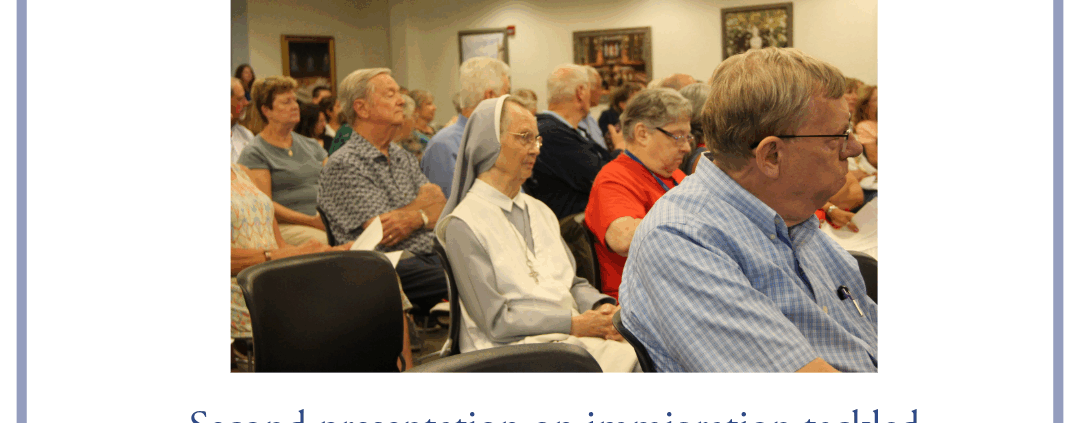
Once again, the Curia’s Bishop Howard Memorial, Covington, found itself full of people of all ages — including both high school age students and seniors — for a presentation by the Intercommunity Sisters Peace and Justice Committee, titled “Immigration: The Catholic Perspective, Part 2.”

Following the success of the previous part in the series of presentations, Part 2 provided attendees with further detail on both the Catholic teaching and the law surrounding the topic of immigration in the United States. After an introduction by Sister Kay Kramer, CDP, and an introductory prayer from Bishop John Iffert — keynote speakers Hannah Keegan, Director for Thomas More University’s Center for Faith, Mission and Catholic Education and Jessica Ramos, an immigration lawyer and manager of the immigration legal team for The Legal Aid Society of Southwest Ohio, LLC, took to the podium.

Hannah Keegan, who previously gave an overview on Catholic teachings, particularly Catholic Social Teaching, at the first presentation, this time gave a “deeper dive” on the intricacies of the subject.

“The Catholic social doctrine is trying to help us to under the Church’s responsibility in society,” Mrs. Keegan explained, “What does the life of faith compel of me in the world? How does it change or inform or challenge my actions in life?”

Perhaps the most crucial part of Catholic Social Teaching, as Mrs. Keegan described is the importance of human dignity, “which is that every human person is created with an intrinsic value,” she said.

“The Catholic social doctrine is saying that the person has a right to migrate. The state has a right to regulate its borders,” said Mrs. Keegan, “but it must regulate its borders with justice and mercy. And so, the more we regulate the borders without a consideration of mercy, the less we respect the dignity of the person.”

“When we speak about the issue of immigration, we are fundamentally addressing the movement of people,” Mrs. Keegan quoted Bishop Mark Seitz, bishop of El Paso, Tx., “Human persons created in the image and likeness of God, each one of them a brother or sister to us all.”

Following Mrs. Keegan, lawyer Jessica Ramos took to the podium to describe, in depth, the pathways to legal immigration in the United States — and the associated challenges that often face migrants seeking U.S. citizenship. While facing hardships such as economic instability, psychological trauma and language barriers — many immigrants, particularly though unauthorized or undocumented, are described by Ms. Ramos as “undocumentable”. This term, coined by a colleague, means that many prospective migrants lack a legal pathway to immigration status.

Achieving a “green card” in the United States — the first step to citizenship — typically requires one of two avenues; employment, which is mostly restricted to individuals with higher education in specialized fields, and family, which is restricted to immediate family and categorized based on the type of relationship — with waitlists for familial green cards ranging from 4 years to 150 years. And, while avenues for asylum seekers and refugees exist, the specific discrimination conditions for asylum and the United States’s limited refugee acceptance number of 125,000 individuals also makes these routes inaccessible for most.

The current administration, according to Ms. Ramos, is “taking away the opportunity to apply for asylum, and putting people in what is called ‘expedited removal’ — which is where they say if you were ever caught at the border, or if you have been in the country for less than two years, then you are not entitled to talk to a judge about your asylum case … that is what our law says.”

The real issue which arises is many individuals inability to prove on the spot of arrest their legal status, regardless of whether they have a green card or citizenship or not, according to Ms. Ramos, who states that these practices possibly encroach on the rights of everyone, not just migrants.

“How do you prove that you’re a U.S. citizen?” Ms. Ramos asked the crowd, “How do you prove that you’ve lived here for more than two years without due process? This could affect any one of us.”

Following the presentation, Holy Spirit Parish, Newport, pastor Msgr. William Cleves remarked on his experiences hearing confessions at the Campbell County Detention Center — learning from migrants awaiting deportation that many have been cut off from their families and were told that they could not reach out to contact them. Some of them, according to Msgr. Cleves, fear deportation to countries different from their country of origin, as well. He concluded the night with prayer, for mercy and justice for all.
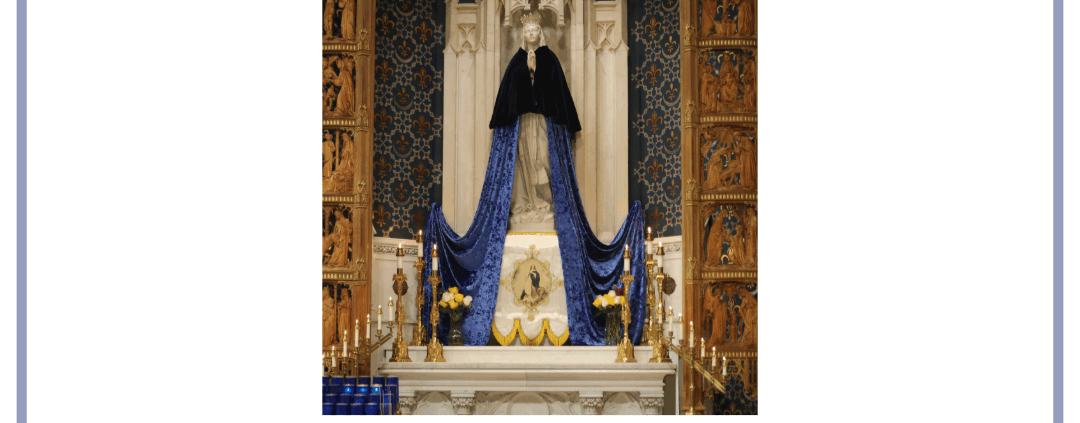
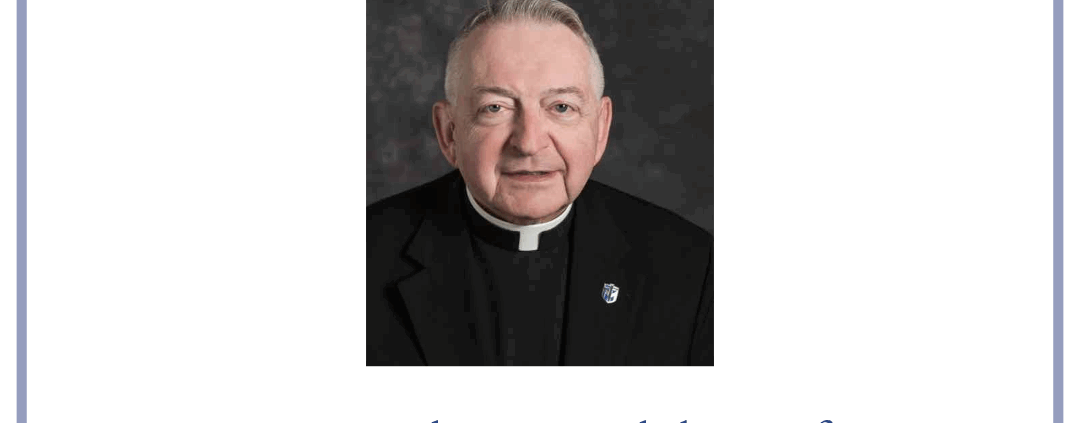
As a tabernacle of Christ, Mary was assumed into heaven, said Bishop John Iffert.

Bella Bailey

Multimedia Correspondent

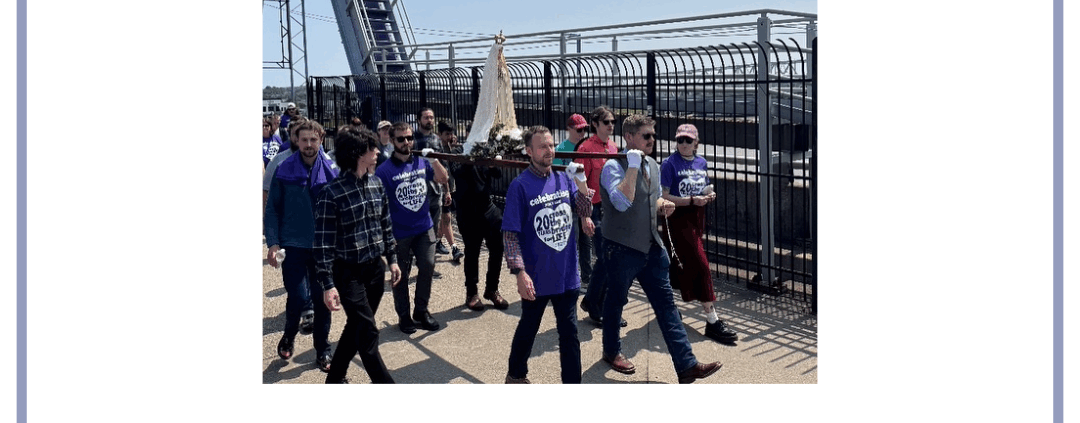
Bishop John Iffert celebrated the vigil Mass for the Feast of the Assumption of Mary, August 14, at the Cathedral Basilica of the Assumption, Covington. This feast, traditionally recognized on August 15, celebrates Mary’s bodily assumption into heaven.

“Because she was the Mother of God,” said Bishop Iffert in his homily, “because bodily, she became the tabernacle of his earthly existence, her body was preserved from decay, her body was preserved from corruption, her body was preserved from the effect of sin.”

While the assumption of Mary into heaven is a point of distinction between Catholics and other religious denominations, Bishop Iffert defends the validity of the assumption with both anecdotal and doctrinal evidence.

Bishop Iffert, in his homily, recalled a story which happened to a friend who teaches at a university in the Palestinian side of Bethlehem. One day, Bishop Iffert said, this friend of his was taken on a tour by a Scripture scholar, and he was taken to three different locations. Each of which claimed to have the head of John the Baptist.

This friend, moved by disbelief, pointed out to the man displaying the relic at the third location that each of his previous stops also claimed to have the one head of John the Baptist. Bishop Iffert recalled from his friend that the man displaying the relic explained that they had the mature head of John the Baptist, and the village before them had the head of John the Baptist as a youth.

“I share this story not to add cynicism to the world but to point out just how desperate we are to connect to the holy ones who live before us. How desperate these communities are to exercise that claim for a connection to a holy saint … so much so that you end up with three heads of John the Baptist,” said Bishop Iffert.

“Nowhere in the world,” Bishop Iffert said, “do you find a relic of the Blessed Virgin Mary … nowhere in the world do you find a relic of her flesh, nowhere in the world do you find a relic of her bone. They don’t exist.”

The dogma proclaiming the assumption of Mary was defined 75 years ago in the year 1950 by Pope Pius XII, in the apostolic constitution “Munificentissimus Deus.”

“The Lord God preserved this vessel of the Lord Jesus from undergoing the corruption that normally occurs after death of a body. Mary was not allowed to be a corpse. She was always a body filled with life, that is the gift from the Holy Spirit. The Church teaches this, and it has been taught from the early centuries of the Church because it is true and it really happened,” said Bishop Iffert.

While the Church does not teach on whether or not Mary died or was “taken up in a whirlwind,” said Bishop Iffert, it does teach of her bodily assumption.

“Because she was the mother of God, because bodily, she became the tabernacle of his earthly existence, her body was preserved from decay, her body was preserved from corruption,” said Bishop Iffert.

Duties and Responsibilities of a State— Part 3 of a 4-part series

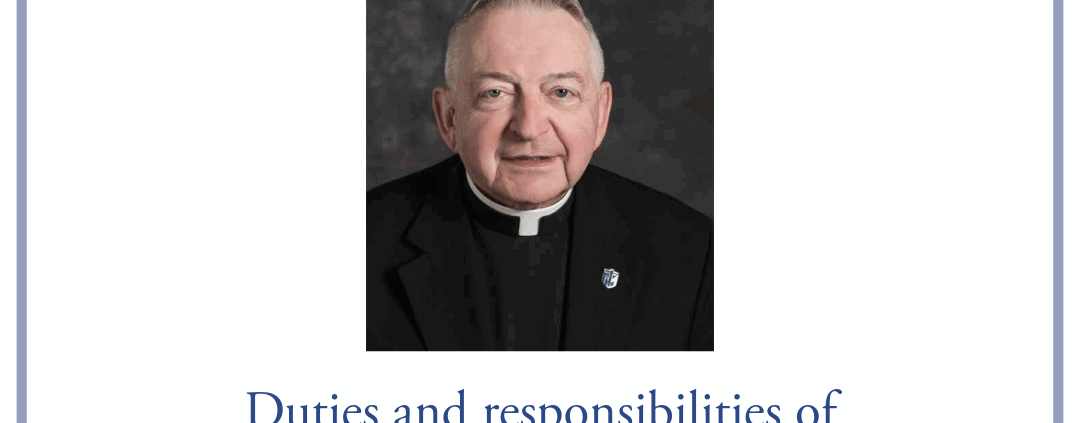
Rev. Msgr. Gerald E. Twaddell, D.Phil., KCHS

Contributor

After laying out the duties and responsibilities of employers and employees to one another, Pope Leo XIII shifted his attention to the proper role of the State in meeting the challenges he had identified at the beginning of “Rerum Novarum.”

First, the pope makes explicit just what kind of entity he is addressing. A State is a government whose institutions conform with right reason and natural law. Its first duty is to ensure that the laws, the institutions, the general character and administration of the commonwealth promote public well-being and private prosperity. A State thrives as a result of moral rule, well-regulated family life, respect for religion and justice, moderate and fair public taxes, progress in the arts and trades and abundant production of the land. In arranging everything in this way every class will benefit and the interests of the poor will be advanced.

In brief, the state must serve the common good. To the extent that the general laws protect the working class, the less need there will be for special means to address them. (§ 32)

A further consideration is that the State must further the interests of all. The working classes are as truly citizens as the rich, and naturally constitute the majority of the members of the commonwealth. Hence, “Among the many and grave duties of rulers who would do their best for the people, the first and chief is to act with strict justice — with that justice which is called distributive — toward each and every class alike.” (§ 33)

Though all citizens contribute to the common good, they do so in diverse ways: some govern, others defend the commonwealth, still others exercise a variety of trades and professions. But since the most important good that a society can possess is virtue, the body politic needs to “to see to the provision of those material and external helps ‘the use of which is necessary to virtuous action.’”

Such goods are principally the product of those whose labor allows States to grow rich. Justice therefore calls for the State to watch out for the interests of those who labor so that “they may find their life less hard and more endurable.” This will serve the advantage of the entire commonwealth. (§ 34)

The State must not subjugate either individuals or families in their freedom of action so long as these are consistent with the pursuit of the common good. The safety of the commonwealth is the central concern of the rulers, and never their own advantage. Their power to rule, after all, comes from God, whom they should imitate in exercising it, that is with a fatherly solicitude, guiding the whole and upholding all its members. (§ 35)

Consequently, should the general interest or some class suffer, the public authority must intervene for the good of the whole community as much as for the protection of those who are enduring some harm. When such troubles arise, the authorities must maintain peace and good order in a manner consistent with divine and natural law.

The pope listed and offered examples of a number of areas to attend to: the discipline of family life, duties of religion, exacting standards of personal and public morality, sacredness of justice, assurance that no one be harmed with impunity. To these he added the evils of employers unjustly burdening their employees or degrading them “with conditions repugnant to their dignity as human beings,” and putting health at risk by excessive labor, or by work unsuited to the worker’s age or sex. In all these matters, “there can be no question but that, within certain limits, it would be right to invoke the aid and authority of the law,” provided the law does not reach beyond what is necessary to remedy the evil. (§ 36)

Respect for Rights

The Public authority has a duty to prevent and to punish injury to the rights of every individual, and particularly those of the poor and badly off. The wealthy have resources to shield themselves from harm so that they have less need of assistance from the State. The poor, though, have no such resources and stand in need of State assistance. Wage earners, then, who belong to the mass of the needy should receive special care and protection from the government. (§ 37)

However, public authority has a duty to provide legal protection for private property, especially when passionate greed crosses the line of duty. For though it is just for all to strive to better their condition, “neither justice nor the common good allows any individual to seize upon that which belongs to another.” The vast majority of workers prefer to improve their lot by honest labor; nevertheless, there are many who are eager for revolution who would like to incite others to the violent takeover of lawfully owned property. The authority of the law must restrain such firebrands. (§ 38)

This is not to say that worker strikes are not justified by excessive hours of labor, or exceedingly hard work or insufficient wages. Such situations need to be prevented by “public remedial measures” because of the impact of strikes on both workers and employers, on trade and on the general public. “The laws should forestall and prevent such troubles from arising; they should lend their influence and authority to the removal in good time of the causes which lead to conflicts between employers and employed.” (§ 39)

The final article of this series will present Pope Leo XIII’s teachings on the implications of all these principles for the responsibility of the State to protect the interests of workers.

Twenty-first Sunday of Ordinary Time

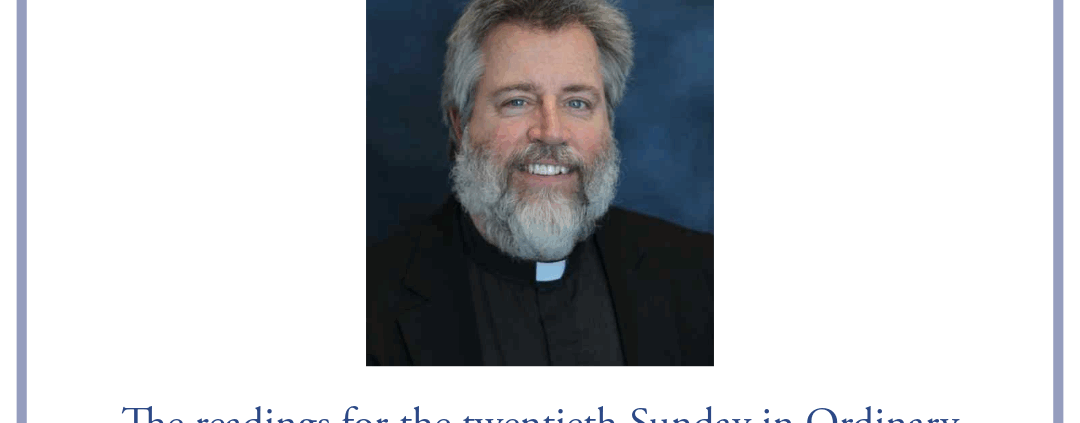
Father Phillip DeVous

Contributor

“Lord, will only a few people be saved?” This, surely, is one of the most important existential questions raised in the Gospel. It is the question that everyone who follows Christ, or who would follow Christ asks, albeit in a more personal way: will I be saved? Are those I love to be saved? These are the hard, searching questions we are to ask and to consider if we truly desire to follow Jesus Christ.

There is a too frequent tendency in contemporary Church life to demur and deflect on the hard questions, especially if we sense the answer might be radically at odds with the consensus of the unbelieving world. As the philosopher, Walter Kaufmann, provocatively states it, “the present age is the age of Judas … To be sure, it is not literally with a kiss that Christ is betrayed in the present age: today one betrays with an interpretation.”

Surely the question of how many people will be saved, and the related question of whether I will be saved, is a question that tempts us to conjure congenial interpretations that would wave away the question’s seriousness. The good news is the word of God is made for our heart, and our heart is made for the Word of God. Consequently, under the tutelage of the Holy Spirit we can rise to occasion of both contemplating a deep question and living with its answer- requirements for the following Jesus.

First and foremost, we must understand that God the Father “has blessed us in Christ with every spiritual blessing in the heavenly places”(Eph 1:2). These spiritual blessing are the Holy Sacraments and the Church, which is the grace of the Incarnation of Christ extended throughout history until the Second Coming and final judgment. So, we must not fear that sufficient grace and truth for salvation is lacking for salvation.

Our Blessed Lord suggests to us that what might be lacking is our will to acknowledge, accept and engage the graces that are revealed and on offer when he teaches, “strive to enter through the narrow gate, for many, I tell you, will attempt to enter but will not be strong enough.” Of course, salvation depends first and foremost on God’s grace. Once the grace has been given then surely our cooperation, conversion and obedience to the grace and truth that has been given is required. We know, even as we struggle, we must not be after as we were before such grace is given. So much “interpretation” in the air today tempts us to remain the same.

The Lord Jesus is laying out for us the difficulties of the spiritual life necessary to correspond to the grace of salvation. Further, he seems to be indicating that many will not want to take it up precisely because of the hardship it entails. I cannot help but think Jesus is referencing the “Two Ways” teaching of Deuteronomy: “See, I have set before you this day life and good, death and evil.” (Deut 30: 15). Jesus envisions the ease with which we pass through the main gates of worldly ways, living according to what’s egotistic, popular, pleasurable, socially accepted and necessary for material advancement in world.

The few, who have seen and heard the Lord, who have encountered his grace and truth, who wish to live according to “life and good” must exert greater effort to pass through the narrow gate of holiness and Godly virtue. This narrow gate, which gives one access to God is none other than Jesus himself. We pass to and through him to the Trinitarian life and eternal existence of Divine Love through receiving the Holy Sacraments and the Word of God with faith and obedience.

This is why we pray in the opening collect of the Holy Mass that our minds might be united in a “single purpose”, so that we might love what God commands and, most significantly, desire what God promises. We will not pursue the path through the narrow gate, which is the imitation of Jesus Christ, if we do not desire the grace and truth that has been revealed and gifted to us. If we do not desire it, will be tempted to interpret and reduce the Catholic faith to therapeutic bromides; to deploy compassion as a solvent of the truth, not its servant; and we will end up with a mush of nice, but not the utter fullness and holiness of God, which is our dignity, destiny and fulfillment as human persons.

Father Phillip W. DeVous is the pastor of St. Charles, Flemingsburg and St. Rose of Lima, May’s Lick.

Duties and responsibilities of employees and employers— part 2 of a 4-part series

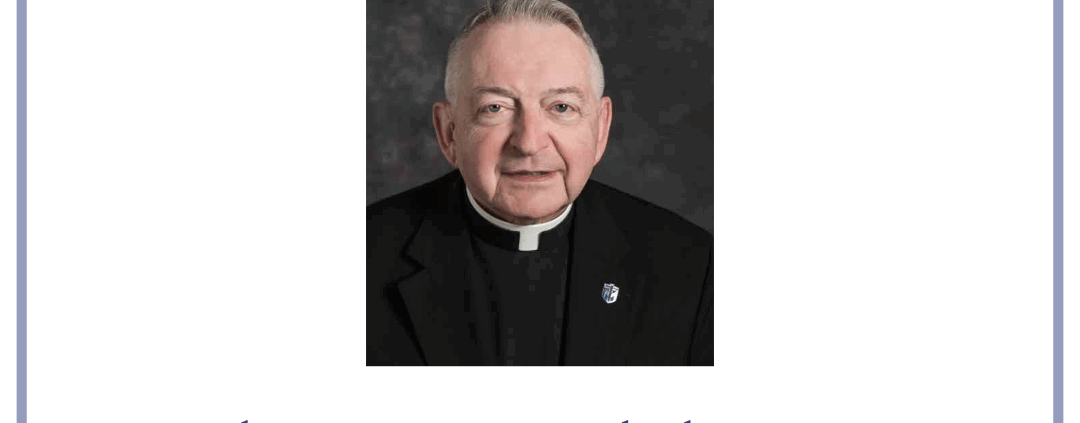
Rev. Msgr. Gerald E. Twaddell, D.Phil., KCHS

Contributor

Turning to the second of the concerns noted at the beginning of his encyclical “Rerum Novarum,” namely the changes in the relationship between employers and employees, Pope Leo XIII, first observes that another great mistake in his day is the assumption that the owning class and the working class are necessarily in conflict. In reality, “capital cannot do without labor, nor labor without capital.”

Mutual agreement between the two leads to “the beauty of good order, while perpetual conflict necessarily produces confusion and savage barbarity.” The most effective intermediary in disputes is the Church’s teaching on the duties of each side to the other, “especially the obligations of justice.” (§ 19)

In Section 20, Pope Leo XIII catalogs duties flowing from the obligations of justice.

Workers duties are the following:

  • to perform fully and faithfully the work equitably agreed upon;
  • never to harm the property, nor outrage the person of the employer;
  • never to resort to violence, riot or disorder in defending their cause;
  • never to rely on people with evil principles who mislead them with empty promises and foolish hopes of impressive results that lead only to “useless regrets and grievous loss.”

Employers are duty-bound to the following:

  • never to look down upon their workers as though they were in bondage;
  • always to respect the dignity of every person;
  • never “misuse workers as though they were things in the pursuit of gain,” because working for pay is honorable, not shameful, since it allows the person to earn a decent livelihood;
  • never shamefully and inhumanely to value workers solely for their physical powers;
  • keep in mind the good of the worker’s soul by seeing to it that workers
    • have time to attend to their religious duties,
    • are not exposed to corrupting influences,
    • not be led to neglect home and family,
    • not be led to squander their earnings;
  • never overwork employees beyond their strength;
  • never employ people in work unsuited to their sex or age;
  • most importantly, the employer’s “great and principal duty is to give everyone what is just.”

This last point leads to the condemnation of several unjust practices regarding the fair remuneration of workers, namely:

  • exercising pressure on the indigent and destitute for the sake of gain;
  • gathering one’s profit from the need of others;
  • defrauding anyone of the wages they are due;
  • cutting down the worker’s earnings by force, fraud, or usurious dealing.

Each of these injustices “is a great crime which cries to the avenging anger of Heaven … because the laboring man is, as a rule, weak and unprotected, and because his slender means should, in proportion to their scantiness, be accounted sacred.” (§ 20)

Beyond these demands of the natural law, the Holy Father reminds us that the Church proposes still higher precepts rooted in the hope for eternal life brought by our Savior. Every person is called to use the things of this world, however abundant or scarce, out of a motive of virtue and in pursuit of merit. (§ 21)

“Riches do not bring freedom from sorrow and are of no avail for eternal happiness, but rather are obstacles.” The pope cites St. Thomas Aquinas who teaches that, “Man should not consider his material possessions as his own, but as common to all, so as to share them without hesitation when others are in need. Whence the Apostle says (1 Timothy 6:17): ‘Command the rich of this world … to offer with no stint, to apportion largely.’” “It is a duty,” Pope Leo XIII proclaims, “not of justice (save in extreme cases), but of Christian charity” on which Christ will judge us. The person who has received an abundance of material goods or gifts of the mind from God’s bounty “has received them for the purpose of using them for the perfecting of his own nature, and at the same time, that he may employ them, as the steward of God’s providence, for the benefit of others.” (§22)

In contrast, those who lack the gifts of fortune learn from the Church “that in God’s sight poverty is no disgrace, and that there is nothing to be ashamed of in earning their bread by labor.” Christ, after all, “for our sakes became poor” (2 Cor 8:9) and labored much of His life as a carpenter. (§23) When we contemplate this divine Model, we see that “the true worth and nobility of man lies in his moral qualities, that is in virtue; that virtue is, moreover, the common inheritance of men, equally within the reach of high and low, rich and poor.”

When all people come to this realization, the pride of the well-to-do will be diminished and they will become generous to the less well-off, who in turn will moderate their desires. The separation and opposition between the two groups will tend to disappear in favor of friendly cooperation. (§24) The Church does her utmost to hand on these principles, relying on the tools given by Christ to reach people’s innermost hearts and consciences, to lead them to the love of God and their fellow human beings, to break down every barrier to virtue. (§ 26)

History displays evidence of such effects. For example, Christian institutions from the earliest centuries managed to renew civil society by the light of the Gospel message, lifting up and restoring life to the human race wherever it was proclaimed. Nothing so great had been known before. The only way society today can be healed of its class oppositions is by a return to Christian life and institutions that had been undermined and rejected in the name of “enlightenment.” (§ 27)

The work that the Church undertakes goes beyond the spiritual to address also the temporal and earthly conditions of workers. She is particularly concerned that the poor be helped to rise above poverty and wretchedness to achieve a better life. Christian morality “powerfully restrains the greed of possession and the thirst for pleasure — twin plagues.” (§ 28)

In addition, the Church from the time of the apostles established many means to offer relief from poverty, whether the voluntary sharing of goods seen in the Acts of the Apostles, the establishment of the diaconate, or the collections gathered by St. Paul. (§ 29) The pope lamented that in his day many sought “to blame and condemn the Church for such eminent charity,” wishing instead to have the State supply such relief. (§ 30) The effective way to achieve the goal of reducing the effects of poverty would be to obtain the cooperation of all human agencies to be of one mind with the Church and act together according to each’s capacity. Part of that effort would be to look into what role the State should play. (§ 31)

In the next article the duties and responsibilities of the State that Pope Leo XIII discerned will be examined.

What Pope Leo XIII had to say —Part1 of a 4-part series

Rev. Msgr. Gerald E. Twaddell, D.Phil., KCHS

Contributor

Since the election of Pope Leo XIV, we have heard many observations about his admiration for the teachings of Pope Leo XIII. Frequent comments have referred to the encyclical “Rerum Novarum” that brought Catholic Social Teaching (CST) into the spotlight in 1891. That was not really something new, since CST is simply the application of long-established moral principles to situations that develop in the relationships of people in their social interactions. Moral theology extends to more than just the choices of individual persons.

We should first recall the turmoil that marked the end of the 18th and the whole of the 19th centuries, the “new concerns” that the title of the encyclical refers to. Intellectually, there was the rise the Enlightenment which sought, in the name of progress and reason, to sweep aside all religion as nothing more than sentimental, superstitious  nonsense. It was an era of rising individualism and liberation from all forms of authority, whether of Church, or King, or any other.

Politically, Enlightenment ideals were embodied in the American Revolution, the French Revolution, the War of 1812, the various European revolutions in 1848,  the FrancoPrussian War, etc., all of which disrupted the stability of monarchies, introduced republics (condemned by Blessed Pope Pius IX) and wrenched the Papal States out of the control of the Catholic Church.

Economically, there was the rise of industrial capitalism which shifted the control of productive forces from traditional artisans and small family shopkeepers into the hands of wealthy individuals pursuing ever greater concentration of political and economic power. The Popes were dismayed, and did their best to dampen such destructive forces, and advance the alternative of the teachings of the Gospel to the people being trampled and oppressed in these circumstances. Pope Leo XIII had addressed several of the issues in a suite of documents. “Rerum Novarum” must be read against the backdrop of the many disturbing trends that surrounded the life of the Church in his  day. This is why it is important for people, Catholic or not, to know what he had to say. The purpose here is to get a sense of the teaching of Pope Leo XIII in just this one encyclical.

The pope’s concern was the condition of workers in a time marked by conflict brought about by the factors shifting the landscape. The first he lists is the expansion of industrial pursuits and scientific discoveries in the 19th century. Second were the changing relations between owners and workers. Third, he noted the enormous fortunes of a few and the utter poverty of the vast majority. Next were the increasing self reliance and mutual organizations among workers. Finally, the pope pointed to the “prevailing moral degeneracy.” (§ 1) Each of these factors receives attention in the encyclical.

In this first part of this series of articles, we will focus on how Pope Leo XIII presented the underlying problem.

Property and Society

In the first portion of the encyclical, the pope reflects extensively on the economic conditions that had emerged with the rise of industrialism in the 19th century.

Leo XIII wanted to bring the principles dictated by truth and justice to bear in confronting those taking advantage of these changes to pervert people’s judgment and stir up revolts. (§ 2) He saw a need to find a remedy quickly for “the misery and wretchedness pressing so unjustly on the majority of the working class.” (§ 3)

As a result of the elimination of ancient protections by public institutions and laws, “working men have been surrendered, isolated and helpless, to the hardheartedness of employers and the greed of unchecked competition.” In addition, usury, long condemned by the Church, was being practiced under new guises “by covetous and grasping men.” The pope’s judgment was that “a small number of very rich men have been able to lay upon the teeming masses of the laboring poor a yoke little better than that of slavery itself.” (§ 3) After this critique of the workings of industrial capitalism, Pope Leo XIII turns his attention to another morally unacceptable proposal.

One answer being put forward came from socialists who sought to eliminate private ownership of the means of production, seen as the root of the problem. The pope did not state specifically whose theory of socialism he had in mind. There were several, and not all agreed on every point. In any case, the false solution of eliminating all private property long ago introduced by Plato in his “Republic” would have had the effect of taking away from workers themselves what little they had.

Laborers have a right both to be paid for their efforts, and to use that pay as they see fit. The socialist plan to transfer people’s possessions to the community at large would deprive the laborer of all hope for improved living conditions. (§5) These practical problems call for a deeper consideration of the implications of human nature itself.

A distinctive feature of human beings, flowing from the capacity for rational thought, is the right of every person to possess property not just for immediate use as in other animals, but also to hold it on a stable basis to meet future needs. (§6) Reason links the future with the present, enabling humans to make choices about what might be advantageous at a later date. All this is grounded in humanity itself, so before any State ever comes into existence, possession of property already provides for the needs of the body. (§7)

The pope explains that the fact that God gives the earth for the use and enjoyment of the whole hu-man race can in no way exclude the owning of private property. (§8) For in giving the earth to all in general, “no part of it was assigned to anyone in particular,” thereby leaving the limits of private ownership to be worked out by people themselves. So private ownership “is in accordance with the law of nature.” (§9) An important means by which people come to own things is by their own labor. Thus, the pope asks, “Is it just that the fruit of a man’s own sweat and labor should be possessed by and enjoyed by anyone else?” (§10)

Civil laws affirm this provision. Given that such laws are just, the law of nature gives them their binding force, and the divine law against covetousness adds further sanction. (§11) These rights are also affected by the right of each person to choose a state of life, single or married, so that provision for whatever is necessary for the preservation and just freedom of the family is also a right. No state can hinder or control the life of the family. (§13)

Indeed, “if a family finds itself in exceeding distress, utterly deprived of the counsel of friends, and without any prospect of extricating itself, it is right that extreme necessity be met by public aid, since each family is a part of the commonwealth.” Likewise, when, within the family, mutual rights are not respected, the public authority must intervene to safeguard and strengthen those rights. Still, parental rights cannot be abolished or absorbed by the State as the socialists would have it. (§ 14) Since the result of applying the idea of communal holding of all goods would upset all relations among people, leaving them in a situation worse than slavery, the socialist “solution” must be rejected. (§15)

A true solution to the challenge of industrialism must be found by involving State leaders, employers of labor, the wealthy, and the working classes as well. But their efforts will fail if the Church is not permitted to contribute her services in endeavoring to uplift the working classes. (§16) The variety of capacities, skills, strength, etc. that people possess need to be recognized. Each person should be able to choose what best suits their own situation. (§17) In making such choices, people need to see the world as it truly is, with all its ills and troubles. It is a mistake to deceive oneself about some simplistic solution that will supposedly make them disappear. (§18)

In the next article in the series we will discover the mutual duties and responsibilities of employees and employers that Pope Leo XIII identified.

Twentieth Sunday in Ordinary Time

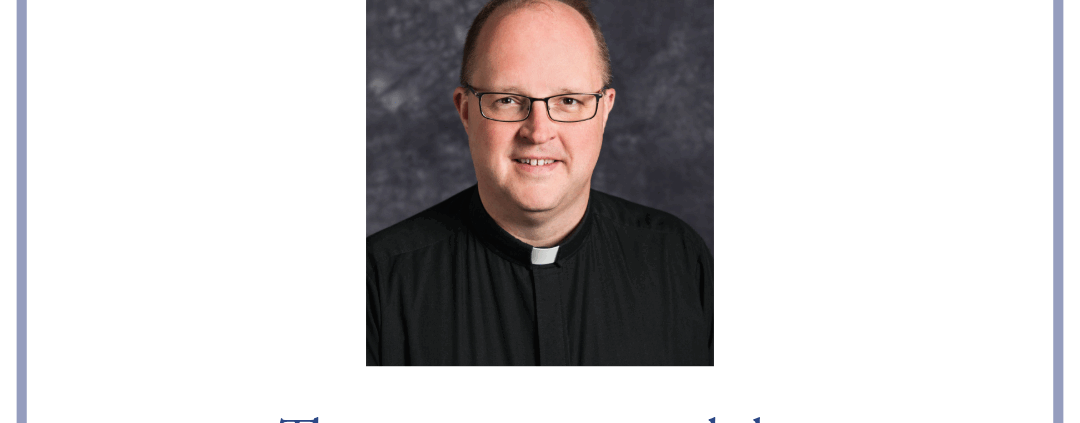
Father Stephen Bankemper

Contributor

We have from Scripture many images of God that are comforting — Jesus as the Good Shepherd (John, chapter 10), who leads us safely through death and darkness (Psalm 23); Jesus, come not as judge but savior (the famous John 3:17); and many more. There are also many passages in Scripture that show a different side, so to speak, of God, with which we are not so comfortable, for example, God who destroys the wicked (Psalms 101 and 92), raining down brimstone and fire upon Sodom and Gomorrah (Genesis 19). The image we hear in the Gospel for this weekend — the image of fire — is hard to put in one or the other category, but it is worthwhile to contemplate both its “positive” and “negative” aspects.

“I have come to set the earth on fire,” Jesus says to his disciples, “and how I wish it were already blazing!” What is this fire our Lord desired to set?

In his book God and the World, Joseph Ratzinger, Pope Benedict XVI, wrote, “When Jesus talks about fire, he means in the first place his own Passion, which was a Passion of love and was therefore a fire; the new burning bush, which burns and is not consumed . . .” (p. 222) This is a fire with which we can feel comfortable, the fire of God’s love that saves and frees us. And yet, it is a fire, as Benedict continues, “that is to be handed on. Jesus does not come to make us comfortable; rather he sets fire to the earth; he brings the great living fire of divine love, which is what the Holy Spirit is, a fire that burns.” (ibid.)

This is a fire that, as Jesus says in today’s Gospel, brings, not peace but division. This is a fire that makes us uncomfortable because it divides, not just “three against two and two against three,” but even divides us from ourselves. When we accept God as our God, we allow into ourselves and our lives a “consuming fire,” (Hebrews 12:29) a “devouring fire, a jealous God,” (Deuteronomy 4:24), a God who desires all of us, who wants to be our first love (“You shall love the Lord your God with all your heart, with all your soul, with all your strength . . . ”) a God who consumes anything in us that is not of God, because in his presence no evil can abide. Do we want this fire?

We tend to think and talk of heaven, hell, and purgatory as three different “places,” but in the last few years I have found myself thinking of them as one place: the presence of God. (I am not claiming this to be Church teaching; it is only an idea, an image.) God, who is all Love, burns eternally with this love. Those who resolutely refuse to let themselves be changed by this love and cling to their sin and selfishness and other loves, are only made miserable by this flaming love, and are thus in eternal hell. Those who desire to be transformed but struggle to abandon themselves to love, who still hold on to some of their own will and other loves, experience God’s love and presence as consuming flames, as purgatory, until they are able to let go of all in themselves that is not God. But those who have given themselves over to God, seeking only His will, and who have let themselves be purified and love God with all their hearts, souls, and strength, rejoice in the Fire, because they themselves are on fire, burning joyfully with God, and are, as Benedict puts it, made “bright and pure and free and grand.”

Many of the saints not only knew about this consuming and purifying fire but experienced it and desired it. Read, for example, St. Thérèse of Lisieux’s experience of God’s fire of love. In her Act of Oblation to Merciful Love she expresses her desire for this love, even as she knows it will destroy her. It is telling that she uses the word “martyr” in her prayer, and “holocaust” — not “sacrifice”: in a sacrifice, part of the animal was consumed by fire, while as a holocaust the entire animal was consumed. The following is a short excerpt:

“In order to live in one single act of perfect love, I offer myself as a victim of Holocaust to your merciful love, asking you to consume me incessantly, allowing the waves of infinite tenderness shut up within You to over- flow into my soul, and that thus I may become a martyr of Your Love, O my God!”

Another saint worth consulting in this context is St. Gemma Galgani, a 20th-century Italian mystic, who described her heart as “all on fire with the love of Jesus.” In a letter to her spiritual director, St. Gemma describes her experience of God’s love as an actual physical burning: “For the last eight days I have felt something mysterious in the area of my heart that I cannot understand. . . this fire has increased, oh so much, as to be almost unbearable. I should need ice to put it out, and it hinders my eating and sleeping. It is a mysterious fire that comes from within, then goes to the outside. It is, however, a fire that does not torment me, rather it delights me, but it also exhausts and consumes me . . . Great God, how I love You! Oh, how I love You!”

Her spiritual director related that “When I questioned her about it, Gemma herself had to acknowledge that the suffering that she felt from this mysterious fire, although it was a joy to her, was really very painful. She said to me: ‘In order to get some idea of it, imagine a red-hot iron, kept constantly heated in a furnace, has been placed into the very center of this poor heart. Thus I feel myself burning’. And yet she would not have exchanged this excruciating torture for all the delights of the world. For while she thus suffered in her body, the sweetness it caused in the depths of her soul was truly beyond all description. Thus in ecstasy she exclaimed, “Come then, Oh Jesus! Your heart is a flame and you wish mine to be turned into a flame as well … Jesus, I feel I must die when you are throbbing so in my heart.”

Jesus expressed the desire that the fire of his Passion and love was already blazing. It will blaze if we surrender to His love and allow ourselves to burn  with it. One of the invocations in the chaplet of St. Michael is, “By the intercession of St. Michael and the celestial choir of Seraphim, may the Lord make us worthy to burn with the fire of perfect charity.” May we be willing to let that love consume us, so that we may spread that fire to others.

Father Stephen Bankemper is pastor, St. Catherine of Siena Parish, Ft. Thomas, Ky.

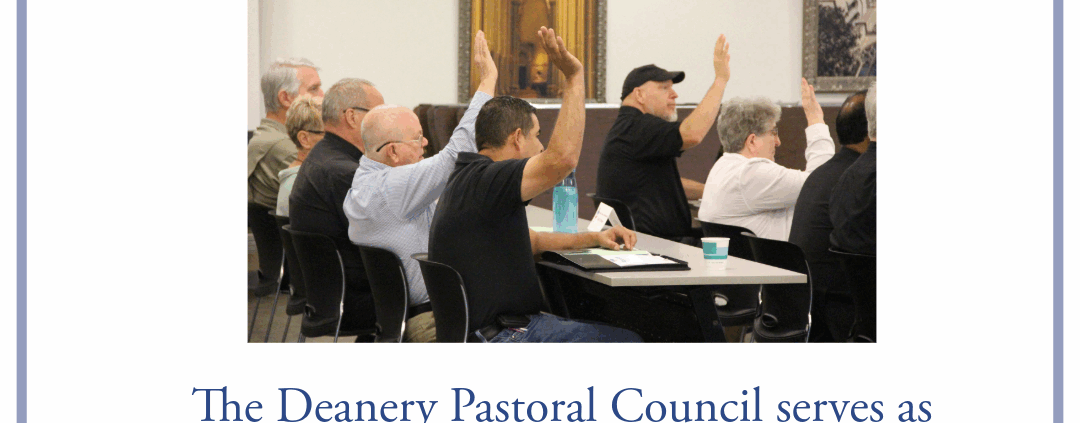
The Deanery Pastoral Council serves as one facet of the body of the Church said Bishop Iffert at DPC orientation

Bella Bailey

Multimedia Correspondent

The annual Deanery Pastoral Council orientation took place August 9, in Bishop Howard Memorial Auditorium, Covington, where new members of the Deanery Pastoral Council learned more about their role as members of the council.

Each parish in the Diocese of Covington is organized into one of five deaneries based on their geographical area: The Cambell County Deanery, The Covington Deanery, The Northern Kenton County Deanery, The Southeast Deanery and The Southwest Deanery. Leading each of these deaneries is a dean, a member of the clergy from within that region appointed by Bishop John Iffert.

The Deanery Pastoral Council is a quarterly meeting of two representatives from each parish within a deanery. Members of the council serve three-year, renewable terms. From each Deanery Pastoral Council, two people are selected by their council peers to represent their deanery at the Diocesan Pastoral Council, which meets quarterly with Bishop Iffert.

The goal of the Deanery Pastoral Council is to discuss and advise Bishop Iffert on issues via their representatives to the Diocesan Pastoral Council. Bishop Iffert likened the hierarchical structure of these councils to that of the body. With the head, in this case himself as the head of the church of the Diocese of Covington, needing to listen to the lungs and heart in order to function properly.

“The head has to listen to the body. The head has to be responsive to the needs of the body. That’s what these councils are all about, to make sure that we are listening to one another and, even more importantly that we are discerning the Spirit of God together,” said Bishop Iffert.

Bishop Iffert recalled a story from his time as a parish pastor, when he provided counseling to married couples. It became to clear him, he said, that these couples did not want to be counseled, rather, the men wanted him to take their side.

“It happened over and over again,” said Bishop Iffert, “and usually they would throw out this thing about the man is the head of the household. They would say the man is to be the head of the household.”

To which Bishop Iffert would respond to them saying, “yes, that works to exactly the degree to which you are a saint,” he said.

“If we’re not saints and we insist on that kind of tight control, we have the potential of giving into our manipulative selves,” he said. Which is why the Deanery Pastoral Council and Diocesan Pastoral Council are structured in such a way, so that the head can easily listen to the heart and lungs.

“All authority in the church is to be exercised as servant leadership. All authority in the church is to be exercised as foot washing, with a gentleness to it, with a servant’s heart. That means we have to take the time to listen. We have to take the time to check our motivations. We have to make sure that we’re considering the good of others in as complete and full way we can,” said Bishop Iffert.

The meetings of the Deanery Pastoral Council are open to the public so that parishioners can voice their concerns and opinions, which will then be taken under advisement by the council. This pipeline from those in the pews to Bishop Iffert through the Deanery and Diocesan Pastoral Councils, allows him to listen to the body of the church of Covington.

“That’s my vision,” said Bishop Iffert, “that we are a family of faith together, our pastors are clearly the heads of those parish families, but none of us are saints, and so we need to be listening to one another and being gentle with one another and being about the work, not listening to my opinions about what things are, but for me, listening to the way the Spirit is speaking to me through the people of God.”

Divine Mercy/St. Bernard Parish Young Adult Group sets an example

Macie Becker

Media Intern

As part of the Diocesan pastoral plan, the diocese has partnered with the Catholic Leadership Institute (CLI). CLI has been working with the parishes in the diocese on long-term pastoral plans for each parish. Divine Mercy and St. Bernard Parishes, Bellevue and Dayton, are a part of Next Generation Parish, a program in which the parish is paired with a CLI consultant to help not only develop but also to implement their plan.

One of the goals for the Divine Mercy/St. Bernard (DMSB) pastoral plan is to increase parishioner involvement in social and service groups within the parishes. DMSB has a thriving young adult community, drawing in people from in and out of the parishes to their events. Father Martin Pitstick, Pastor, refers to it as one of their parish’s “charisms.” Having events almost every day, the DMSB young adults have been an influence on the parish community, setting an example for the pastoral plan.

The young adults within the parish have continued to set this example by getting involved with other aspects of parish life, such as serving Masses and planning after-Mass brunches for the parishioners. Mr. Nienaber says the reason for starting integrated events is for the parishes to be “living and breathing and really healthy going into the next 20, 30, or 40 years.”

They combine the religious and recreational, planning events like Masses and Bible studies, as well as fun events like bonfires and swing dances. That dynamic has drawn in many people, both Catholics and non-Catholics alike. Oftentimes, non-Catholic participants in these recreational events end up being drawn to the Catholic faith by it.

“We always try to find that balance,” says Colin Nienaber, DMSB Young Adult Minister, who continued to say, “we’re having a lot of fun, but we also want to integrate the rest of the parish so that it’s not like two different parishes being made.”

“The young adults are taking on the service role for the life of the rest of the parish to leverage and to be the yeast for helping the rest of the parish,” said Father Pitstick. He continued, saying “no program is perfect, but you take valuable resources from the program, and we’ve done that and it has been very helpful.”

To learn more or get involved with DMSB or their young adult ministry, visit https://dmsbcatholic.com/.

Diocese and intercommunity sisters continue dialogue on immigration with upcoming presentation, continuation of June efforts

Maura Bailey

Staff Writer

This past June, the Intercommunity Sisters Peace and Justice Committee, in a collaboration with the Diocese of Covington, held a presentation attended by near 200 participants on the topic of immigration — the Catholic perspective.

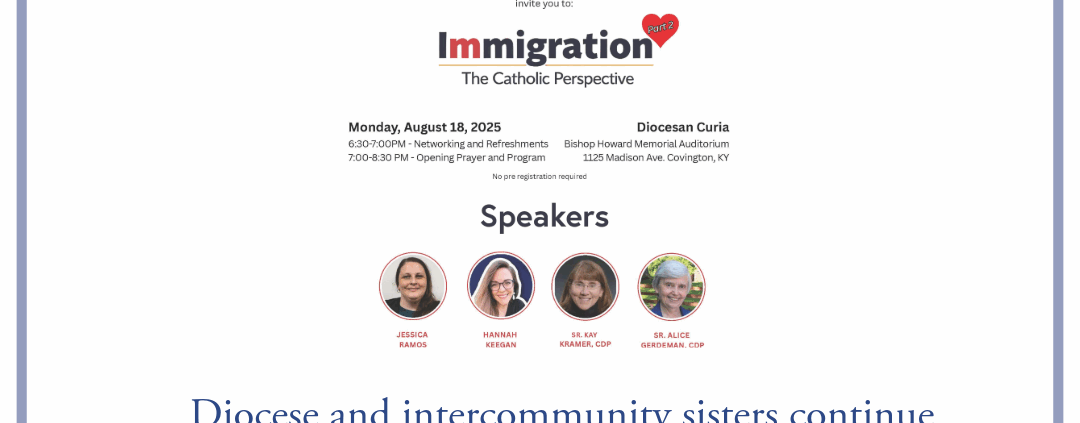
On August 18, the sisters aim to continue this dialogue with the second part of the immigration series, once again to be held in the diocesan Curia, Covington, from 6:30–8:30 p.m.

The August presentation will begin with a “deeper look at Catholic social teaching as it pertains to immigration,” said Divine Providence Sister Kay Kremer, one of the hosts and speakers of the event. “At the first session, Hannah Keegan,” of Thomas More University, “gave more of an overview of those parts of Catholic social teaching … but, this time, she’ll delve deeper into what it means specifically in regards to how we are called to treat migrants, and how we are called to live in contrast to what’s happened to migrants in the country right now.”

Immigration lawyer Jessica Ramos will also be participating in the upcoming presentation. She will be speaking on the “pathways to legal immigration and citizenship in our country,” said Sister Kay, “and how those things have drastically changed in the last six months.”

Attendees will also be supplied with a resource sheet of discussing immigration in the Catholic context, as well as local ways to help migrant populations.

“We want everyone who attends to feel welcome,” Sister Kay continued, “And we want this to be an opportunity for all of us to continue to learn about what the Church teaches about immigration.”

These conversations are important, she explained, as “people are really suffering right now,” Sister Kay said. “The majority of migrants are good, hard-working people who simply want to live their lives in a place where they’re safe and where they can provide for their families, and where their children have an opportunity for a good education. Their hopes and dreams for their lives are the same hopes and dreams that probably all of our ancestors had when they came to the United States.”