Archive for category: Planning Commissions 2026

The strategic plan of 2026 involved the creation of 4 Commissions: Diocesan Governance Commission, Catholic Foundation Commission, Catholic Charities Commission, and Catholic Schools Commission.

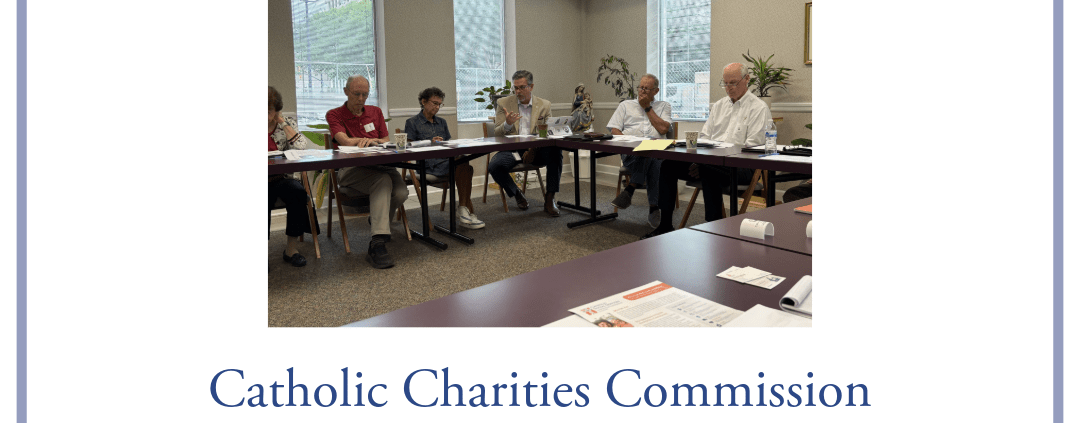
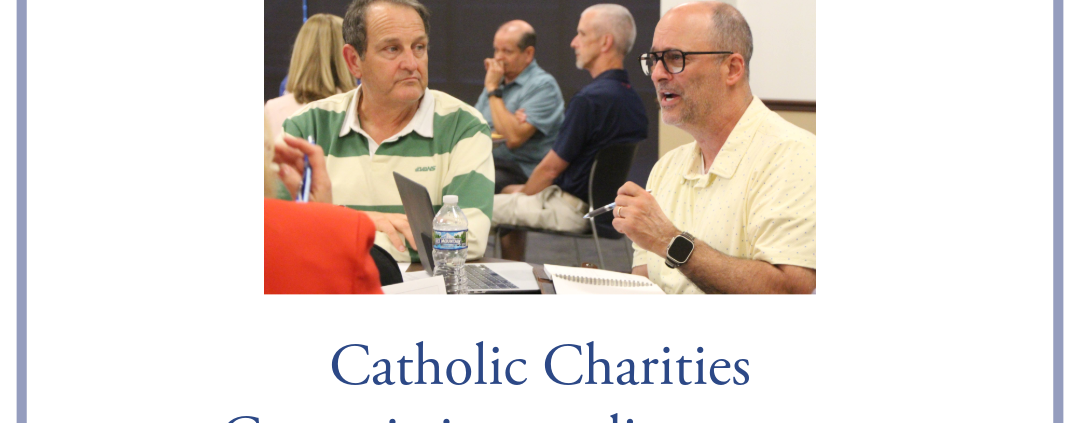
Catholic Charities Commission prepares to finalize new strategic plan

Bella Bailey

Multimedia Correspondent

Catholic Charities, Diocese of Covington, is preparing to finalize a strategic plan to present to Bishop John Iffert that will take its mission and ministries through the year 2030. This comes as a result of the planning commissions that took place as part of the Diocese of Covington’s larger strategic planning process.

“The timing is providential that across the Diocese we’re looking at some more substantive things,” said Chris Goddard, executive director of Catholic Charities.

The strategic plan is broken into six distinct goals that come together in support of the outlined priorities which focus on care of the whole person while maintaining respect, dignity and mercy.

The first goal is rooted in Catholic Charities’ programs and services. Working to provide whole person care where it is needed most, the goal moves beyond emergency relief toward stability for those that Catholic Charities serves.

“We’re always looking at how do we uphold the dignity of the person … very interested in trying to help the person not just with their emergency basic needs, but how do we get them to a different, better place,” said Mr. Goddard.

To do this, Catholic Charities is looking to the community as part of goals two and three — equipping the local Church to respond via the establishment of a parish ambassador network and the growth of the City of God Network. Both of these goals emphasize the priority of wrap-around care for those that call Catholic Charities looking for assistance.

“The whole idea behind the ambassador program is one to help parishioners across the Diocese understand who we are and where there are opportunities where they could help,” said Mr. Goddard.

The ambassador network would help improve communication between Catholic Charities and the parishes as well as increased awareness of available resources. This collaboration would ensure that parishes are equipped to provide information to those in need.

“I think there’s an opportunity to collaborate more efficiently for the sake of the people that we’re trying to serve,” said Mr. Goddard about the ambassador network and the City of God Network.

The vision for the City of God Network is that Catholic Charities becomes a resource hub for those in need of services beyond Catholic Charities provided ministries.

“It’s connecting individuals with needs with organizations … Catholic Charities’ role is being that connector of people needing help to people that can step up and help,” said Mr. Goddard.

These first three goals are rooted in the gift of mercy. Equipping the community and enabling Catholic Charities to continue to perform the corporal and spiritual works of mercy. Mr. Goddard said that this “really builds on the whole Campaign of Mercy that Bishop [Iffert] launched with his initial campaign or strategic plan.”

The fourth goal of the strategic plan is designed to spread the news of goals one, two and three — to make mercy visible.

“No one knows who we are,” said Mr. Goddard, “so this really names it in terms of making ourselves more visible and trusted, inviting. People know that they can come to us and we’ll help them work their way through the system.”

In order to meet these goals, Catholic Charities must focus on growing its financial capacities and restructuring their internal governance system. Goal five focuses on the financial aspect of the strategic plan, building the capacity and freedom to serve.

“We could have the greatest plan in the world and the right people to execute it, but there’s going to be a need for some resources,” said Mr. Goddard.

One of the outlined priorities of this goal is to increase the annual fund from the 2026 fiscal year total $700,000 to a potential $1.3 million target by fiscal year 2029. “We need to raise the necessary funds in order to do what is in that plan,” said Mr. Goddard.

To support the increase in community outreach, agency and organization collaboration and fiscal responsibility, Catholic Charities deemed it necessary to review their governance structure. As part of goal six, the establishment of shared ownership, governance and success measurement, Catholic Charities will be dissolving the current corporate and advisory board structure, moving instead to a member corporation made up of five people. As defined in the strategic planning document, the member corporation would “preserve diocesan oversight while allowing the Board of Directors to manage day-to-day operations.”

Mr. Goddard said, “It’s meant to allow the governing board to operate independently, more autonomously, but at the same time, reserve powers of the bishop and the four others to approve the hiring of the CEO, to approve a slate of board members, but they’re not going to be as involved in the annual plans and those kinds of things.”

The work of the Catholic Charities Commission through the diocesan strategic planning process was “very” influential, said Mr. Goddard.

“If you don’t have the right people, especially in leadership from the beginning, you more than likely could have a product that is not as good as what could turn out to be,” he said, praising the involvement of the diocesan community in the planning process.

Mr. Goddard said about the plan, “if you’re not intentional and you don’t incorporate it in a plan, it’ll never happen.”
 

Diocesan Governance Commission begins work on strategic plan for Diocese of Covington

Laura Keener

Editor

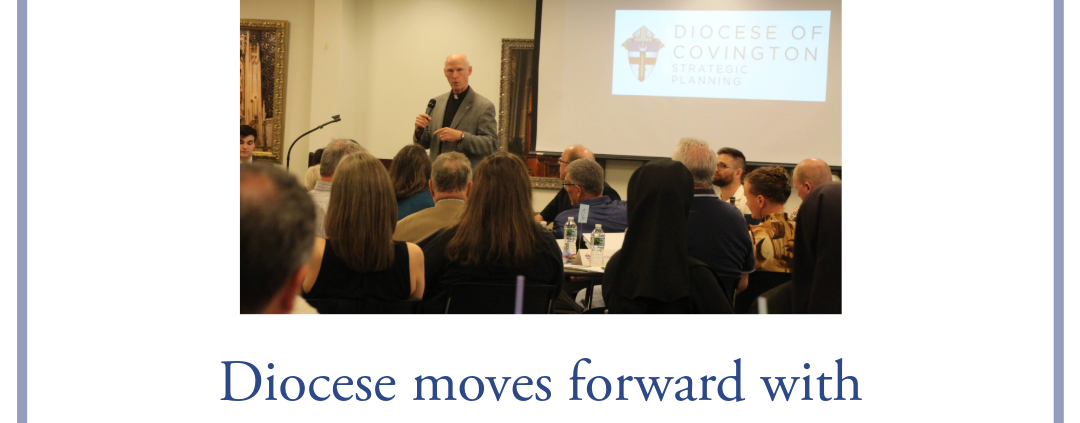
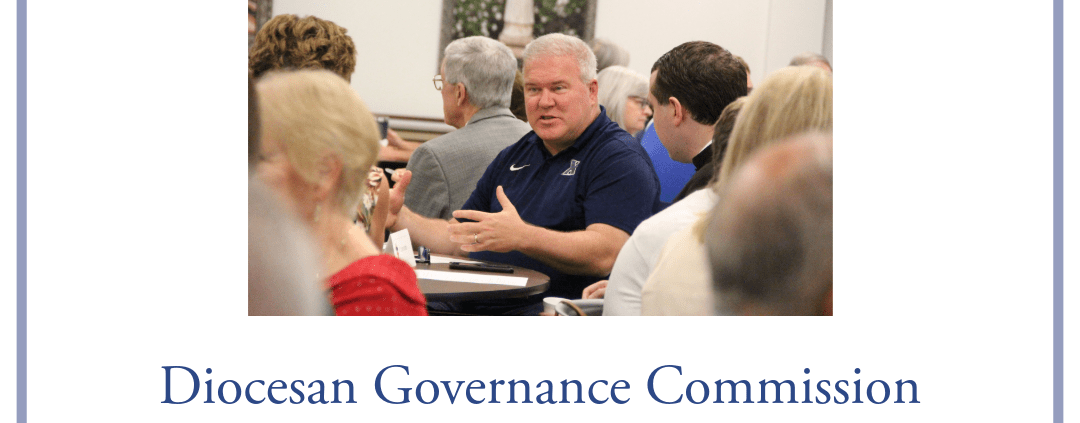
Bishop John Iffert welcomed about 200 volunteer participants, Sept. 12, for the first gathering of the Diocesan Governance Commission at Bishop Howard Memorial Auditorium in Covington. The meeting opened the final stage of a larger strategic planning process for the Diocese of Covington.

The Diocesan Governance Commission is the last of four commissions formed to help the diocese plan for the future. The first three commissions focused on Catholic Charities, Catholic Schools and the creation of a Catholic Foundation. Informed by the priorities raised by these groups, the Diocesan Governance Commission will look closely at the structure and work of the diocesan Curia — the offices that help Bishop Iffert serve parishes, schools and ministries across Northern Kentucky.

The Diocesan Governance Commission will focus on four strategic areas: Departments and Ministries; Finance, Revenue and Allocations; Shared Services; and Communications. According to the Diocese of Covington’s strategic planning schedule, the Commission’s first meeting is a general session kick-off focused on strengths, weaknesses, opportunities and threats. The Commission is scheduled to continue meeting through December. In January, all of the Commissions will gather for a closing Mass and gathering.

The four-and-a-half-hour day of discussion began with 45-minutes of reflective, intercessory prayer a process that Bishop Iffert calls “spiritual conversation.” For the last couple of years, Bishop Iffert and the Diocesan Pastoral Council has used spiritual conversation for its deliberations.

“I like it because I feel like I get deep reflection and wisdom from the folks who are involved,” said Bishop Iffert about spiritual conversation. The feedback he has received from members of the DPC about the process has been positive.

“After about a year, I evaluated with them and asked, Do you feel like I’m wasting your time? Do you feel like these meetings are unproductive? And they said, absolutely not. We feel listened to. We feel like we get to reflect on things. We feel like we’re having real conversations. We’re making real progress.”

Guided with the repetitive reading of a Scripture passage, the spiritual conversation was informed on the initial question, “Five years from now, what would success look like to you?” as participants began the planning process.

In his opening remarks after the spiritual conversation, Bishop Iffert told the group that their work is important because the diocese is facing problems that cannot be solved by one parish, school or office alone.

“This, to me, is the beginning of a very important process, and this meeting is an extraordinarily important meeting,” Bishop Iffert said. “Why is that? It’s because I’ve concluded that our diocese faces some systematic challenges, and I always am a believer that systematic challenges require systematic responses. So that’s the situation we find ourselves in. I really am relying on the wisdom in this community formed here today. I’m really relying on the sense of the Holy Spirit of this group to help us to address those issues as we go forward.”

Bishop Iffert asked the participants to think of the diocese not as a separate office or outside organization, but as the whole local Catholic Church in Northern Kentucky.

“When we speak about the diocese, I’m afraid we fall into this ‘we, they’ parochialism,” he said. “Here’s what the diocese is: the diocese is the Church in Northern Kentucky. The diocese is the family of all parishes, schools, Catholic agencies, the lay ecclesial communities, ministries. That’s what the diocese is. The diocese has a head, and by the grace of God and with Pope Francis, I am humbled to be that head. The diocese is an organic living thing.”

He said diocesan decisions affect everyone because money and resources used in one area are shared by the whole local Church.

“When we make a decision that as a diocese we are going to invest in one place or another, what that means is that every other parish, school, agency, ministry is making a sacrifice so that we can invest in that priority,” Bishop Iffert said. “I have no money of my own. I have no huge Sunday Mass to take up a collection. What we do as a diocese is us working collectively to be the Catholic Church, the body of Christ throughout our region — that’s what it is.”

Bishop Iffert said that the purpose of the Curia is to support the pastoral work of the diocese, not to stand apart from it.

“We have a curial staff here that serves the diocese, and they are a kind of bureaucracy,” he said. “And we all know we have our attitudes toward bureaucracy, and our bureaucracy may or may not be organized well for its purpose. That’s what you are here to help discern. But our bureaucracy, the Curia, is always directed in a pastoral spirit. That’s the idea that we need some of that internal structure and support to be able to coordinate our pastoral ministries across regions and across the whole Church.”

He told the volunteers that their task is not small. Their recommendations could shape the way his ministry as bishop and the work of the diocese function for many years.

“I’m charging this group to develop the resources and the conditions within which my own episcopal ministry will function for the next 10, 15 years,” Bishop Iffert said. “That’s what I’m relying on this group to do — to help create the resources, the structures, the directives within which my own ministry as bishop is going to function for the next 10, 15 years. That’s why this meeting is so important to me.”

Bishop Iffert said he believes the Holy Spirit has already given the local Church the gifts it needs to face its challenges. He calls those gifts the “local genius.”

“Every skill, talent, resource we need to respond to the challenges we face, God has already planted in our local community,” he said. “There is a local genius. Now, that’s not any one person. So, if you think I’m talking about you, you’re on the wrong track,” he said with a chuckle. “But there is a local genius, and I think particularly in Northern Kentucky, we have a very strong sense of our local identity and our local genius. All the gifts we need to respond effectively, to put ourselves in a place where the Holy Spirit can use us, are already in our community.”

Bishop Iffert focused on the need to move from simply maintaining current programs to building a missionary Church that is ready to grow. He pointed to serious concerns, including fewer registered Catholic households, lower school enrollment and fewer donors to diocesan campaigns. But he also named signs of hope, including more people entering OCIA (the Order of Christian Initiation of Adults), rising Mass attendance and greater parish planning.

“All of this is about moving from maintenance to mission,” Bishop Iffert said. “That’s the goal — to move us from how do we keep the lights on and the doors open, to how do we grow? How do we get the word of Jesus to more people? How do we take an interest in their spiritual life? How do we make sure they know the people in the Church care about their spiritual growth?”

The bishop said one of his deepest concerns is the overall resignation that young people will leave the practice of the faith and that the Church is shrinking.

“The one thing that drives me, if you want to say one thing that drives Bishop John, I am sick and tired of just accepting the idea that we’re going to lose 60 percent of our young people from the life of the Church,” he said. “I am tired of pointing to those numbers and people saying, ‘Well, that’s just the way it is today.’ What if we dared to grow? What would it look like if we set as our goal that we were going to grow? What would we do then?”

Bishop Iffert said the Commission should work with a spirit of servant leadership, collaboration, listening, transparency and creativity. He said he is inviting the group into the work of decision-making, even though the final responsibility for decisions belongs to him as bishop.

“I’m inviting you into the decision-making process, recognizing that I have a unique role in that process. Pastors in your parishes function in the same way. They have a unique role, but not the only role in that process. I want to put forward listening and building consensus where we can. I think that’s always important,” he said. “At some point, this conversation will come to something that looks like a conclusion, and then, because I’m your bishop, I’m the only person in the diocese who can take that decision and say, ‘Okay, we’ve been talking long enough. We may be right, we may be wrong, but this is what we’re going to do.’”

He also asked the Commission to help the diocese make decisions based on good information.

“I very often have to make decisions in a low information environment,” Bishop Iffert said. “We just do not have data, and I want your help in moving from making decisions based on anecdotes and personal reports to having data to support the decisions we make. I am so often asked to make a decision, and I have no good data to support one decision or another. And I want to begin to change that.”

And finally, Bishop Iffert said, “I believe very much in transparency and in clear channels between me, the Curia, and the wider Church. I believe we exist, me and the Curia, we exist to promote the creative ministries of parishes, schools and agencies. We exist to motivate that kind of ministry and to support it.”

Considering that the Church is losing many of its young people Bishop Iffert encouraged the Commission to think and act boldly.

“I think we need kind of an entrepreneurial spirit. We need to try things, and when they work, we need to share them and reproduce them. We need to be creative in the ministries we do. We need to recognize the moment as the crisis that it is, and we need to respond with creativity,” he said.

As the meeting ended, Bishop Iffert thanked the volunteers and asked them to think creatively, pray and make recommendations that will help the diocese better serve its people.

“Go consider the problem, think creatively, form your best directions in the Holy Spirit, and make recommendations to me on how we organize ourselves,” he said. “Thank you. God bless.”

Diocesan strategic planning process prepares for fall session on governance

Bella Bailey

Multimedia Correspondent

The public portion of the Diocese of Covington’s spring strategic planning process has all but concluded, with Bishop John Iffert preparing to hear the priorities identified from the three commission.

“The committees have brought their data forward, and probably in the next two weeks we should have a good idea on the priorities that have bubbled up across the three commissions,” said Deacon Jim Fortner, chief operation officer for the Diocese of Covington. “Then, we will draft the priorities based on what we heard. We are going to review that with the commission leaders,” he said, “Then they look at it and then they make adjustments based on what they heard.”

Once the commission leaders, Deacon Fortner and the strategic planning consultants are aligned on the identified positions, they will be presented to Bishop Iffert. His feedback will then be taken back to the commission leaders for an update. At the end of this process, “we got the priorities ready to go, publish, and then we work on the actual plan underneath it. So, we’ll have the goals, priorities, and then we’ll have an actual planning team…their job is to then take it into a specific action plan,” said Deacon Fortner.

A key element of the strategic planning process so far has been the input of the faithful throughout the diocese, with lay leaders, clergy and religious all coming together. “It’s been beautiful,” said Deacon Fortner, “you’re putting responsibility on the people to help us make these decisions.” He continued saying, “It’s been phenomenal. The amount o support that we got, the passion from people has been invigorating because folks recognize that this is a big opportunity to provide input into a strategic plan,” he said.

Part of the spring’s strategic planning process was gathering data, both quantitative and qualitative, in the form of anecdotal evidence from committee members. Deacon Fortner referred to the data gathered as, “rich insights,” which was gathered by, “listening to people, looking at other diocese, which we’ve done across the board,” he said. This data, and the priorities identified from it, will be key when beginning the fall portion of the strategic planning for diocesan governance.

“We started with the spring commissions, they give input on what they need from the Curia,” said Deacon Fortner. “That’s why it was really important to start with those spring commissions and let that feed the Curia.”

“This is a synodal process,” said Deacon Fortner, “at the end of the day, this is all about salvation of souls, this is all about leading people to a sacramental lifestyle. Everything we do in this strategy work needs to ultimately lead to that.”

Catholic Charities Commission Subcommittee focuses on the role of Catholic Charities in the community

Bella Bailey

Multimedia Correspondent

Over the summer months, the Diocese of Covington has participated in a new strategic planning process, focusing on key areas of growth for the Diocese in Catholic Charities, a foundation and Diocesan schools, with commissions being formed to focus on each. Each of these commissions consists of subcommittees which help inform the commissions overall recommendations to Bishop Iffert at the conclusion of the information gathering process. For many involved, these subcommittees served as a space for conversation, education and involvement in the overall direction of the Diocese. Mary Paula Schuh, Catholic Charities board member and co-chair of the Catholic Charities Commission’s Parish and Community Partnerships subcommittee, said that her experience on the subcommittee has been an exciting opportunity.

“We had lots of good discussion, we had lots of great ideas as a result of the meeting,” said Mrs. Schuh. Primarily, she said, the discussion revolved around volunteer engagement, brand identity and serving those in rural as well as urban areas. Mrs. Schuh said her co-chair role was an “opportunity to envision more broadly a role for Catholic Charities in our community through partnership with other organizations.”

“We’ve also talked about expanding services in the rural counties. The Diocese consists of 14 counties, and we want to have a Catholic Charities presence in all those counties,” she said. Her hope is that the work of the Catholic Charities Commission and Parish and Community Partnerships Subcommittee builds a “better understanding across the Diocese of what Catholic Charities does, and I hope that as a result of that, that people are more willing to support, both volunteer their time and financially support Catholic Charitie’s efforts to lift up our community.”

Throughout the process, she said, the members of her sub-committee have been engaged and excited about the possibilities that lie ahead. “My biggest takeaway, personally, has just been the passion that people bring to the discussion and the commitment that people have to helping others. It’s heartwarming to see,” she said.

The work has been “gratifying,” she said. “I didn’t expect for as many people to be involved as we’ve had. I mean we had a room full of people, many people, come out and be willing to spend their time on multiple occasions to engage and listen and speak up and share ideas, so that’s been gratifying to me.”

As the work of the first three commissions concludes, the work of the fourth is just beginning. To register for the Diocese of Covington’s Governance Commission and for the opportunity to inform the future of the Diocese, go to covdioplanning.org.

Academic Excellence Committee prepares to set goals in final committee meeting

Bella Bailey

Multimedia Correspondent

As the spring portion of the Diocese of Covington’s strategic planning process draws to a close, each commission and their respective committees will meet once more to draft their goals for the future. Since May, each commission has been involved in a deep process of education and discernment with members of the Diocesan community who have volunteered their time and effort as members of commission committees.

Over the course of three months, each committee has met to learn, grow and develop specific interest areas of the Diocese of Covington’s strategic plan. Together, they worked toward a common goal of improving the lives of all those who live and worship in the Diocese of Covington. For some commissions it was planned giving, for others it was ministry work, for the Schools Commission their goal was simple: promoting student success.

Chair of the Academic Excellence Committee and Chair of the School of Education for Thomas More University, Crestview Hills, Christy Petroze, said “my thought is always ‘how does this impact my students,’ and if it doesn’t really impact my students then I’d rather be doing something else.”

The Schools Commission consists of four committees: mission and Catholic identity, academic excellence, governance and leadership and operational vitality. “Those have to exist to support our work,” said Dr. Petroze, “but I would imagine at the heart of it is about student success in our Catholic Schools, to promote the Catholic faith in education.”

Dr. Petroze outlined that the Academic Excellence Committee has identified two primary areas focus areas of standardizing curriculum and increasing inclusive education. In August of 2025, the Diocese of Covington hired Emily Urlage, director of curriculum and instruction for the Diocese of Covington’s school office. Since being hired, Mrs. Urlage has worked to create a standardized curriculum for Diocesan schools.

Once completed, these new curricula will serve as “guidelines,” said Dr. Petroze, “they are not telling teachers how or what to teach.” But rather, the curriculum will continue to move Diocesan schools into a “more rigorous academic setting … that’s the expectation across the Diocese,” said Dr. Petroze.

In addition to standardized curricula, the committee is also focused on inclusive education, citing the support of the Fire Foundation of Northern Kentucky. Dr. Petroze explained that the question is “how can our Catholic schools be more inclusive to students with special needs?”

As the committee continued to meet throughout the summer months, members comprising of parents, grandparents, teachers and alumni have all come away with a deeper understanding “of the structure of the schools and the expectations of teachers, parents and students,” said Dr. Petroze. “It has been a nice community space to have these open conversations and people are just feeling free to ask the questions.”

As the committee meetings come to an end, Dr. Petroze reflected on the opportunity to meet and discern with members of the community who are spiritually invested in the state of Catholic education in the Diocese of Covington.

“It has been a really wonderful experience to see all of those community stakeholders who really do want to see Catholic education continue. They all have a stake in it, they want to see it grow and they are committed in positive ways to listening and solving … it’s been awesome to have that many people in the room who care about Catholic education,” she said.

Foundation Commission’s governance committee reflects on the value of a Diocesan Foundation ahead of final phase

Bella Bailey

Multimedia Correspondent

The Diocese of Covington’s new strategic planning process is well underway, as the commissions and their sub-committees continue to meet and discuss the future of the Diocese. Discerning together, with the Holy Spirit, how best to serve the needs of diocesan schools, the community of Catholic Charities and the future of charitable giving in the Diocese through 2030 and beyond. Soon, the committee chairs will meet with Bishop John Iffert to update him on progress made and discuss with him possible next steps for their respective commissions.

Each commission has at least three sub-committees with Catholic Charities and Schools Commission having four. The committees of each commission are unique and were formed to serve specific functions within the structure of that commission. However, each has a governance sub-committee whose role is to evaluate the systems and structures currently in place for their commissions organization and to determine the best system of governance moving forward.

John Garvey III, Governance sub-committee co-chair for the Foundation Commission, shared that the strategic planning process, for them, has been one of education and understanding, immersing themselves in the culture and language of charitable giving through a Diocesan Foundation.

“It’s been a big learning process,” he said. Specifically, on “the needs of the Diocese as a whole, and the opportunity to explore the concept of a foundation, and how that could be of great service to many aspects of diocesan life and parish life, and the schools.”

“It’s been very fun,” said Mr. Garvey, “to dream big and contemplate whether a foundation could bring value to serving God’s people.”

To help the sub-committee discern the potential value of a foundation, the Foundation Commission has met with Archbishop Shelton Fabre of Louisville, school principals from the Diocese of Cleveland, and the development staff of the Christ Hospital Foundation. Throughout these meetings, the governance sub-committee has explored the models of different foundations so that they can make an educated recommendation to Bishop Iffert.

“The question, or the common refrain is, … ‘What does this really look like? How does it change lives? How does it improve parish life, improve education, improve charitable services, improve the functioning of the Curia.’ We’re looking for best practices and success stories,” said Mr. Garvey.

For Mr. Garvey, the possibility of a foundation surpasses the dollars and cents which could be raised, it exceeds the material goods which a foundation might steward. It is rather a foundation rooted in service to the Diocese and to the people, focused on the mission of the Diocese.

“Our Diocese, hands down, has everything it needs to get people into Heaven, that’s my belief in this foundation. My goal, my hope, is that collective wisdom to move forward with one (a foundation). I have an unshakable belief that a foundation in Covington would absolutely advance that goal.”

Diocese moves forward with four commissions rooted in With One Heart

Laura Keener, Editor

As the Diocese of Covington ends its contractual business relationship with the Catholic Leadership Institute, the diocesan priorities identified in the With One Heart pastoral plan continue. This time, guided by consultants of L’Etoile Development Services, and through the establishment of four planning commissions.

Four years ago, as Bishop Iffert celebrated his one-year anniversary as shepherd of the Diocese of Covington, he announced the With One Heart pastoral planning initiative. The process was led by the Catholic Leadership Institute and funded by generous anonymous benefactors.

The multi-year WOH planning process began with a Disciple Maker Index survey, where every parishioner in the Diocese was asked to complete a 72-question survey reflecting “on their journey of discipleship and their parish’s effectiveness in supporting that journey.” Additionally, listening sessions were held in parishes throughout the Diocese.

Hosting the listening sessions, gathering and analyzing data into an identifiable and workable pastoral plan became the work of the Pastoral Planning Commission, a group of 11 people including clergy, religious and laity. From the data, the Planning Commission identified three diocesan priorities — Faith Formation, Evangelization and Leadership Development.

Over the course of the last four years, Bishop John Iffert, Deacon Jim Fortner, Jamie Schroeder, chancellor, and CLI consultant, Carla Molina, worked with a group 10 people — the WOH Core Team — who provided feedback and helped keep the implementation of the strategic plan on track.

During Lent 2026, a second DMI survey was conducted. Parishes throughout the diocese will use the data from this second survey to determine how well parish pastoral plans were implemented and what opportunities remain as they develop a new pastoral plan for their parish.

At the Diocesan level, four commissions have been established — Schools Commission, Catholic Charities Commission, Foundation Commission and Diocesan Governance Commission — to work on the development of its new strategic plan.

These commissions and their subcommittees did not emerge in isolation, said Deacon Fortner. Rather, they are the latest expression of the With One Heart pastoral planning process, which identified three perennial priorities for the local Church: faith formation, evangelization and leadership development.

In a recent interview, Deacon Fortner reflected on how the work underway today grows directly from that earlier discernment. What may appear to be a new set of initiatives, he said, is actually “building on what we’ve got in place,” as the Church continues to respond to the foundational priorities first named through With One Heart.

Those priorities provided a framework for recognizing where sustained attention and broader participation are needed. Faith formation remains visible in the continuing work of schools, catechetical efforts and parish formation. Evangelization has shaped outreach through service and ministries that invite people into deeper relationship with the Church. Leadership development has underscored the need to cultivate structures, resources and people capable of carrying ministries forward.

“We come back to the lay faithful and ask, based on these strategies, what’s our priority here now going forward?” Deacon Fortner said.

Deacon Fortner pointed to several examples. The ministries of Catholic Charities, he noted, are not only a work of mercy but also a pathway to evangelization, especially when younger people encounter the Church through service and volunteerism. Schools continue to play a central role in faith formation. Efforts tied to foundations and governance, meanwhile, highlight the importance of leadership development and stewardship for the future.

The current commissions and their subcommittees can therefore be understood as an extension of that pastoral vision. In areas where earlier priorities were only partially realized, these bodies now provide the structure to carry the work further. Rather than abandoning the original plan, the diocesan process is deepening it — bringing more people into discernment, sharpening strategy and translating pastoral priorities into ongoing action.

“This process, with all these people involved, that is a step change difference,” Deacon Fortner said pointing to the 373 planners involved with the commissions. “I think it is going to help really take us to a whole other level; this is breakthrough thinking,” he said.

That continuity also offers an important message for the lay faithful. As new strategies are introduced, the Church is not starting over. Instead, it is returning to the core priorities that have guided the pastoral plan from the beginning and asking how they can be lived more fully now. The commissions are one way of answering that question — creating focused avenues for collaboration, accountability and long-term mission.

“I’m pretty excited about that,” said Deacon Fortner as he realizes how the Holy Spirit has been guiding the pastoral planning, and now the strategic planning, process.

Seen in that light, the commissions are not separate from With One Heart; they are one of its clearest fruits. Their work, and the work of their subcommittees, represents the ongoing effort to realize the pastoral priorities of faith formation, evangelization and leadership development in practical, sustainable ways across the life of the Diocese.

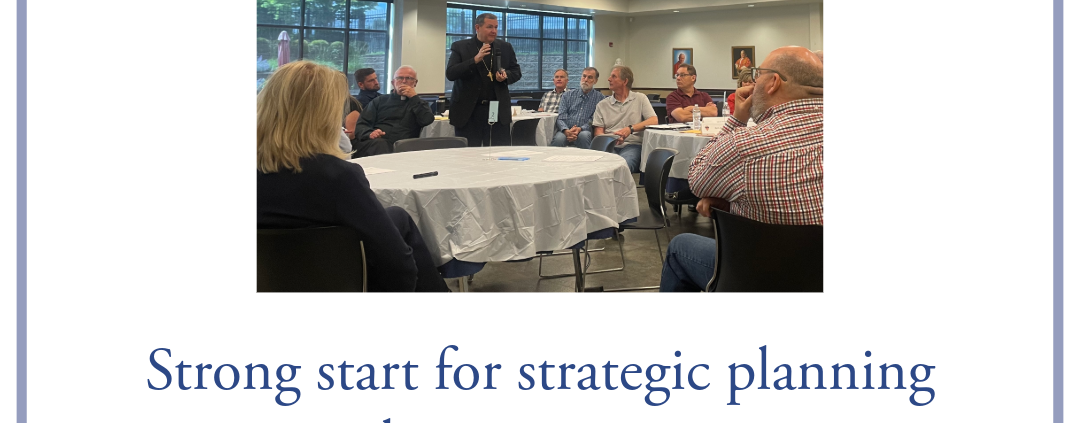
Strong start for strategic planning and commissions as subcommittees name leaders

Laura Keener

Editor

The strategic planning process continued in earnest the week of May 11–15. The subcommittees of all three currently active commissions met last week, with 11 meetings held across the diocese. The meetings marked an important step forward as leaders were appointed for each subcommittee and members began their work. For a listing of the commissions, their subcommittees and respective leaders, see box at (left/right).

Deacon Jim Fortner, diocesan chief operating officer who is overseeing the planning process, said he has been encouraged by the response. “There’s so much energy for this from day one,” he said. He added that many people are showing strong commitment by attending meetings after a full day of work and some are serving on more than one committee.

The newly appointed leaders were chosen from the 373 people from across the diocese — lay faithful, clergy and women religious — who had signed up to take part in the planning process.

Jim Hess, diocesan director for Stewardship and Mission Services who is also leading the process, said registration forms asked whether people were open to serving in leadership roles, which created “a great pool of candidates” for chairs and co-chairs.

“I think overall people are very excited to be a part of a transparent planning process in the Church, where they can have a real impact,” Mr. Hess said.

Deacon Fortner said organizers also looked for people with “the right skills” and passion for each area.

The subcommittee meetings are more than discussion or listening sessions. “This is a strategic planning process,” Mr. Hess said, noting that participants are helping shape the way forward. “Bishop Iffert has made it clear that he doesn’t have any preconceived ideas, he doesn’t have an agenda, that he wants the people in the room to be coming up with a way forward. He has given them a lot of responsibility, and it’s really encouraging to see how people are taking that on.”

The subcommittees have two more scheduled meetings in June and July before they will develop a plan and present it to Bishop Iffert. Committee members will also take part in scheduled webinars to hear from local and national experts in their field.

Deacon Fortner and Mr. Hess said that the strong turnout and willingness of so many to take on leadership roles show that people are ready to serve and help guide the commissions’ work.

For more information and to keep abreast of the strategic planning process, visit www.covdioplanning.org.

Diocese of Covington studies creating Catholic Foundation to support diocese, parishes, schools

Laura Keener

Editor

The Diocese of Covington has formed three commissions that will spend the next four months studying, praying and discussing a strategic plan that will guide the diocese for 30 years or more. These three commissions are — Catholic Schools Commission, Catholic Charities Commission and Catholic Foundation Commission. A fourth commission — the Diocesan Governance Commission — will begin its work in the Fall, building on the needs and direction identified by the other three commissions.

The Catholic Foundation Commission is examining whether to create a Catholic Foundation — an independent nonprofit that could help parishes, schools and diocesan ministries with long-term giving and fundraising support. The Catholic Foundation Commission held its first meeting April 15, where Bishop John Iffert addressed the Commission via video.

Referencing the With One Heart planning process that parishes and the diocese have been implementing the last three years, Bishop Iffert said, “Tonight we’re kicking off on another kind of parallel strategic planning process. In this process, especially, we want to work on developing the capacity of the local Church to be able to support ministries that make a difference in people’s lives.”

The work of the Commission, Bishop Iffert said, is “to study and to bring into fruition a Catholic foundation to encourage giving in support of the mission of Jesus and his kingdom. That’s what this foundation is all about, to encourage that natural response that we need to give.”

The conversation for a foundation started about a year ago during efforts to better coordinate planned giving and estate planning across the diocese. Jim Hess, diocesan director for Stewardship and Mission Services, said early talks with Catholic Charities raised a simple question: How can the Church make it easier for people to include their parish, school or ministry in their long-term plans?

“We were having conversations about encouraging planned giving in the diocese and estate planning, and how we could both do that and coordinate that work together,” Mr. Hess said.

When leaders asked other dioceses how they manage that work, he said the answer was consistent: “Every diocese that we talked to said that you have to have a foundation in place.”

Mr. Hess said Bishop Iffert has approved a planning process to explore the idea. Whether or not to move forward with forming a foundation or what the final structure of the foundation would look like is the work of the Foundation Commission and its three subcommittees.

“None of these things have been decided,” Mr. Hess said. “This will be the work of the commission, and it’ll be an intensive work over the next four months.”

At the commission’s first meeting, about 60 people attended, including priests, school leaders, parents and other parishioners. Mr. Hess said the group’s questions took up so much time that organizers didn’t get to the second half of its agenda.

“It was wonderful to see how curious people are,” Mr. Hess said, adding that the discussion helped explain “what a foundation could provide for the diocese and also what a foundation is not.”

In general terms, Mr. Hess described a diocesan foundation as a separate nonprofit organization created to serve the Church’s local needs. “A diocesan foundation would be an independent 501(c)(3), an independent nonprofit that works to support our parishes and schools,” he said.

He said it could offer services the diocese is not currently set up to provide, such as education on estate planning, support for planned giving, and help establishing and growing endowments for parishes and schools.

Mr. Hess said those funds could be professionally managed and “invested ethically … in Catholic and ethical portfolios.” He also said a foundation model can add oversight through a lay board and clearer reporting, giving donors “visibility into how their money is being used, how it’s being invested.”

Just as important, Mr. Hess stressed that a foundation would not replace parish offertory or compete with schools and parishes for donations. “We’re not competing with the parishes and schools,” he said. “The foundation actually expands the capacity of parishes and schools to be able to accept different ways of giving that right now they’re not set up to receive.”

One practical example is fundraising consulting. Mr. Hess said parishes and schools often hire outside firms for capital campaigns, which can cost tens of thousands of dollars for a standard campaign. A foundation could reduce that cost by building an in-house team.

Equally important, when outside firms leave, he said, “any of the relationships that they’ve created with our faithful leave with them.” A diocesan foundation, he said, could help ensure those relationships stay in the Church.

Deacon Jim Fortner echoed the need for a coordinated approach.

“Today, everybody’s separate. There’s no strategy,” he said, noting that parishes are often “on their own” when it comes to endowments, planned giving or major fundraising.

Deacon Fortner said he sees a foundation as “the umbrella that everything hooks into,” helping keep donor relationships and information “inside the Church” instead of handing them to consultants “who come and go and take all that valuable data with them.”

Mr. Hess said recent research into local giving trends has been “very eye opening.” Looking back over decades of records, he said, “on average, the diocese and its parishes receive less than one percent of their income from bequests,” and “the majority of those funds come from priests.”

In dioceses with a working foundation, he said, bequests often average “eight to 10 percent.” For a diocese this size, he added, that can mean around $2.5 million a year in bequest gifts. Currently, the diocese averages about $25,000 in bequests each year.

Deacon Fortner said other dioceses encouraged Covington leaders to start talking about estate planning sooner rather than later. “Faithful are passing and we’re just not in the conversation,” he said. Deacon Fortner also pointed to broader challenges, including fewer households participating in parish life, saying the diocese needs “a more strategic approach” if it wants ministries to remain “healthy and robust.”

Mr. Hess said a foundation could also help parishes teach stewardship in a practical way.

“A major aspect of living a life of stewardship is deciding what you’re going to do with the gifts God has entrusted you with when we pass on from this earth,” he said. Mr. Hess said many Catholics have not taken that step, adding that “70 percent of Catholics don’t have an estate plan in place.”

When families do plan, he said, it can bring relief: donors often feel “an immense peace of mind … for their children and grandchildren” because it can prevent the estate from going through probate court and tying things up for months or years for loved ones.

Mr. Hess said that planned giving isn’t only for the wealthy. “For the vast majority of people, the largest gift they’ll ever make in their life is their estate,” he said, which may include a home, insurance policies, or retirement accounts. He said the foundation’s work would especially help “the vast majority of people that doesn’t have … a network of financial planners and legal advisors.”

For example, the average teacher that might have an estate of $30,000 when they die, doesn’t have a legal team but still has a need to sit down with someone to guide through estate planning.

Questions about oversight are central to the commission’s work. Mr. Hess said there are “different models” for how much involvement a bishop has, and the Governance Subcommittee will study what has worked in other dioceses. He said the goal is to set up something that will serve local Catholics for the long haul: “For the decades and centuries to come, we want to take our time now to establish something that is going to serve the Diocese best.”

Over the next four months, the commission will continue gathering feedback and reviewing possible services and governance options before making recommendations. For now, diocesan leaders say the discussion is about building a stronger support system for parishes and schools — while making sure any new foundation is clear in purpose, transparent in operation and focused on serving local Catholic ministries.

For more information on the Planning Commissions visit www.covdioplanning.org.

Catholic Charities Commission to discuss new evangelization through service

Bella Bailey

Multimedia Correspondent

The Diocese of Covington is embarking on a new strategic planning process, looking to guide the Diocese through 2030. The planning process will be focused on four key aspects to the ministry of the Diocese of Covington: Catholic schools, Catholic Charities, the Catholic Foundation, and diocesan governance. Faithful from across the Diocese of Covington have been invited to participate in commissions and subcommittees, with the goal of advising Bishop John Iffert on the best path forward in these ministries.

The meeting of the Catholic Schools Commission, April 14, began the process of commission and committee meetings, with the Catholic Charities Commission meeting April 15. The Catholic Charities Commission meeting brought together approximately 50 people, said Deacon Jim Fortner, chief operating officer, Diocese of Covington, all of whom are vested in the success of Catholic Charities.

Chris Goddard, executive director, Catholic Charities of the Diocese of Covington, said about the crowd, “I was really pleased with the enthusiasm, the diversity of representation in terms of the breadth and depth of professionals, men and women, different careers and people that came who are very interested in programs and services.”

Deacon Jim Fortner called the group of participants, “prayerful people.”

Their role will be to meet and discuss the future of Catholic Charities in the Diocese in terms of ministry services and how to reach people in need. Mr. Goddard said, “the greatest thing that I heard was that Catholic Charities could expand its reach and scope across the Diocese … there’s a tremendous opportunity to increase awareness across the community, that a lot of people don’t know who we are.”

In opening remarks made via video at the commission meeting, Bishop John Iffert told the crowd, “It’s time for us to engage in strategic planning. That is, planning that is really directed towards building the capacities of Catholic Charities and our Diocese, to be able to respond to the needs of our neighbors who rely on us and our spiritual need to be able to serve others and to give charitably.”

Moving past just increased volunteerism in the community, Deacon Fortner hopes to evangelize through service, a callback to the With One Heart Campaign of Mercy.

“I would love to see then, obviously, by us serving we strengthen the body of Christ through more people, stronger people, fully participating into the works, the spiritual and corporal works of mercy; not just going to Mass, but going to Mass and serving.”

The Campaign of Mercy, a process of evangelization through practice of the corporal and spiritual works of mercy, is instrumental and a natural fit for Catholic Charities in the Diocesan strategic planning process.

“This campaign of mercy was fundamental to evangelization,” said Deacon Fortner. “We need to get out there and really do something, break through, as a form of reaching those that are unchurched, those that may not feel the love of Christ’s hands.”

While Catholic Charities has many ministries that meet the physical needs of a person, Mr. Goddard emphasized the importance of inviting people into a life with Christ; emphasizing the need for ministry to be not only “transactional” but “relational.”

“I think equally important,” he said, “is people knowing that they’re loved by God and sharing the good news.”