Catholic Charities new counseling service ensures all students are set up for success

Bella Bailey

Multimedia Correspondent

At the beginning of the 2025-2026 school year, Catholic Charities in the Diocese of Covington launched a restructured counseling program — CARES, which stands for the Catholic Approach to Resilience, Engagement and Support. Currently the program is being piloted in three diocesan elementary schools, Holy Cross Elementary, Covington; Mary, Queen of Heaven School, Erlanger and Holy Trinity School, Bellevue.

The program was implemented to meet the increasing number of students needing counseling supports, while acknowledging the limited number of counselors available to meet those needs. CARES uses a three-tiered system, ensuring that each child is, “seen, valued and supported not only in academics but also in their emotional and spiritual growth,” wrote Chris Goddard, executive director of Catholic Charities, in the Partners Newsletter.

Catholic Charities has always provided one-on-one counseling. It is still available as tier three and is the most specialized and resource intensive. The two added tiers provide counseling to the broader student populus and small groups.

Jessica Gangwish, counselor to the three pilot schools, said, “tier one is the classroom groups. They are interactive, age-appropriate lessons. It’s to help with developing skills like emotional regulation, self-awareness, decision-making, communication, relationship building, overall life and social skills. Then cultivating empathy and, something we’re really focusing on is resiliency.”

Tier one counseling is effective for about 80 percent of students according to a research article co-authored by Jannik Nitz of the University of Cologne, Germany and available on the National Institute of Health website.

“Tier two,” continued Ms. Gangwish, “are those supportive, additional, one-to-one check ins or small groups. Part of that is screening the kids to promote early identification and get some early intervening, recognizing skills where students are struggling.” According to the Nitz article on multi-tiered counseling, about 10 to 15 percent of a class would benefit from Tier 2 counseling.

Three months into the pilot program, “it’s been going really, really well,” said Ms. Gangwish. “The schools have been really receptive, the teachers are really receptive, and the parents have been really receptive as well.”

The tiered approach is not new to those in the counseling profession with many public schools using what is known as MTSS, Multitiered System of Supports. The primary difference between CARES and MTSS is the faith-based support provided through CARES.

“We make it a point in each session to incorporate the faith in any way that we can, whether it be coping using your faith with prayer or Scripture, going to Mass or talking with a pastor,” said Ms. Gangwish.

Karen Kuhlman, a Catholic Charities volunteer, wrote in the Partners Newsletter alongside Mr. Goddard, “By grounding counseling in a Catholic understanding of the human person, the program helps students flourish academically, emotionally and spiritually, equipping them to live out their faith with confidence and purpose.”

Within this new program, there is a heavy emphasis on instilling strong virtues in students from a young age as a form of prevention, allowing them to have these important skills to fall back on.

“Anything major that may come up, we kind of drilled those skills already to prevent anything further down the road. Instilling these skills that are essential life skills that you need as a student, a high school student, in college, in your work, just as basic life skills. Especially communication and managing emotion,” said Ms. Gangwish.

“We are building a system that strengthens not only academics, but also resilience, compassion and hope – qualities that shape the whole person,” wrote Mr. Goddard. “In this way, Catholic Charities is helping our schools prepare students not only for success in the classroom, but for lives of faith, hope and love — lives firmly rooted in Christ.”

Cathedral Basilica of the Assumption takes center stage in new Dynamic Catholic production

Bella Bailey

Multimedia Correspondent

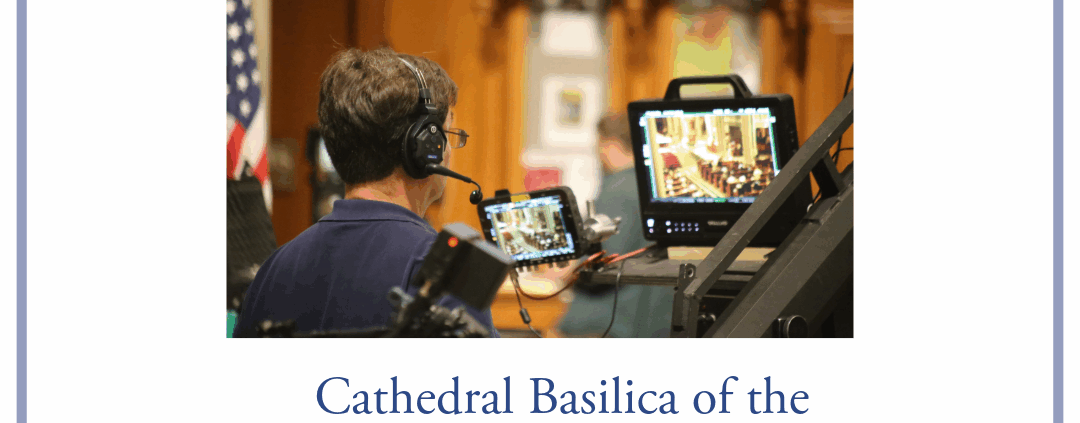
A film crew from Dynamic Catholic made the Cathedral Basilica of the Assumption, Covington, their home October 2–3, as they filmed for Dynamic Catholic’s new project “People of the Eucharist.” One in a series of 10 programs, known as “Catholic Moments,” that Dynamic Catholic is creating to “hopefully create world-class faith resources and education for Catholics at different points in their life,” said Stephen Anderson, content team leader for Dynamic Catholic.

The program being filmed at the Cathedral Basilica of the Assumption will be focused entirely on the Mass. Along with the full, live Mass that was filmed Oct. 3, the program will be broken into 52 “moments of engagement,” said Mr. Anderson, “that will teach people specifically how they can engage in that moment of the Mass.”

The crew will return in November to film the educational moments of engagement, which will be combined with the footage from the Mass.

This is not the first project that Dynamic Catholic has filmed in the Cathedral Basilica of the Assumption, but it is one of the largest scale projects that has been completed in the space.

“There’s a lot of prep work that goes into something like this,” said Mr. Anderson. “I did try to take a few moments on the day to sit back and look up at the cameras and just soak in the fact that this was happening at such a big scale.”

Mr. Anderson estimates that there was a total of 11 to 12 cameras on site in addition to sound equipment and drones. “The scale of this thing really blew me away,” he said.

The beauty of the Cathedral Basilica of the Assumption, in addition to its pre-existing comfort with the space and staff made it an easy choice to host the filming of the program.

“We think it’s one of the most beautiful churches in the world. We love that space, it’s so bright and beautiful. When it comes to capturing the beauty of the Catholic Mass, we really couldn’t think of a better location,” said Mr. Anderson.

The program has an expected release date of the summer of 2026 and can be viewed on Dynamic Catholic’s own viewing platform Dynamic+. The series will be free to access and view through this platform on their website.

“Nothing compares to the feeling and grandeur of a full Mass,” said Mr. Anderson. “We believe this will transform the way Catholics, young and old, experience the Mass forever.”

Newport Central Catholic rains blue in celebration of CAPE National Blue Ribbon School nomination

Bella Bailey

Multimedia Correspondent

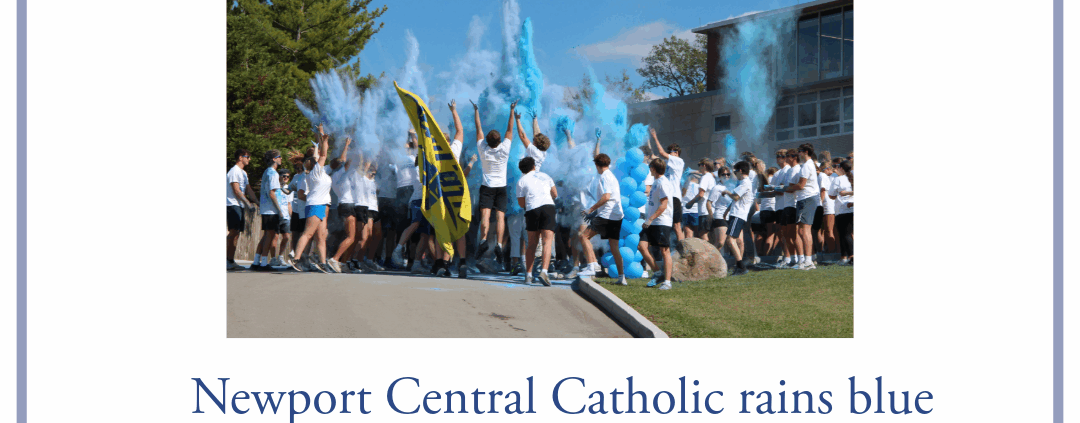
The grounds of Newport Central Catholic High School, Newport, were colored blue, October 8, following a celebratory color run in which students, faculty and staff celebrated their recent CAPE Blue Ribbon School nomination. Blue powder filled the air in celebration of this achievement as students ran around campus greeting faculty and staff. By the end, no one was spared of the blue powder, not even Ken Collopy, principal, who was doused in the celebratory powder by students.

Newport Central Catholic High School applied to be a National Blue Ribbon school in the fall of 2024 with the scores of the 2024 and 2025 graduating classes, both of whom tested above the national average in multiple categories.

“It speaks volumes on how hard our staff has worked and how hard our students have worked,” said Mr. Collopy, “our staff made a lot of intentional efforts to realign curriculum with standards, whether they are state or diocesan.”

Having back-to-back graduating classes qualify for National Blue Ribbon consideration is, “to my knowledge very uncommon,” said Mr. Collopy, as test scores must be in the top 15% of the nation to be considered. However, the back-to-back qualifications speaks to a changing culture at Newport Central Catholic, one where students have “bought in,” said Mr. Collopy.

“Our students bought into the process of ‘we aren’t testing just to test. We are testing to give data to our teachers to better meet our needs,’ and our teachers took that data and they did exactly that. They made adaptations in the classroom to help with their learning. I really believe that’s why we were able to achieve not only with the class of 2024 but also 2025,” said Mr. Collopy.

In a school assembly preceding the color run, Mr. Collopy addressed the students saying, “I ask two things of you every day, to show up with good effort and good attitude…we have not focused on attaining these numbers, the focus has been on just giving your best and looking to improve. That is what God calls us to go, give our best. It is not always easy; the results are showing that we doing this at an extremely high level.”

When schools apply to be considered as a National Blue Ribbon School, they are given the option to exclude certain scores. “We looked at various things including demographics, testing and services. We applied with everyone, we didn’t take anyone out,” Mr. Collopy announced, “These are students in our AP classes, dual credit, honors, also students in our St. Joseph Institute, regular level classes, student athletes, drama. All of those things made all of you National Blue Ribbon Students,” he told them.

Superintendent of Catholic Schools Kendra McGuire spoke at the saying, “This recognition really reflects the hard work and dedication of your school administration, your school staff, and especially you. We are hoping that this is just the beginning of the wonderful future here at Newport Central Catholic,” she said, “you truly are a beacon of light to everyone, and I know this is finally recognizing the achievements your school has made for decades. I look forward to this tradition of excellence to continue for many generations to come.”

Twenty-ninth Sunday of Ordinary Time

Father Stephen Bankemper

Guest

The Gospel for this weekend, the story of the corrupt judge and the persistent widow, is well known and often cited, but I have always thought that the story in the first reading, the story of Joshua battling Amalek and Moses praying on the hill above him, deserves to be better known, because it is a good picture of what the Church’s life — and more particularly, parish life — should be.

Moses tells Joshua to engage Amalek in battle. Why Joshua and not Moses? To lead in battle is not Moses’ role. It is Joshua’s and the other Israelite warriors’ task to engage their enemies in battle. Just so, it is not the primary role of the pastor to engage in the Church’s duties and activities in the world. That belongs primarily to the lay faithful of the Church. This principle has been explained in many ways by many different spiritual writers and teachers, but I will cite just two examples.

Lumen Gentium (“Dogmatic Constitution on the Church”), one of the documents that came out of the Second Vatican Council, after describing the nature of the Church in general, next discusses the nature and purpose of the hierarchy (clergy), and then has an entire section dedicated to the laity (Chapter IV, “The Laity”). Among all the things written about the laity is this general comment: “But by reason of their special vocation it belongs to the laity to seek the kingdom of God by engaging in temporal affairs and directing them according to God’s will. They live in the world, that is, they are engaged in each and every work and business of the earth … There they are called by God that, being led by the spirit to the Gospel, they may contribute to the sanctification of the world, as from within like leaven …” (Par 31b)

A second example comes from John Paul II’s Post-Synodal Apostolic Exhortation, Christifideles Laici (“The Lay Members of Christ’s Faithful People”). From the very first sentence of the document John Paul illustrates the role of the laity by using the parable from Matthew’s Gospel of the workers in the vineyard: “The lay members of Christ’s Faithful People … are those who form that part of the People of God which might be likened to the laborers in the vineyard mentioned in Matthew’s Gospel …” (Introduction) Lay people “as well are personally called by the Lord from whom they receive a mission on behalf of the Church and the world.” (Par 2d)

Who supports them in their mission? The clergy. Moses does not stand on the battlefield, but climbs a hill from where he entreats the Lord on the warriors’ behalf. The citations describing the priest’s ministry to the laity are too numerous to even mention, so perhaps we should simply look at the nature of priestly ministry, described broadly by noting that the priest, as an extension of the local ordinary (bishop), participates in Jesus’ ministry of Priest, Prophet and King; the One Who sanctifies His people (for their own benefit, but also that “they may contribute to the sanctification of the world”, the quote from above), the One Who teaches and speaks God’s word to them and the One Who shepherds and guides them. I include under “Priest,” one who sanctifies, praying for my people. In fact, I spend more time praying for my parishioners than I do any other one thing, except perhaps homily preparation.

Moses, however, gets tired. His hands fall. He needs the support of Aaron and Hur to

continue his prayer. So, too, the priest gets tired, discouraged, disillusioned, scandalized, doubts himself, is subject to attacks by the Enemy, is tempted in many ways. Some months ago a YouTube video caught the attention of the Catholic people. It was purported to be a message from Pope Leo in reaction to the suicide of a priest. It very quickly became known that it was not, in fact, from the Holy Father, and it quickly died, but the message was nonetheless accurate. The priest needs support in his ministry, not for his own sake, but so that he can continue in his ministry and be effective. Without Aaron and Hur, Moses would not have been able to continue his intercession, and the battle would have been lost. Without support, the priest, too, will eventually fail in his ministry. Not all of that support needs to come from his people — there is his prayer and devotional life, the Eucharist, and the grace of the sacrament of ordination, for examples — but the human support he receives from his people is vital.

Go back and read this story again in this context. Let us pray for each other, so that we each may persevere in our respective vocations and ministries. Let us care for each other. Let us help each other. Let us love each other.

Father Stephen Bankemper is pastor, St. Catherine of Siena Parish, Ft. Thomas, Ky.

Diocesan pro-life director visits grade schools encouraging students to be signs of hope ahead of the Pro-Life Essay contest

Bella Bailey

Multimedia Correspondent

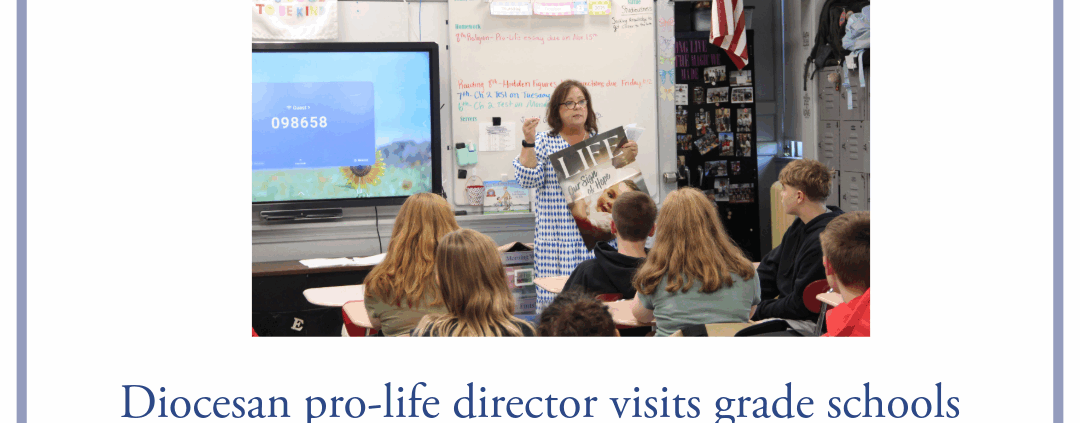
For the last 32 years, eighth graders across the Diocese of Covington have been invited to participate in the Pro-Life Essay contest. Every year the students submit essays pertaining to the year’s theme to the Diocesan Pro-Life Office. And while the themes change each year one thing remains the same, each focuses on the dignity of life; what Faye Roch, director of the pro-life office, calls the “essence of the pro-life movement.”

While visiting Holy Cross Elementary School, Covington, Mrs. Roch unveiled the theme for this year’s essay contest, “Life, our Sign of Hope.” Quoting Pope Leo XIV, she explained the topic further, “how important it is that each and every baptized person feel himself or herself called by God to be a sign of hope in the world today.”

The students are being asked to examine two key points in their essays. First, an explanation of how the Church’s teaching on dignity of life from conception to natural death is a reflection of Jesus’ teachings. Second, how a young person can be a beacon of hope for those experiencing “hopelessness and emptiness,” and how they can inspire others to do likewise, she said.

For three decades the essay contest has been utilized as a tool to help students delve into the Church’s pro-life beliefs in an increasingly polarizing world, preparing them for the “controversial things that come up when you talk about pro-life,” said Mrs. Roch.

“I’m hoping I can give you some tools to have those conversations with people, especially when it comes to talking about the unborn,” she said. “That’s what we’re called to do, to have conversations. We are called to convert people through love, not through yelling at them, not through calling them bad names, to talk to them and do it through love.”

Each student was handed a small, silver anchor, which Mrs. Roch said was a reminder to them that they can be anchors of hope in this world. “You can be that person,” she said addressing the eighth graders,” who can be a sign of hope. Know that it’s not easy, and it may not always be popular. Just know that you, as a junior high student, have that power in you.”

Notre Dame Academy celebrates the installation of President Lauren Hitron

Staff Report

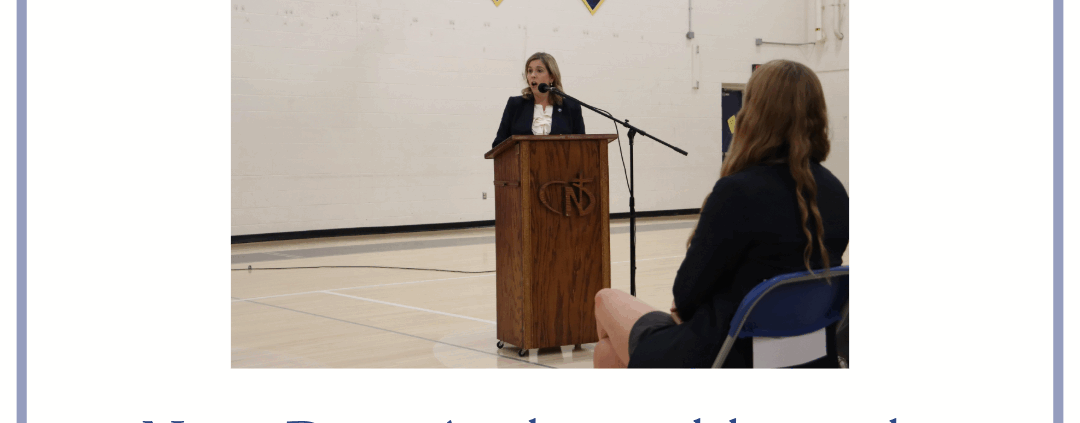
Notre Dame Academy (NDA), Park Hills, celebrated the installation of Lauren Hitron as the school’s fifth president, Oct. 1, immediately following NDA’s Foundation Day Mass with Bishop John Iffert. The liturgy honored both the 175-year legacy of the Sisters of Notre Dame and NDA’s 120th anniversary year, uniting generations of students, educators and alumnae in faith and celebration.

President Hitron, who began her tenure in July, was formally commissioned during the ceremony, surrounded by students, faculty, staff, alumnae, family and friends. The installation highlighted NDA’s enduring mission of educating young women to make a difference, a mission that has guided the school since its founding in 1906.

“It is an honor and a calling to serve a community so deeply rooted in faith, excellence and purpose,” President Hitron said. “As we celebrate 120 years of educating young women to make a difference, I look forward to leading Notre Dame Academy into its next chapter — one that honors the legacy of the Sisters of Notre Dame and prepares our students to lead with courage, compassion and vision.”

A native of Louisville, President Hitron brings nearly two decades of experience in Catholic education and leadership development. Before joining NDA, she served as the founding director of the Jean Frazier Leadership Institute at Sacred Heart Schools in Louisville, where she built a nationally recognized, endowed program focused on leadership formation for young women. She also previously served as Director of Enrollment and Director of Recruitment at Sacred Heart Academy.

“President Hitron embodies the heart of Notre Dame Academy’s mission,” said NDA Board Chair Jessica Rawe. “Her faith, experience and vision for young women’s leadership will ensure that the legacy of the Sisters of Notre Dame continues to flourish for generations to come.”

IGNITE celebrates inclusivity

Maura Baker

Staff Writer

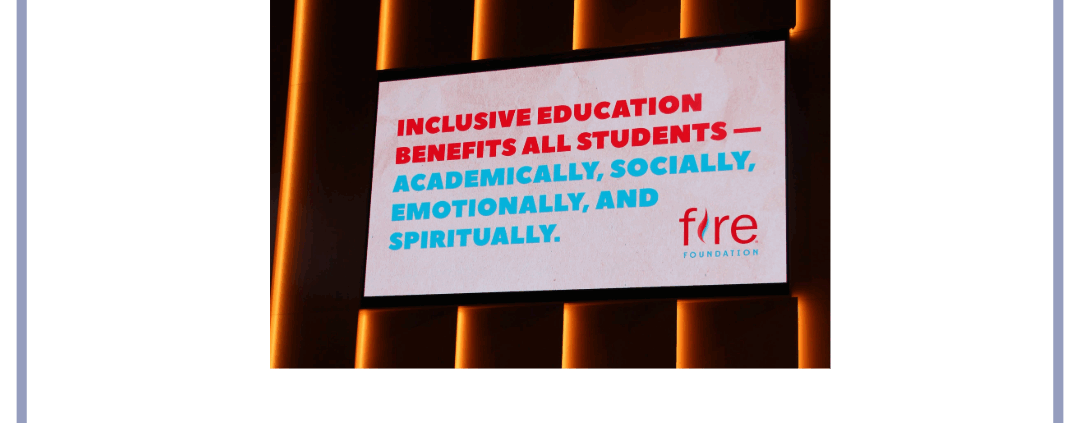
Supporters of the FIRE Foundation of Northern Kentucky’s mission came together, Oct. 2, for an evening of inclusive education celebrated in Thomas More University’s Academic Center, Crestview Hills.

The evening, which began with an hour of socializing between guests, culminated in a program that expressed the foundation’s history and ministry — to make Catholic education accessible for all.

Officially established in November 2023, the FIRE Foundation of Northern Kentucky provides funding, training and personnel to Catholic schools for the purpose of inclusivity towards children with mental and developmental disabilities. Founded by parents who faced challenges with their own children’s education, the foundation has already provided vital assistance to St. Therese School, Southgate, with hopes to expand to more schools in the upcoming year.

With a goal of $300,000, the money raised will both continue to support St. Therese School but also allow for the FIRE Foundation’s model to support four other schools for the 2026–2027 school year.

“The FIRE Foundation is read to open the grant process to all of our schools to be able to meet their needs,” said Kendra McGuire, the Diocese of Covington’s superintendent. “But, in order to open the process, we need financial support to make this all possible.”

Schools in the Diocese of Covington are sponsored primarily by the parishes, with parishes contributing 30–70 percent of every collected dollar to their individual schools.

“That’s how important those Catholic schools have been to us,” Bishop John Iffert said in his closing remarks. “That’s how important we believe this strategy for passing on the faith is.”

The strategy of the FIRE Foundation, whose program originates in Kansas City, relieves the financial pressure from parishes while still allowing equal opportunity for children with disabilities.

“When we see a need, we work together to try to fill it,” Bishop Iffert said. “I’m very grateful for that.”

To learn more about the FIRE Foundation, or to make a donation, visit https://www.firefoundationnky.org.

The final regional Jubilee pilgrimage offers space for faith renewal among 1,200 relics with Bishop John Iffert

Bella Bailey

Multimedia Correspondent

The theme of the 2025 Jubilee Year, Pilgrims of Hope, has encouraged approximately 35,000,000 people from across the world to make that titular pilgrimage to Rome. However, for most, this kind of pilgrimage is unrealistic, cost-prohibitive and time-restrictive, though this does not mean they cannot make a pilgrimage during the Jubilee Year.

Bishop John Iffert, through the diocesan Office of Stewardship and Mission, has organized many regional opportunities for the faithful of the Diocese of Covington to make a pilgrimage with him. So far, there have been two regional pilgrimages: one to St. Mary of the Woods College, St. Mary of the Woods, Indiana, where the shrine of Saint Mother Guerin is located; the other to the Abbey of Gethsemani, Trappist, Kentucky, where Trappist Monks lead lives of prayer.

The final of these regional pilgrimages will take place Nov. 22, with Bishop Iffert and the faithful traveling to the Maria Stein Shrine of the Holy Relics, Maria Stein, Ohio. Jim Hess, director, Office of Stewardship and Mission Services, said, “The shrine itself is incredible. They have really beautiful grounds, they have over 1,200 relics, five different relics of the true cross.”

The shrine’s reliquary collection is one of the largest documented collections in the world; however, the unique opportunity to connect with the saints is not the only thing it offers. “This shrine really offers that beacon of hope for people,” said Mark Travis, executive director of the Maria Stein Shrine of the Holy Relics.

“Going on a pilgrimage is really an opportunity to be reminded of the fact that we’re meant to just sometimes be and reminded of our human beingness. To be able to take intentional time away from the to-do list, so sometimes in prayer and being in the chapel with all the relics, it’s really just a reminder of who we are as sons and daughters of Christ,” said Mr. Travis.

This year, the shrine has seen an “uptick” in their number of pilgrims as they have been designated as a Jubilee holy site by Archbishop Emeritus Dennis Schnur of the Archdiocese of Cincinnati. Pilgrims have traveled nationally and internationally to visit the shrine. “Having people go on pilgrimage here from all over the world definitely is a testament to how holy this place is and how necessary it is,” said Mr. Travis.

“You don’t have to travel to Europe; you don’t have to go to Italy or France to experience beautiful Catholic culture. It’s in these shrines in our region,” said Mr. Hess.

Mr. Travis said, “that special grace, by doing a pilgrimage to a holy site during a jubilee year, just making that personal recommitment of faith, no matter where you’re at in your faith journey, it’s a great opportunity to begin anew in a lot of ways.”

There is still time to sign up for the last of the regional pilgrimages; go to covdio.org/jubilee for more information.

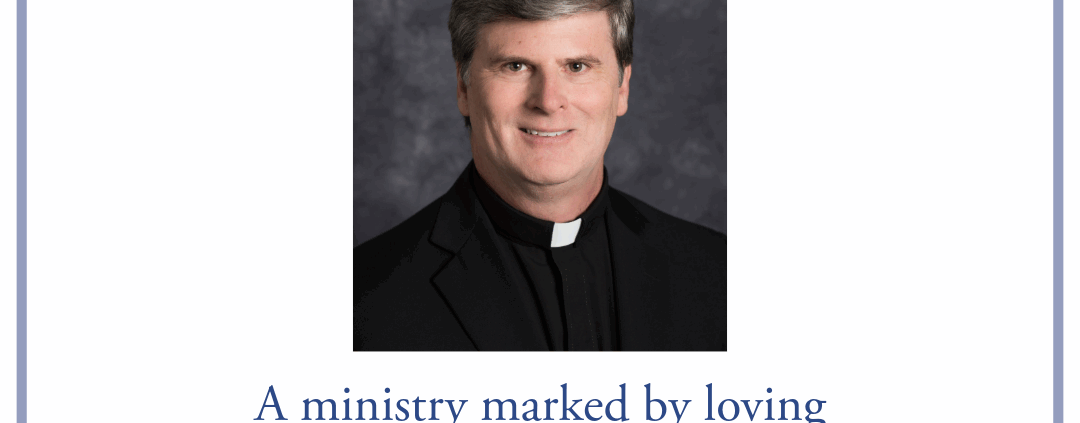
A ministry marked by loving like Christ, Deacon McGraw celebrates twenty-five years

Bella Bailey

Multimedia Correspondent

Deacon Joseph McGraw, currently assigned to Mary, Seat of Wisdom Chapel, Crestview Hills, celebrated 25 years of diaconal ministry with the anniversary of his ordination, May 13. Deacon McGraw’s ministry has spanned two states, five parishes and many roles.

It was his family and church community that helped him to realize his call to the diaconate. He said, “I was very fortunate to have wonderful, faithful parents and loving siblings, and I was further blessed when this continued with my wife and children. I think that kind of environment is really conducive to discerning a vocation. For me, a vocation is a calling from God, and it’s also a calling from the community.”

Following that call, Deacon McGraw was ordained in the Diocese of Cleveland, where he resided and ministered for 12 years following his ordination. There, he aided his Bishop and served two parishes each with over 2,500 parishioners.

“I did a lot of baptisms, I witnessed marriages, and, I would say, probably one of the most humbling things I did was I was with families as their loved ones passed away,” said Deacon McGraw.

After his 12 years of ministry in Cleveland, Deacon McGraw and his family moved to the Diocese of Covington, where he was assigned to Holy Spirit Parish, Newport. It was there he remained, serving the parish for seven years before a reassignment to St. Therese Parish, Southgate, where he served for six years, before moving to his current ministry at Mary, Seat of Wisdom Chapel.

Currently, Deacon McGraw teaches in addition to his diaconal ministry, which he says are one and the same.

“The majority of the students here are not Catholic, and so you have to meet people where they are,” said Deacon McGraw. “I always tell the students in my class that relationships are just like with people and God. You’ve got to enter into a relationship, and you’ve got to spend time together. Then, once you do, you can start to trust the person, and once you trust the person, you can believe in that person. But you can’t expect people to start believing in a person right away.”

In the students he ministers to and teaches, said Deacon McGraw, he sees the heart of Christianity. “A lot of it goes back to what I see in the students,” he said. “They are much, much more empathetic than my generation ever was. And at the heart of Christianity is empathy.”

As for his next 25 years of diaconal ministry, Deacon McGraw hopes to do more of the same, helping draw others closer to Christ. “It’s trying to help everyone understand having faith … There’s always talk about Catholic identity and what it is. For me, Catholic identity comes down to loving like Christ did. And if they let me do that, I’ll try it,” he said.

Twenty-eighth Sunday of Ordinary Time

Father Michael Elmlinger

Guest

For those of you who do not know me, I am a huge Notre Dame college football fan, so it should not come as a surprise that almost every year during the season, there is one movie that comes to mind: “Rudy.” There is one particular scene that I was recently reminded of. It is the scene where Rudy feels like he is losing all hope of getting into Notre Dame, and he is sitting in the Basilica of the Sacred Heart when Father Cavanaugh notices him. During the conversation, Rudy says, “Maybe I haven’t prayed enough … If I’ve done everything I can, can you help me?” Father Cavanaugh responds to him with a very simple statement, “Son, in 35 years of religious studies, I have come up with only two hard, incontrovertible facts: there is a God, and I’m not Him.”

The reason that I bring up this scene is because one of the things Father Cavanaugh is saying here to Rudy is the same as our readings this weekend: faith is not magic. It is not a matter of saying some prayers that will force God to wave his hand to cure us of whatever ailment we are dealing with. Having this kind of relationship with the Lord is not an authentic relationship; rather, it is one of superficiality or even quid-pro-quo.

Faith, instead, is about a relationship of intimacy, of trust and obedience. We are to be obedient to Him in whatever He commands us to do, because we trust in him. That obedience is meant to lead to thanksgiving.

For the sake of brevity, I am not going to retell the story of Naaman, the Syrian commander who was cured of leprosy. I do encourage everyone to read the full story themselves in 2 Kings 5, because it will help in understanding the point I want to make. I want to focus on Naaman’s reaction to Elisha telling him to go to the Jordan River and bathe seven times. Naaman is incredulous and disappointed. He thought that Elisha would simply wave his hand and cure him of his leprosy.

Not only that, but the Jordan River is hardly the best river in the land. In fact, Naaman has to be reminded that he has no other choice but to do what Elisha commands him. He had to learn this truth that relationship with God is not meant to be a magic show. It is meant to be a relationship of trust in all that he commands him to do. After deciding to listen to what Elisha tells him, Naaman goes to the Jordan and is healed of his leprosy, and the only thing that he can think to do is to see that the God of Israel is the true God and to give thanks to him.

The 10 lepers who are healed by Jesus experience the same thing. It is interesting how this time, Jesus does not heal the lepers first, like he did earlier in the Gospel in Luke 5:12-16, before sending them to the priest. Rather, he is sending them first, which likely may have been confusing, if not frustrating, for these lepers. As lepers, they were to isolate themselves from the rest of society until they were actually cured (cf. Leviticus 13:46).

What Christ is doing here is calling them to the same act of humility and trust that Elisha called Naaman, trusting that what they have been told is true, regardless of whether they may agree with it or not. That trust turns what would have been a simple display of magic into an opportunity to grow in a real relationship with the Lord, rather than a superficial relationship. It is a relationship that is built on trust, on obedience to the word that the Lord has spoken to them, and that trust and obedience is meant to lead to only one other response: thanksgiving (from the Greek, eucharisteo).

This is what an authentic relationship with the Lord looks like. It is not one of superficiality, where all it consists of is saying the “right words” to have the Lord wave his magic hand over whatever happens to ail us that day. Rather, it is an intimate relationship built on trusting in what it is that he tells us to do, even if it may not make sense.

When we are willing to truly listen to the voice of the Lord calling out to us, then are we able to be truly transformed by Him and cleansed by him of the leprosy of sin, and there is only one response worthy of this wondrous gift: “Give thanks to the Lord, for he is good, for his mercy endures forever.” (Psalm 118:29)

Father Michael Elmlinger is a priest of the Diocese of Covington, Ky. Father Elmlinger is currently studying Canon Law at the University of St. Paul, Ottawa, Canada.