Cafeteria Manager – Saint Timothy School, Union

Overview:

The Cafeteria Manager oversees all aspects of the cafeteria, ensuring the efficient operation, compliance with federal guidelines, and delivery of nutritious meals to students and staff. The role combines food service management with administrative and supervisory responsibilities.

Key Responsibilities

  • Program Compliance: Ensure all meals meet the U.S. Department of Agriculture (USDA) and state guidelines for meal patterns, nutritional content, and portion control.
  • Food Production & Safety: Oversee large-scale food preparation, ensuring adherence to recipes and maintaining high standards of safety and sanitation according to Hazard Analysis Critical Control Points (HACCP) requirements.
  • Staff Management: Hire, train, schedule, supervise, and evaluate cafeteria staff, fostering a positive and efficient work environment.
  • Inventory & Ordering: Manage food and supply inventories, place food orders, verify deliveries, and store items properly using the First In, First Out (FIFO) method.
  • Financial Accountability: Handle cash receipts, prepare bank deposits, manage budgets and labor costs, and maintain accurate financial and payroll records.
  • Record Keeping & Reporting: Complete and maintain daily production records, temperature logs, inventory logs, and other documentation required for federal, state, and local reporting and auditing.
  • Customer Service & Communication: Resolve complaints, promote the program to students and the school community, and collaborate with school administration, parents, and health staff on dietary concerns and special events.

Essential Qualifications

  • Education: A high school diploma or equivalent is required.
  • Experience: Relevant experience in large-scale food service operations, including supervisory experience, is preferred.
  • Skills: Proficiency in computer systems (point-of-sale, inventory management, email, basic Microsoft Office) and strong leadership, organizational, and problem-solving abilities.

Physical Demands

The role often requires moderate physical activity, including frequent standing, walking, bending, and lifting items weighing up to 40 pounds. The work environment is a school kitchen with exposure to various temperatures and noise levels.

Contact

For more information or to apply for this position, contact Laura Hatfield, School Lunch Program Director, at [email protected]

Youth Minister – St. Joseph Catholic Church, Crescent Springs

About Us: Here at St. Joseph Catholic Church in Crescent Springs, KY we have a vision for every soul in our community to be united in the worship of God at our altar, in a community zealously living out the love of God and love of our neighbor. Towards that aim, our mission is: Be Saints, Make Saints – by receiving Christ’s transforming life, growing as His disciples in a vibrant community, and sharing His love generously with others.

Job Description: We are looking for a passionate Full Time Youth Minister to join our staff as we endeavor to equip domestic church families to live the faith – and promote a discipleship culture such that anyone can join St. Joseph Parish at any stage in life and faith and be nurtured in a vibrant Catholic community. The ideal candidate will be a joyful, outgoing, confident, and inviting person who loves the Church and thrives on sharing the joy of the Gospel with others. You would be responsible for leading Elementary, Middle School, High School, and College Ministry. You will be helping nurture the young souls of our parish to know and love God and neighbor, through developing their relationships with God and each other. Teaching the youth how to pray and encounter God in Scripture is foundational to this ministry. We are striving to foster a true depth of faith in these youth that will guide them for the rest of their lives and attract others to the Lord through them. Day to day responsibilities would include preparing sessions, meeting with students, training volunteers, planning retreats, and communicating with parents. Maintaining a vibrant personal prayer life would also be an expectation in this role. This role reports directly to our Director of Mission Advancement.

Requirements:

  • Bachelor’s Degree in Theology, Ministry, or related field
  • Applicants must be practicing Roman Catholics and able to articulate the Truth of the Gospel effectively
  • Must be able to relocate or easily commute to Crescent Springs, KY
  • Expected to work joyfully with others and promote a welcoming environment
  • Maintains a personal awareness of our mission and embodies such in work habits
  • Maintains confidentiality of church records and conversations
  • A clean background check (no criminal record) and ability to complete all safe environment requirements
  • Prompt and reliable
  • Attention to detail, able to complete tasks with minimal supervision

Preferred Qualifications: Masters in Theology, Ministry, or related field, proven success in youth ministry, previous parish ministry experience

Salary/Benefits: Annual base salary commensurate with education and experience, competitive diocesan benefits including PTO, full premium paid health insurance, life insurance, dental insurance, vision insurance, and relocation assistance

https://www.linkedin.com/jobs/view/4323820762`


Development and Planning Coordinator

The Catholic Diocese of Covington is seeking a full-time Development and Planning Coordinator within the Office of Stewardship and Mission Services. The Coordinator’s role for the first six-to-eight months will be focused on assisting with the development of a new ministry: specifically, providing support for Bishop John Iffert’s strategic planning initiatives and implementing a comprehensive fund development program, leading into a full-time Development Coordinator role. This position combines administrative coordination with stewardship efforts to advance the Diocese’s mission. Interested individuals should send a letter of interest, a comprehensive detailed resume including compensation history, and references with contact email addresses to Stephen Koplyay, SPHR at [email protected]


The Solemnity of Our Lord Jesus Christ, King of the Universe

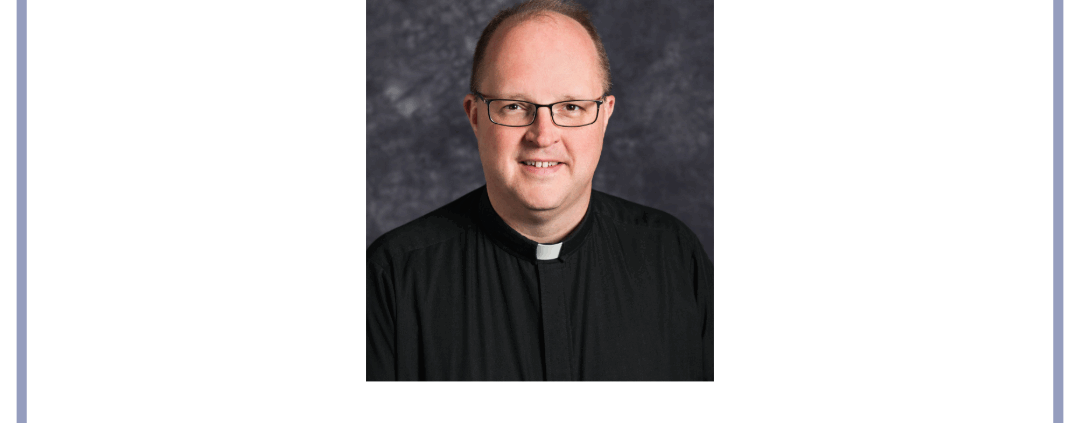
Father Phillip DeVous

Guest

“Almighty ever-living God, whose will is to restore all things in your beloved Son, the King of the universe … that the whole creation, set from slavery, may render your majesty service and ceaselessly proclaim your praise.”

These words of our opening collect for the Solemnity of Our Lord Jesus Christ, King of the Universe, unequivocally state that it is the will of God to restore all things in Christ, that creation is to be set free from slavery, and that the purpose of the entirety of creation is to render the majesty of God service and ceaselessly proclaim praise to God. This, of course, is true, however we must grasp that this statement of truth is also poses some deeply personal questions to us: Do we want to be restored in Jesus Christ? Do we want to be set free from slavery? Do we even want to see how it is we might be enslaved in various ways by the forces of the world, the flesh and devil?

It is quite easier than we think to become apathetic about the holiness of one’s life. Saying Christ is King may fall easily from our lips, but it is much harder to acknowledge that kingship with the ardor of our lives. It is easy to go the way of the world, but quite difficult to live in confrontation with the dictatorship of the worldly, which comes about as the consequence of rejecting Jesus Christ as King. The temptation is always to be more social than truthful, negotiating for our comforts within the confines of the worldly dictatorship, rather than accepting Jesus Christ as the Lord and King of our lives.

To live under the kingship of Christ is to be the target of the world’s animus. It is important to grapple with the depth of world’s hatred of those who belong to Christ. The theologian, Cardinal Jean Daniélou, describes it well:

“If I keep faith with Christ, I must incur the world’s reproach, it is impossible for me to be on good terms with the world . . . ‘The world’ [here] means the whole collection of those human tendencies that go against the Spirit of Christ, vanity, pride, hardness of heart, concupiscence; of which Christ himself said, ‘I am not praying for the world.’ [John 17:9] A Christian cannot agree with the spirit of this world, because there is a direct incompatibility between it and the spirit of Christ. So, it is natural for the Christian to be thoroughly disliked; his whole behavior is a living reproach. He has no love for the world’s ideals; this in itself is an intolerable position, because it amounts to a judgement and sentence passed upon the world. Therefore, the world hates him.”

That the world hates the Christian, because it first hates Jesus Christ, can be clearly seen in the Gospel: “the rulers sneered at Jesus … soldiers jeered at him … one of the criminals hanging there reviled Jesus.”

The rulers, the soldiers and the criminals in the crucifixion scene represent a Christological constellation of divine revelation: the scope of worldly powers opposed to the kingship of Christ. The rulers represent the forces of cynical political power, then and now, which understands power to be self-justifying by those who wield it. The soldiers represent the forces of egoism-those who get what they want by various forms of violence, believing that might makes right. Finally, the criminal gives voice to the force of sin and transgression which believes it can revile Jesus Christ without consequence.

We see here the comprehensive rejection of the Kingship of Jesus Christ, which Jesus exercises not through political power or violence or lawlessness-the ways of the world-but in humility, sacrifice and self-giving. The dictatorship of the worldly, with its cynicism, violence and free-form transgression is contrasted to the Kingdom of Christ, which is a “kingdom of truth and life, a kingdom of holiness and grace, a kingdom of justice, love and peace.”

The proclamation of Christ’s kingship and kingdom places before us the stark choice to be slave to the dictatorship of the worldly or to be sanctified citizen of the Kingdom of God. Though assailed and tempted by the various forces of the world, luring us down the paths of cynical power, egoistic violence and transgression, we make an act of profound trust in the Eucharistic Lord, knowing in my Holy Communion with Him, the Father has “delivered us from the power of darkness and transferred us to the kingdom of his beloved Son, in whom we have redemption, the forgiveness of sins.”

Fr. Phillip W. DeVous is the pastor of St. Charles Borromeo Parish in Flemingsburg and St. Rose of Lima Parish, May’s Lick.

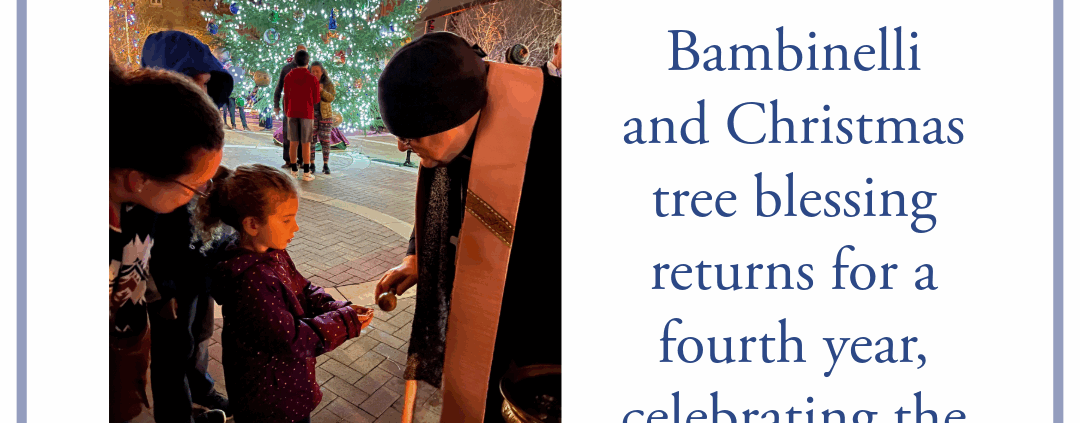
The Bambinelli and Christmas tree blessing returns for a fourth year, celebrating the local church

Bella Bailey

Multimedia Correspondent

The Bambinelli and Christmas tree blessing is back for another year, Dec. 13, at St. Mary’s Park, Covington, immediately following the 4:30 p.m. Mass at the Cathedral Basilica of the Assumption, Covington.  This will be the fourth of what has become an annual diocesan tradition, where Bishop John Iffert blesses the bambinelli (infant Jesus) of home nativities and lights the diocesan Christmas tree.

The Christmas tree will stand tall in St. Mary’s Park as a representation of the local church of Covington, as churches and schools decorate the ornaments which adorn the tree. While the blessing of the bambinelli is an active participation in the local church, “it’s a way to celebrate together,” said Jamie Schroeder, chancellor.

“It reminds us of the reason for season, which is the spirit of it. We’re celebrating the birth of our savior, Jesus Christ,” she said. The blessing of the bambinelli is a tradition popularized by St. Pope John Paul II in 1969. He invited children to bring their bambinelli to St. Peter’s Square where he blessed them. Now, the tradition lives on in the local church of Covington.

“It’s a beautiful way to celebrate the season, it’s kind of like the Curia’s gift to the diocese. It’s one way for us to show our gratitude and appreciation for the people of the diocese,” said Mrs. Schroeder.

This year, the Bambinelli and Christmas tree blessing will feature a performance by the St. Thomas Chrildrens Choir and the reading of a classic Christmas story by Bishop Iffert. Also available will be cookies, homemade by Curia staff members, as well as hot chocolate and hors d’oeuvres.

So far, the event as yielded an average attendance of “250 to 300 people who come each year,” said Mrs. Schroeder. “It lifts your heart,” she said, “to see how many people are out there. It’s just exciting.”

There is no registration required for the event, “all are welcome to come and be with us, to celebrate the season of Advent and to have their little baby Jesus blessed,” said Mrs. Schroeder. Like last year, small bambinelli will be provided so all may be included in the blessing.

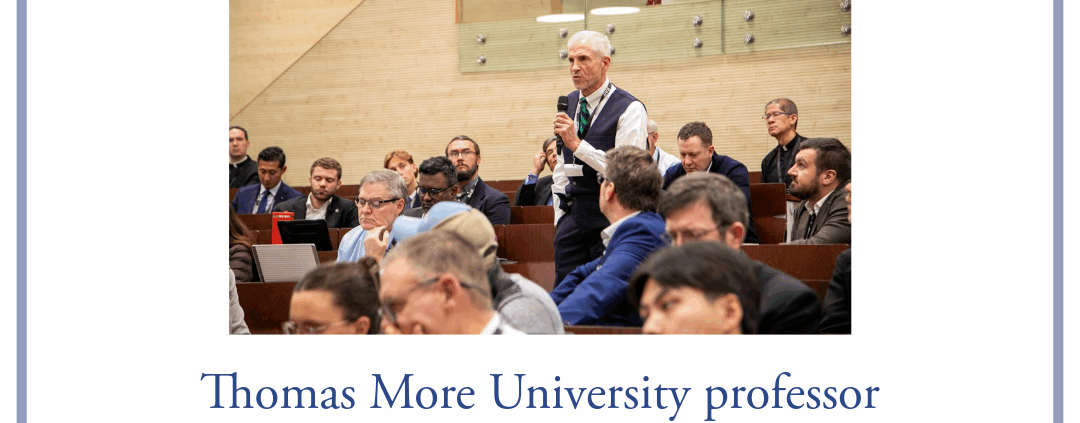
Thomas More University professor takes part in Vatican-sponsored AI Builders Forum

Laura Keener

Editor

A Catholic cruise with Catholic Answers has found Dr. John Rudnick, a year later, at a completely unexpected destination — the Vatican-sponsored AI Builders Forum.

“Catholic Answers reached out to me knowing that I was working in higher education and asked me what we were doing in artificial intelligence,” said Dr. Rudnick. “They thought it sounded interesting,” and offered Dr. Rudnick an invitation to the Forum.

When Catholic Answers extended the invitation and he accepted, Dr. Rudnick said he had no idea where the Forum was being held. The awe of being at the Vatican and among 200 like-minded Catholic leaders — educators, healthcare workers, innovators, priests, bishops and others — has left Dr. Rudnick on an “academic and spiritual high.”

“It was a wonderful time. The people that I met were just as kind and as welcoming and giving and sharing as one could have. It was very much a Catholic community and we were all rolling in the same direction,” Dr. Rudnick said. “You could say that our goal is to get each other to heaven, and our goal is to try to make sense of artificial intelligence in a positive way.”

Dr. Rudnick is a professor at the College of Business, Thomas More University, Crestview Hills. In addition to Thomas More University, other institutions of higher education with representatives at the Forum included Ave Maria College, Boston College, Catholic University of America and Notre Dame University.

His attendance at the AI Builders Forum is beneficial not only for TMU but also the Diocese of Covington. Already, Dr. Rudnick is working with Deacon Jim Fortner, chief operating officer, and Kendra McGuire, superintendent of Schools, to develop ways to share the information and to develop AI best practices with educators and leaders throughout the diocese.

The Church now stands at a pivotal moment comparable to the introduction of the printing press — an inflection point calling not for hesitation but for imaginative, evangelizing leadership, said Dr. Rudnick. AI presents new possibilities to expand access to learning, deepen pastoral outreach and strengthen global mission impact. Rather than retreat, the Church is invited to guide the development of Christian digital humanism, ensuring that emerging technologies serve truth, beauty, justice and communion, he said.

During the AI Builders Forum, the 200 members broke into six workshop groups. These six groups are now forming global cohorts to continue discussing, evaluating and recommending policies on AI. Dr. Rudnick is part of the education cohort.

“We will try to help shape policies and guidelines in relation to guardrails, privacy, cybersecurity and how artificial intelligence can be applied in education to make things more efficient and effective for faculty members and for staff, and to also be flexible and adaptive to the needs of diverse student learning types,” said Dr. Rudnick.

According to Dr. Rudnick, in the United States, Hollywood’s fascination and representation of AI, often as an antagonist in its movies, is a formidable hurdle to overcome in the general public’s understanding of AI.

“The Internet can be used for good things or bad things, and artificial intelligence can be used for good things or bad things,” Dr. Rudnick said.

The overarching theme at the Forum and one that will help guide the ongoing work of the cohorts is to leverage AI always with the dignity of the human person and the common good at the forefront. That, like with all human innovations, AI is a tool to be used by and for persons, not to replace persons.

“AI is changing hourly, and it’s something to be reckoned with,” said Dr. Rudnick. “But if we approach it with the foundation of truth, beauty and goodness, with regard to the need for the Catholic bias to be at the root, and for this to be aligned with our souls, then we’ll be okay.”

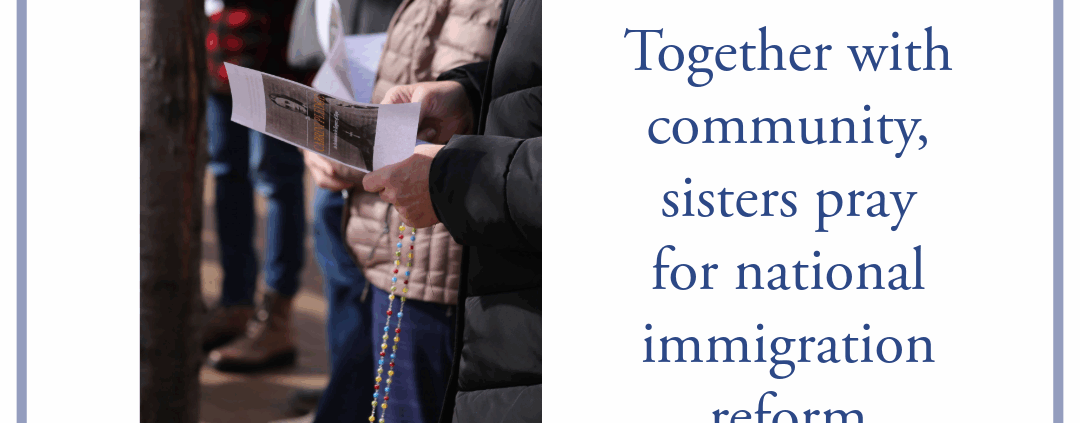
Together with community, sisters pray for national immigration reform

Maura Baker

Staff Writer

As the United States Conference of Catholic Bishops continued their sessions of the Fall Plenary Assembly in Baltimore, faithful nationally were called to pray in solidarity with migrant communities and for the reform of laws surrounding immigration, Nov. 12, on the vigil of the Feast of St. Frances Cabrini — the first canonized American saint and an Italian immigrant.

The Intercommunity Sisters Peace and Justice Committee led the prayer service at St. Mary’s Park, Covington, joining with a sizeable crowd of sisters and laity for prayer and the recitation of the Rosary.

Divine Providence Sister Kay Kramer, a member of the committee, quoted Pope Leo XIV, saying, “Migrants and refugees remind us and the whole Church of her pilgrim dimension, perpetually journeying towards her final homeland, sustained by hope that is a theological virtue.”

“Hope should be our big resounding feeling today,” said Sister Kay, “Not despair, not sadness, but hope … We know with gratitude that so many of our clergy, consecrated religious and faithful already accompany and assist immigrants in meeting their basic human needs … We pray that the Lord may guide the leaders of our nation, and we are grateful for past and present opportunities to dialog with public and elected officials.”

Thirty-third Sunday of Ordinary Time

Father Steven Bankemper

Guest

The readings of this 33rd Sunday in year C of the Church’s liturgical year are shadowed by the idea of endings: the “Day of the Lord” in the first reading, the “end times” in the second, and the destruction of the Jerusalem temple in the Gospel. One thing that is interesting about all three of these readings is that there is nothing anyone can do about these endings, and the speakers – Malachi, Paul and Jesus – offer no solutions or remedies for them. There is, quite simply, nothing anyone can do to avoid or stop the Day of the Lord, the end times, or the difficulties of living an authentic Christian life, including the seeming destruction of even those things we have held most dear to us in the Church.

To say that there is nothing one can do to stop or avoid these things, however, is not to say that there is nothing we can or should do when they happen. In fact, the speakers in all three readings give clear advice, and their messages are remarkably similar. Malachi prophecies that while the Day of the Lord will be destruction for “all the proud and all evildoers,” for those who fear God’s name the day will bring the rising of “the sun of justice with its healing rays.” In the Old Testament, to “fear God’s name” means to show deep reverence, awe, and respect for God. It is not fear of punishment, but a profound recognition of God’s power, holiness and sovereignty, which motivates a person to live in a way that is pleasing to Him. Paul, responding, in the opinion of many biblical scholars, to the attitude that some in the church of Thessalonica had, that since the end times were near or already upon them, they no longer had to work, exhorts them not to live in idleness, but to imitate him, Paul, who when he was with them worked “night and day.” In the line that follows what we hear at Mass, Paul urges them: “Brethren, do not be weary in well-doing.” And in today’s Gospel, Jesus’ advice to his disciples is not to prepare for coming persecutions, but simply to persevere in faith and trust.

The Church echoes these sentiments in the prayers of the Mass today, especially the Collect. In this prayer that “collects” and sums up the opening rites of the Mass, the Church prays that God may grant us the “constant gladness of being devoted to you,” for “it is full and lasting happiness to serve with constancy the author of all that is good.”

As we face our own troubles in both the world and the Church, let us remember the words we hear today and strive not to let ourselves be worried or shaken. Let us stay close to God, living a life devoted to God, persevering in serving him through Jesus, in the strength the Holy Spirit gives us. Let us strive to remain constant in our devotion to God and trust Him to guide us in what to say and do.

And let us help each other to do this.

Father Stephen Bankemper is pastor, St. Catherine of Siena Parish, Ft. Thomas, Ky.

New Marriage Catechumenal Pathways journeys with individuals from kindergarten through marriage to strengthen the home church

Bella Bailey

Multimedia Correspondent

The Diocese of Covington’s marriage preparation program is currently undergoing a transformation in line with Pope Francis’ request for more intensive preparation and the ongoing With One Heart Diocesan Pastoral Plan. The new program, Marriage Catechumenal Pathways, is broken into four phases: Remote, Proximate, Immediate and Enrichment. These four phases intend to strengthen the sacramental faith formation and marriage preparation beginning in childhood and extending beyond the wedding.

Deacon Jim Fortner, diocesan chief operating officer and deacon assigned to Blessed Sacrament Parish, Ft. Mitchell, said, “Bishop Iffert laid out three strategies in the pastoral plan: faith formation, evangelization and leadership. This is faith formation.”

Marriage Catechumenal Pathways is not a new concept to those in the Church, said Deacon Steve Alley, St. Timothy Parish, Union, who is a member of the Marriage Catechumenal Pathways development team.

“The Catechumenal Pathways for Marriage was a request from Pope Francis. (The Pope’s concern) was that we, as a Church, don’t spend enough time training couples for sacramental marriage,” he said.

The first of the four phases is the Remote phase, where a stronger emphasis is placed on the age-appropriate education of the sacrament of matrimony.

“I think the main focus for children is always on first Communion and confirmation. This is going to put emphasis also on marriage,” said Deacon Alley.

Starting in kindergarten through 12th grade, students will learn about marriage in a foundational way. The ideal will be that when students graduate high school, they will be equipped with the knowledge needed to discern what God asks of them.

This discernment is phase two of the Marriage Catechumenal Pathways, the Proximate phase. In this phase, high school graduates who have not yet found their vocation discern God’s calling for their life.

“They’re discerning whether they want to be married, be single, maybe go into some religious order. It’s that searching,” said Deacon Alley. “This is just a lot deeper, personal and faithful way to journey through life. When you come out of high school, you immediately start that discernment process.”

Phase three of the Marriage Catechumenal Pathways is the Immediate phase, which begins right after a couple’s engagement. One year prior to marriage, the engaged couple will receive a mentor couple from their home parish. This couple will journey with the engaged up to the wedding day and for the first five years of marriage.

“We marry couples, but then we don’t accompany them after they get married,” said Deacon Fortner. This new structure will accompany the engaged and newly married on their journey. “Our hope is that once this program is set, it will be self-perpetuation. The couples graduating out of the five-year program would then become mentor couples for the next group,” said Deacon Fortner.

Also new in the Immediate phase is the betrothal ceremony where the engaged couple, in the presence of the priest, their family and friends, will receive a blessing as they make a commitment — a betrothal — to one another, said Deacon Alley.

Following the Immediate phase is the Enrichment phase, which is the first years of marriage, journeying with a mentor couple, to discover ways to practice the faith at home and to engage in parish life as a couple.

“The idea is that you become a community in your church, a community with other couples who may be dealing with the same things you’re dealing with as a couple,” said Deacon Alley. “The idea is that you have this small group of like-minded Catholic faithful couples.”

The formation of Marriage Catechumenal Pathways will change the way that the Diocese of Covington prepares couples for the Sacrament of Matrimony and marriage. Bestowing in them a renewed heart of spirit for the journey which lies ahead.

“The home church is the most important institution here. We have to form husbands and wives to create a strong home church,” said Deacon Fortner.

The Diocesan Pastoral Plan — welcoming new and continuing the formation of the people the Lord calls his own

Laura Keener

Editor

The Catechesis and Evangelization Office has been working on the implementation of several goals following the priorities of Ongoing Faith Formation and Evangelization of the Diocesan “With One Heart” Pastoral Plan.

The grandest in scope has been faith formation and the Diocesan partnership with the Franciscan University’s Catechetical Institute. Through the Institute, the Diocese has been offering the complete Franciscan At Home library of courses and workshops free of charge to every person in the diocese. To date, over 1,100 learners have registered with Franciscan At Home. However, according to Isaak A. Isaak, director of the Office of Catechesis and Evangelization, 717 of those registered accounts are dormant.

“The challenge here is how to really engage all the people who are involved,” said Mr. Isaak.

To help engage learners, in October Mr. Isaak hosted an in-person workshop on how to navigate the Franciscan At Home website. The workshop was led by Brady Webb, the Catechetical Institute’s webmaster.

“He helped walk through the clutter of the website,” said Mr. Isaak. Mr. Webb also showed school and parish leaders where they can track the progress of learners and offered strategies on how to encourage them. “It was really helpful,” said Mr. Isaak.

Another way to help meet the engagement challenge is through the help of mentors. Currently, nearly 60 people from across the Diocese have been trained as mentors to help journey with learners taking the online Franciscan At Home courses. These mentors have been described as the “secret sauce” that differentiates Franciscan At Home from other online faith formation programs.

Additionally, the Office of Catechesis and Evangelization has developed and hosted 23 in-person courses for catechists and others. These courses were held during the summer of 2025. Mr. Isaak said, he is currently developing over 60 in-person courses to be held in the summer of 2026.

“We’re just trying to intensify our in-person workshops, because that’s a priority for the diocese. It brings people together, people network. They create friendships around faith formation,” said Mr. Isaak.

Another goal Mr. Isaak is working on is to boost implementation of the Order of Christian Initiation of Adults (OCIA), formerly known as the Rite of Christian Initiation of Adults (RCIA). The two programs both are the process by which the Church welcomes new members and prepares them for the sacraments of initiation — baptism, Communion and confirmation. But, Mr. Isaak said, it is more than just a name change. “It’s even the way, the methodology, of transmitting the faith,” said Mr. Isaak.

Approved by the USCCB in 2021 for implementation starting in 2023, OCIA emphasizes the nature of the process as an “order” rather than solely a “rite” while retaining the core structure and purpose. A fundamental difference is that with OCIA, inquirers are welcome and encouraged to begin the process at any time, instead of waiting until the fall when the formal process would typically begin. And, it emphasizes continual spiritual formation as opposed to fixed checkpoints in a 10-month period.

Again, reaching out to its Franciscan University Catechetical Institute partner, the Office of Catechesis and Evangelization held two workshops, most recently on Nov. 9. Over 50 catechists and others attended the workshop led by Dr. William Keimig, deputy director of the Catechetical Institute at Franciscan University, focused on revitalizing OCIA ministry and reigniting parishes.

“OCIA becomes an instrument of renewal for the entire parish,” said Mr. Issak, “because the people who initiate OCIA are the entire community. It’s not just the ones who are involved on the OCIA team, and it’s not just the pastor’s responsibility. The hospitality, the teaching, the witnessing of faith, it’s the entire parish’s responsibility to initiate.”

Mr. Isaak said that implementation of the Diocesan Pastoral Plan has been a time of renewal not just for the OCE but for the entire Curia.

“It helps us to really renew our office. How do we look at the things we’ve been doing in a new way?” he said. “I think the Diocesan Pastoral Plan came as a blessing to the Diocese, because every office is engaging with the people of the Diocese. We really are keeping the vision of the Bishop, which is the pastoral plan, and to make it alive in the parishes, to make it alive in the schools, to make it alive with our people and with whoever we meet.”